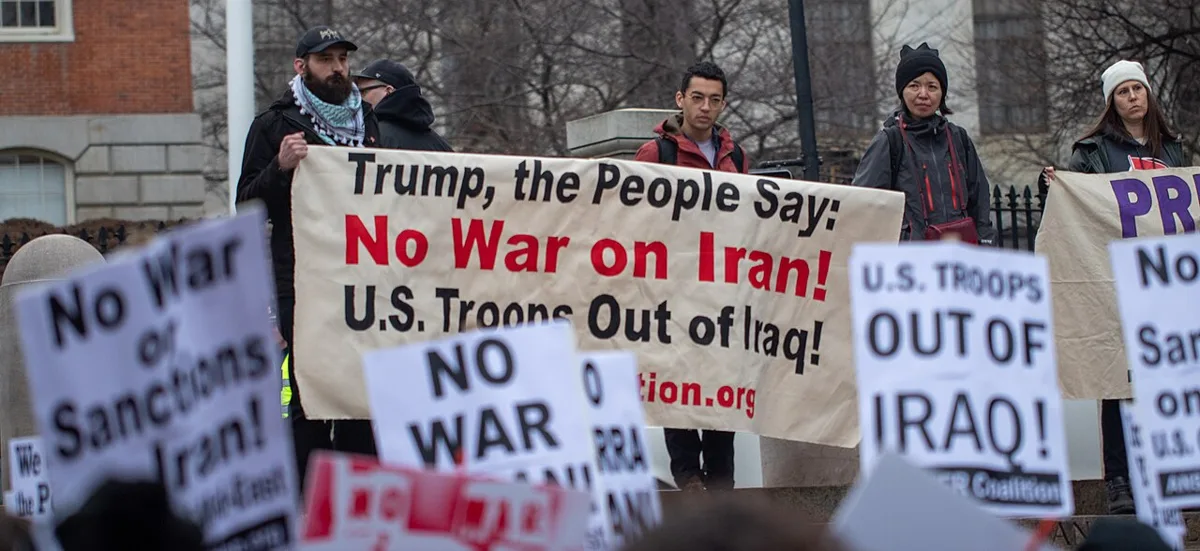
Five months ago, the Trump administration sold America a war against Iran that was going to wrap up in a matter of weeks. It has not wrapped up. What it has done is push gas above $4 a gallon, stretch food pantry lines, and start deploying spouses with a single day's notice. The Guardian spent time talking to regular Americans about what this thing actually costs, and the answers are not going to show up in any victory lap press conference.
A War That Was Supposed to Be Over by Now
Here is where we are. Five months in, Iran's Supreme Leader is dead from the opening strikes, multiple ceasefires have collapsed, and the Strait of Hormuz has been closed and reopened like a gas station bathroom that nobody is really in charge of. There is no victory. There is no peace. There is no clear end in sight.
This is landing on top of an American public that was already raw from writing a blank check for Israel's war on Gaza. As The Guardian reports, the Iran war does not replace that argument so much as pile directly on top of it, blurring into one large, festering question about what American power is actually supposed to be for.
The Bill Shows Up at the Pump and the Pantry
Lydia Stone is 31, works in Maine's logging industry, and is raising an 18-month-old daughter. She told The Guardian her industry is getting squeezed from both directions: fuel costs are rising while the price customers pay for wood stays flat. That is not a sustainable equation for anyone running a small operation. "It's been a huge jump in prices, and makes life a lot harder," she said.
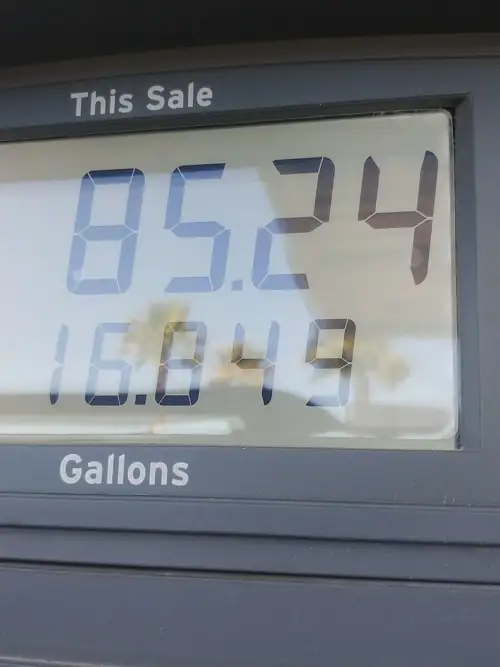
The data backs her up. According to AAA, the average price of gasoline has pushed above $4 a gallon for the first time in years. Analysts have noted the pain is not distributed equally. Lower- and middle-income households spend a larger share of their budgets on fuel, which means the same price spike hits them considerably harder than it hits someone who can afford to not think about what gas costs.
Stone went further than economics. "A huge part of what has been so frustrating," she told The Guardian, "is the fact my tax dollars are going to fund murdering people, at the same time that it's cutting social services, it's cutting SNAP benefits for my neighbors." She said the line at her local food pantry has grown noticeably longer. Her best friend's husband was deployed with almost no warning.
Voters Across the Political Map Are Asking the Same Question
Terrence Dahmen is 73, retired, from Cable, Wisconsin, and describes himself as independent-leaning but usually votes Democrat. He called American involvement "a huge mistake." The Guardian reports his reasoning was straightforward: "We weren't provoked into that fight, and we weren't attacked. I saw no reason to go there other than possibly controlling oil somehow."
Robert Edelstein runs a window-tinting business in Douglas County, Wisconsin. He was not subtle about it. "In the general election, I would automatically vote for anybody that was against the war," he told The Guardian. He compared the decision to strike Iran unfavorably to the Iraq War under George W. Bush, which is not a favorable comparison to make. "It's screwed everything up, as we all know. It's absolutely stupid."
In Georgia, a retired teacher named Jimmy Carter told The Guardian he watched Trump's motorcade arrive near his old school with disbelief. "It's a dumbass idea," he said. "I don't know who fed him that idea." He noted that even his own brother, a Trump voter, agreed with him on this one.
The Military Community Is Not Unified Either
Trump supporters with military backgrounds are not a monolith here, which is worth paying attention to. Nick Marine, a retired sailor at a Trump rally in Marietta, told The Guardian he fully backs the administration's approach. "I think what President Trump is doing is good. I think it took a long time for us to get to this point. I'm glad it's finally being resolved." He even expressed concern for Iranian civilians caught without water and sanitation. It is a more complicated position than the rally setting might suggest.
Richard Bradley is a retired Army major and combat engineer from Mabelton, Georgia. His son and daughter both currently serve. He supports the broader rationale for confronting Iran but wants to know how it ends. "I kind of take a little bit of an issue with where we're at now," he told The Guardian. "We need to be figuring out how to finish it up, so it doesn't turn into another enduring war." His own father fought in the Gulf War. He said he does not want his kids cleaning up unfinished business left behind by his generation. That is a sentence that should land harder than it probably will in Washington.
Trump Voters Are Starting to Do the Math on His Legacy
Clay Harvison is a mixed martial artist from Marietta who voted for Trump. He told The Guardian the conflict should have ended months ago and put some blame on Israeli leadership for dragging the US in deeper. More pointedly, he said the prolonged war is threatening the one thing Trump seems to care about most: his historical reputation.
"He's messing with that really bad right now," Harvison said. Younger voters in particular, he added, are asking why a president who campaigned on ending wars is now entrenched in one that has no visible exit ramp. That is a question the White House has not answered in any satisfying way, possibly because there is no satisfying answer available.
Salman Majidi, an Iranian immigrant and software developer from Atlanta, was at an anti-Trump protest holding a "Free Iran" sign, but not for the reasons you might expect. He supports Iran's exiled former crown prince and told The Guardian he views the American campaign as closer to a rescue operation. "Tens of thousands of Iranian civilians have been murdered by the Islamic regime," he said. The war contains multitudes of grievance and hope, not all of them pointing in the same direction.
The Dingo Take
Let's be direct about what five months of this war has produced. Gas over $4 a gallon. Food pantry lines that regular people can actually see getting longer with their own eyes. Spouses getting a single day's notice before deployment. And a Supreme Leader who is dead, which was supposed to be the thing that ended it, but somehow did not end it. The administration sold this as a short, decisive action. It is neither short nor decisive. It is an open tab at a bar that nobody is willing to close.
The most damning thing in The Guardian's reporting is not the economic data, although that is bad enough. It is the sheer consistency across people with wildly different politics, different relationships to the military, different views on whether the war was ever justified. The retired Army major who supports the rationale still wants to know how it ends. The Trump voter at the rally thinks the president is wrecking his own legacy. The independent retiree in Wisconsin drew a straight line to Iraq. When people who disagree about almost everything are converging on the same conclusion, that conclusion is probably correct.
And here is the part that should genuinely make you angry. The same administration that committed American tax dollars and American lives to this open-ended conflict has been cutting SNAP benefits and social services back home. Lydia Stone in Maine watched the food pantry line grow while watching her fuel costs rise, and she made that connection herself without anyone prompting her. She did not need a think tank to explain the trade-off. She lives it. The people writing the checks for this war do not.



Comments