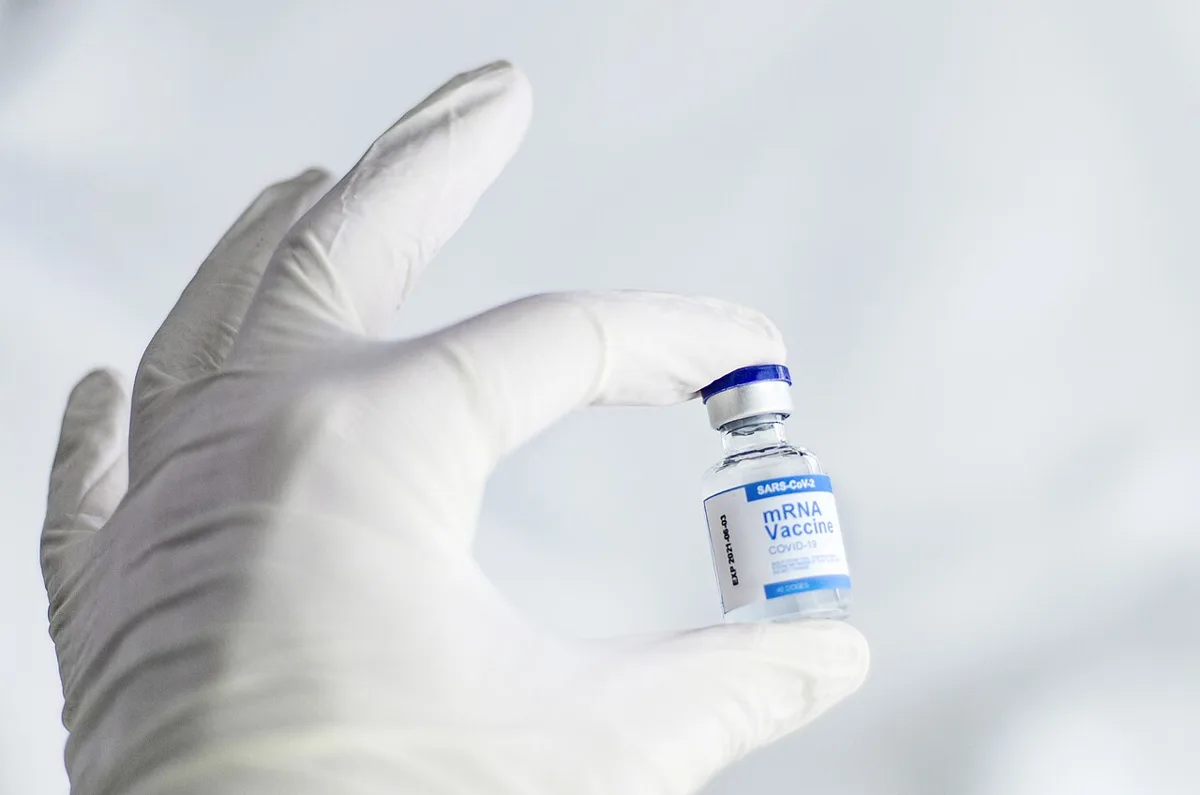
A vaccine that could help prevent tens of thousands of flu deaths a year, built with the same Nobel Prize-winning technology that ended the Covid pandemic, is finally getting its day in front of an FDA advisory panel. The fact that this is even news tells you everything you need to know about what the Trump administration has done to American public health.
What's Actually on the Table Here
Moderna is seeking FDA approval for mFlusiva, its mRNA-based flu vaccine, as an option for Americans 50 and older. According to The Guardian, an FDA advisory committee convened Thursday to debate the shot, a formal step toward a final approval decision before the winter flu season rolls around.
This matters because tens of thousands of Americans die from influenza every single year, and older adults are the most likely to be among them. There are already several flu vaccines on the market, including three specifically designed for people 65 and older. But the mRNA platform has a feature that older vaccines don't: speed. If the flu virus mutates in a way that makes current vaccines less effective mid-season, manufacturers could brew a new matched version dramatically faster. That's not a hypothetical advantage. Flu does exactly that kind of thing.
In a study of 40,000 people aged 50 and older, Moderna's vaccine reduced flu cases by about 27% compared to another routinely used vaccine brand. The FDA published a favorable review of that data ahead of the meeting and reported zero safety concerns. By any conventional standard, this thing should have been approved already.
The Part Where a Trump Official Tried to Torpedo It
Here's where it gets ugly. Earlier this year, as The Guardian reports, a then-top FDA official blocked Moderna's application outright. The official in question was Dr. Vinay Prasad, the embattled vaccine chief operating under Health Secretary Robert F. Kennedy Jr., who has spent the better part of his public life convinced that vaccines are the enemy.
Prasad's stated objection was methodological: Moderna had compared mFlusiva to a standard-dose flu vaccine rather than a high-dose one specifically recommended for seniors. That sounds like a technical quibble, but the context matters enormously. FDA staff had already approved that study design before Moderna even ran it. Prasad didn't raise this concern during the design phase. He raised it after Moderna submitted years of data and was waiting for a decision.
Moderna pushed back hard. The company pointed out that FDA scientists had signed off on the trial methodology from the start, and they submitted a separate, smaller study comparing the mRNA shot directly to a high-dose senior vaccine. The results showed the antibody response was comparable. Days after the very public spat, the FDA accepted the application and the process moved forward. But make no mistake: a senior federal health official tried to run out the clock on a flu vaccine during flu season, under an administration led by a man who has called vaccines poison.
What the Science Actually Says
The advisory panel is also evaluating that smaller comparison study. According to The Guardian, it found that Moderna's shot generated flu-fighting antibodies at levels similar to the existing high-dose vaccine already recommended for seniors. That's the benchmark Prasad demanded. Moderna met it.
The FDA's initial review did flag some real, legitimate gaps: there isn't yet robust data on very frail older adults or people with weakened immune systems. That's a fair concern, and Moderna is conducting additional testing. For the 65-and-older group, the company is currently seeking authorization rather than full approval, pending that further work. Full approval is being requested for the 50-to-64 age bracket.
None of those gaps are unusual for a new vaccine. They're exactly the kinds of questions that get answered in post-approval studies, which is how the FDA has always worked. The process exists precisely to allow useful drugs and vaccines to reach the public while remaining data collection continues. The goalposts didn't move for other vaccines. They moved here.
Why the mRNA Part Matters More Than People Realize
The technology underpinning mFlusiva won a Nobel Prize in 2023. Katalin Kariko and Drew Weissman spent decades developing mRNA delivery as a platform, and it became the backbone of the Covid vaccines that billions of people received. The science is, at this point, extraordinarily well understood.
But beyond the specific shot, the mRNA platform represents something flu vaccine development has desperately needed: flexibility. Traditional flu vaccines are grown in eggs, a process that takes months and can't be accelerated easily. An mRNA-based manufacturing line can respond to a mutating virus with a turnaround that older methods simply cannot match. In a world where bird flu is actively spreading and the next pandemic is a when-not-if proposition, that speed advantage isn't just valuable. It's potentially lifesaving at a population scale.
RFK Jr.'s FDA has spent this year making it harder, slower, and more politically fraught to get vaccines approved. That policy has a body count attached to it. We just don't know the number yet.
The Dingo Take
Let's be very clear about what almost happened here. A sitting federal health official, appointed by and accountable to Robert F. Kennedy Jr., tried to block a vaccine that a 40,000-person study showed was safe and effective, by retroactively objecting to a trial design his own agency had approved. If Moderna hadn't had the resources and legal standing to fight back, that vaccine dies in a drawer. How many smaller companies or academic researchers don't have that firepower? How many treatments are sitting in limbo right now because someone at the FDA decided the goalposts needed moving?
The advisory panel meeting is a good sign. The FDA staff's favorable review is a good sign. But the fact that it required a public corporate brawl to get a promising mRNA flu vaccine to a standard advisory hearing, in the year 2026, under an administration that has turned vaccine skepticism into official policy, is genuinely terrifying. We built this infrastructure. We paid for it. And a small group of ideologically motivated people are quietly dismantling it in real time.
Tens of thousands of Americans die from flu every year. That number is not fixed. It goes up when vaccines are harder to get, slower to approve, and politically toxic to advocate for. Every month of delay, every manufactured obstacle, every press conference where RFK Jr. does his thing, that number creeps. The flu doesn't care about the politics. It never has.



Comments