
The U.S. military probably killed more than 170 people, most of them children, when it struck an elementary school in Iran on the first day of the war. Nearly four months later, the Pentagon has finally finished its investigation. And now there is serious concern in Congress that the Trump administration is going to lock the whole thing in a classified vault and dare anyone to complain about it.
What Happened at Shajareh Tayyebeh School
On February 28, the first day of the U.S. and Israeli war with Iran, a munition struck the Shajareh Tayyebeh elementary school in Minab. More than 170 people died. Most of them were children. This is not a disputed number buried in a footnote somewhere. This is the central fact of one of the deadliest single strikes on civilians in recent American military history.
NBC News geolocated video footage that showed what appeared to be an American Tomahawk cruise missile hitting a compound belonging to Iran's Islamic Revolutionary Guard Corps right next to the school. Weapons experts confirmed the ID. Preliminary findings from the investigation showed a U.S. munition was likely responsible, and that outdated intelligence probably led to the strike being carried out at all.
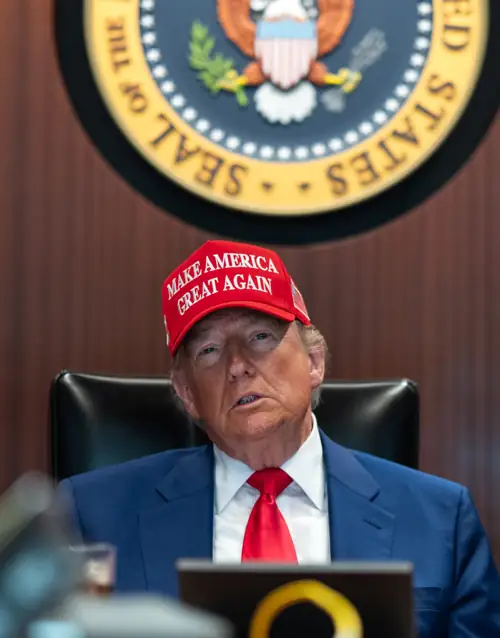
When reporters asked President Trump about it Wednesday, specifically whether he planned to hold anyone accountable, he said, and this is a direct quote: 'Mistakes are made, war is nasty.' That was his answer. About a school. Full of children.
The Investigation Is Done. The Stonewalling May Be Just Starting.
U.S. Central Command has completed its investigation, according to a person familiar with the probe who spoke to NBC News. Lawmakers who have oversight responsibility over the Pentagon have not received any details of the results. They have not received any timeline for when they might. Four months after the strike, the people constitutionally charged with overseeing the military are sitting in the dark.
The concern now, which NBC reports is shared by four congressional officials and the person familiar with the investigation, is that Defense Secretary Pete Hegseth will classify the entire report. Classifying it would put it out of public reach almost entirely, meaning the American people would have no official accounting of how their military killed a building full of kids.
'Our concern is that Hegseth will classify the report and prevent it from being released,' the source familiar with the probe told NBC News. Democratic Sen. Mark Kelly of Arizona, who sits on both the Intelligence and Armed Services committees, was blunter about it: 'Of course they are going to try to classify the report.' Another Democratic senator told NBC they would be 'shocked speechless' if the administration did not mark it classified.
The Part Where They Promised to Be Transparent
Here is a detail you should sit with for a second. CENTCOM commander Admiral Bradley Cooper testified under oath to lawmakers last month. He told them, explicitly, that once the investigation was complete he was 'fully committed to transparency.' He said it was near completion. That was last month.
The investigation is now complete. Lawmakers have heard nothing. The Pentagon spokesperson told NBC the matter is 'still under investigation,' which conflicts with what the person familiar with the probe told the outlet. So either someone is lying, or the Pentagon's left hand is not talking to its right hand while it figures out how to make this go away. Neither option inspires confidence.
It is worth reviewing what past administrations have done in comparable situations. The Obama administration publicly disclosed its role in the 2015 attack on a Doctors Without Borders hospital in Afghanistan that killed at least 42 people. The first Trump administration disclosed its role in civilian deaths from a special forces raid in Yemen and a bombing in Iraq that killed more than 100 people. There is precedent here, and it runs entirely in the direction of disclosure. The current administration is being asked to follow a standard it already set for itself.
Trump Said Iran Did It. The Evidence Says Otherwise.
Less than two weeks after the strike, Trump told reporters, without any supporting evidence, 'In my opinion, based on what I've seen, that was done by Iran.' He suggested at various points that Iran or 'other countries' could be responsible for the strike on the Iranian school.
The results of the investigation are expected to show the U.S. was responsible. There is video. There is geolocated footage showing what weapons experts identified as an American Tomahawk missile. The preliminary findings pointed to a U.S. munition. And yet the president of the United States stood in front of cameras and suggested, without evidence, that Iran bombed its own elementary school full of its own children. That claim is now sitting in the official record, and when the classified report lands in a vault somewhere, it will be the last thing many Americans remember hearing about this story.
Congress Has Questions About AI. Don't Expect Answers.
In March, 120 House Democrats sent a letter to Hegseth pressing for answers about the Minab strike. Among the questions: what role, if any, artificial intelligence played in selecting the target. Specifically, they asked whether the Maven Smart System, a Defense Department AI targeting tool, was used to identify the school as a target, and whether a human being ever verified that identification before the missile was fired.
Those are not hypothetical concerns. The Pentagon has been expanding its use of AI-assisted targeting systems, and the question of whether a human being has meaningful oversight of those decisions before civilians die is the central accountability question of modern warfare. The letter was sent in March. According to NBC, lawmakers have still not received any response to those questions from the Pentagon, and the classified investigation report would be the primary vehicle through which those answers might ever become public.
If it gets locked away, those questions die with it.
The Dingo Take
Let's be precise about what is happening here. The United States government likely killed more than 170 people, mostly children, in an airstrike on an Iranian elementary school. The military spent four months investigating it. The investigation is finished. And rather than releasing it, the Pentagon appears to be seriously considering marking the whole thing classified so that no one outside a secured briefing room ever has to reckon with what it found.
Trump's response to a question about accountability was 'mistakes are made, war is nasty.' That is a phrase you use when someone orders the wrong pizza. It is not a sentence you deploy when your military has potentially killed 170 children and you are about to bury the evidence in a classification stamp. The casual shrug of it, the complete absence of any weight, is its own kind of statement about how seriously this administration takes the lives it has ended.
The precedent being set here is genuinely dangerous. Every administration that has faced comparable disasters has at least publicly acknowledged responsibility and released findings. The Obama administration did it after Afghanistan. The first Trump administration did it twice. If this version of the Pentagon buries this report, it is not just covering up one terrible incident. It is telling every military commander going forward that as long as the politics are sufficiently hostile, accountability is optional. That is not a 'war is nasty' problem. That is a democracy problem.


Comments