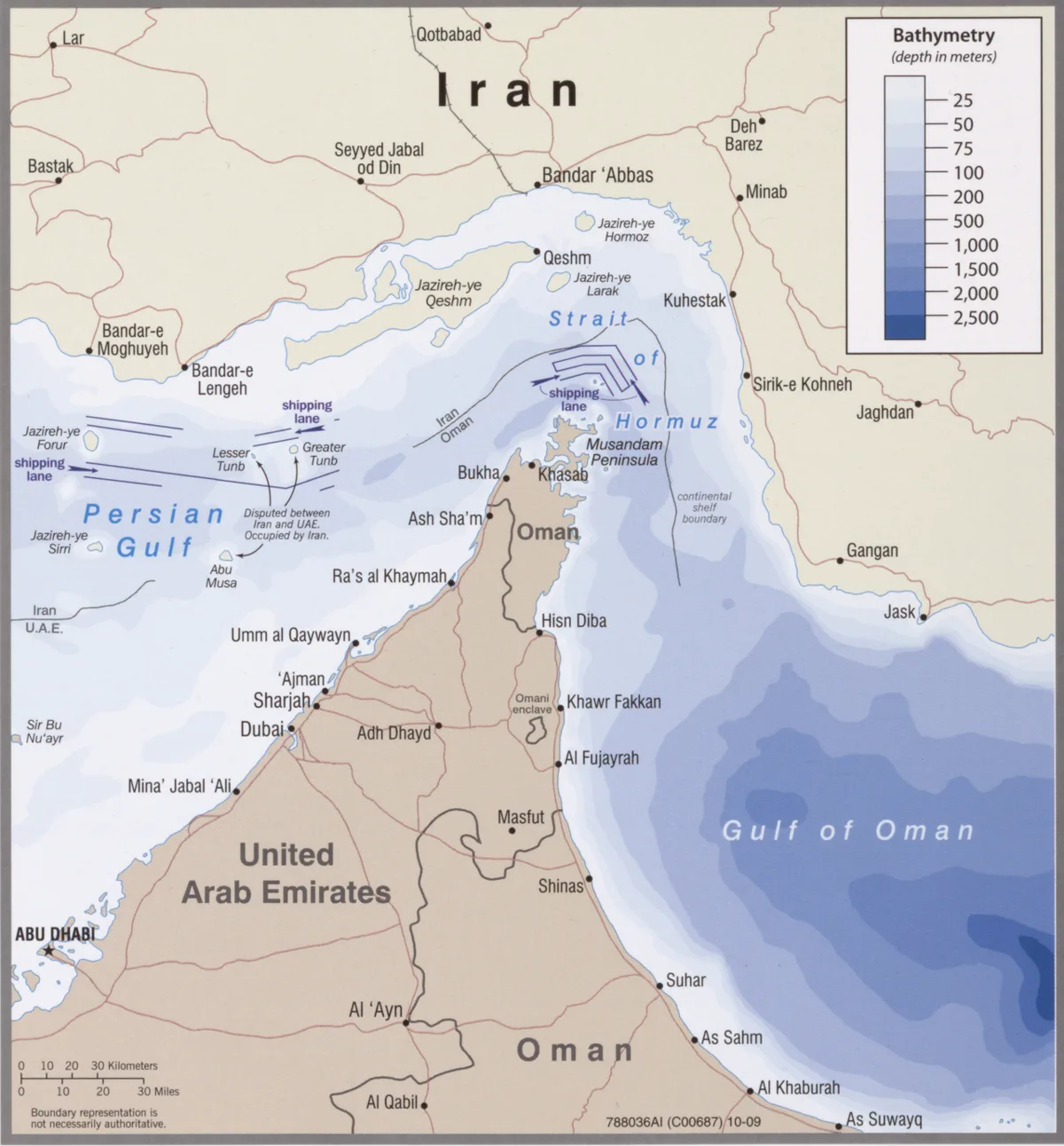
The United States has lifted its naval blockade on Iranian ports, kicked off a 60-day negotiating countdown, and told the world's oil tankers to get moving through the Strait of Hormuz. The only problem: nobody's actually moving through the Strait of Hormuz yet, because there are still mines in the water. Great start.
What Actually Happened on Wednesday
U.S. Central Command announced Thursday that American forces have stood down their blockade on ships entering and exiting Iranian ports and coastal areas. This follows a ceasefire agreement signed Wednesday between Washington and Tehran, which NPR is reporting kicks off a 60-day window for the two countries to hammer out a final deal.
Under the agreement, Iran has committed to letting oil tankers move freely through the Strait of Hormuz, the narrow chokepoint through which roughly 20% of the world's oil flowed before the war started. Iran has also gotten its oil exports freed from U.S. sanctions, at least for now. The U.S. Navy, for its part, is staying in the area to make sure the ceasefire terms hold. So it's peace, more or less, but with a fleet still parked nearby. Very warm vibes.
The agreement itself is a 14-point memo, and NPR has published the full text. It's broad. Very broad. The kind of broad where you read it and start doing the mental math on how many of these points could quietly collapse before the 60 days are up.
Mines. There Are Still Mines.
Here's the part that should make every shipping executive pour a large drink. Even with the blockade lifted and Iran promising safe passage, NPR reports that when ships will actually begin sailing through the Strait in significant numbers remains an open question because of Iranian-placed mines that the U.S. and other nations are still in the process of clearing.
Trump told ships to "start your engines." The ships have not started their engines. Because mines. The Strait of Hormuz handles a fifth of the world's oil supply on a normal day, and right now it's sitting there like a swimming pool that someone definitely put something in but they're not totally sure where.
The global oil market was already rattled when the war started. The path back to normal runs directly through one of the most heavily mined bodies of water on earth right now. Sixty days sounds like a long time until you remember how much can go wrong in international waters with unexploded ordnance in them.
Vance Holds 'All the Cards,' Reportedly
Vice President JD Vance is leading the U.S. side of the negotiations and is expected to head to Switzerland as early as this weekend to begin the next phase of talks. He held a White House press briefing Thursday where he defended the memorandum of understanding and made a series of claims that deserve a close look.
Vance said the U.S. holds "all the cards" right now, and insisted Iran won't see significant benefits until it can "verify for us that they are changing their behavior." He also argued that lifting the blockade and allowing Iranian oil back through isn't actually a new concession. "They were selling oil for many, many years, well before we ever put the blockade," he said. "We imposed that blockade. They stopped selling oil, and now we've lifted the blockade in order to promote the free flow of energy across the world."
That is technically true, in the same way that breaking someone's window and then offering to unbreak it is technically a form of generosity. Whether Iran sees it that way is a different question. Whether the 60-day clock runs out before Vance can close a deal is a considerably more important one.
The $300 Billion Question Nobody's Answered Yet
The thorniest parts of this agreement are the parts that aren't actually agreed yet. The 14-point memo NPR obtained is more a list of intentions than a binding deal, and several of those intentions are genuinely jaw-dropping in their ambition.
The document calls for a $300 billion fund for the reconstruction and economic development of Iran, to be coordinated with regional partners, with details to be sorted within the 60-day window. Details of lifting remaining sanctions and disposing of Iran's stockpile of enriched uranium are also on that list. These are not small items to leave for the next two months of talks.
The agreement also states the ceasefire extends to Lebanon, which would require cooperation from Israel. Israel is not a party to the agreement. Israel was not consulted on this point, as far as anyone has publicly said. How that gets resolved is, per the memo, something to figure out later. The 60-day clock is ticking on approximately everything.
Iran's 'Service Fees' and Why Lawyers Are Already Busy
One detail buried in the ceasefire text is going to generate a lot of billable hours in maritime law firms. Per the agreement, Iran will allow commercial vessels to transit the Strait of Hormuz "with no charge for 60 days only," after which "future administration and maritime services" will be determined by Iran along with Oman and other Persian Gulf states.
Iranian officials have already floated the idea of imposing "service fees" on ships passing through. Industry analysts, according to NPR, are calling this legally questionable on an international waterway. The Strait of Hormuz is governed by international maritime law, which generally does not allow one country to toll an international strait like a highway off-ramp. Iran appears to disagree, or at least wants to see what it can get away with once the 60 days are up.
So even in the optimistic scenario where everything goes smoothly, mines get cleared, the deal holds, Vance closes a final agreement in Switzerland, and the uranium gets dealt with, there's still a live question about whether Iran is going to try to start charging shipping companies for the privilege of using one of the busiest waterways on earth. Day one of the peace deal and we're already negotiating the peace deal.
The Dingo Take
Look, this could work. Treaties have been built on shakier foundations and managed to hold. The region desperately needs something to hold. Iranian oil coming back online matters for global energy prices, and clearing the mines and reopening the Strait of Hormuz matters for everyone from European fuel consumers to Asian manufacturing. The incentives for a deal are real on both sides. None of that is nothing.
But the gap between this 14-point memo and an actual final agreement is enormous. Three hundred billion dollars for Iranian reconstruction, Iran's enriched uranium stockpile, sanctions relief, Lebanon, Israel's cooperation that nobody's gotten yet, and the question of whether Iran gets to turn the Strait of Hormuz into a toll road. All of that in 60 days, while Vance is heading to Switzerland this weekend and the mines are still being cleared and nobody's ships are moving yet. That is one hell of a to-do list.
Vance says the U.S. holds all the cards. Maybe. But in high-stakes poker, holding all the cards only matters if you don't fold on the bet. Sixty days from now, we'll know whether this was a genuine turning point or the opening act of a very expensive stall. The Strait of Hormuz is open, sort of, for now, conditions apply, mines may be present, service fees forthcoming, terms subject to change. Welcome to diplomacy.




Comments