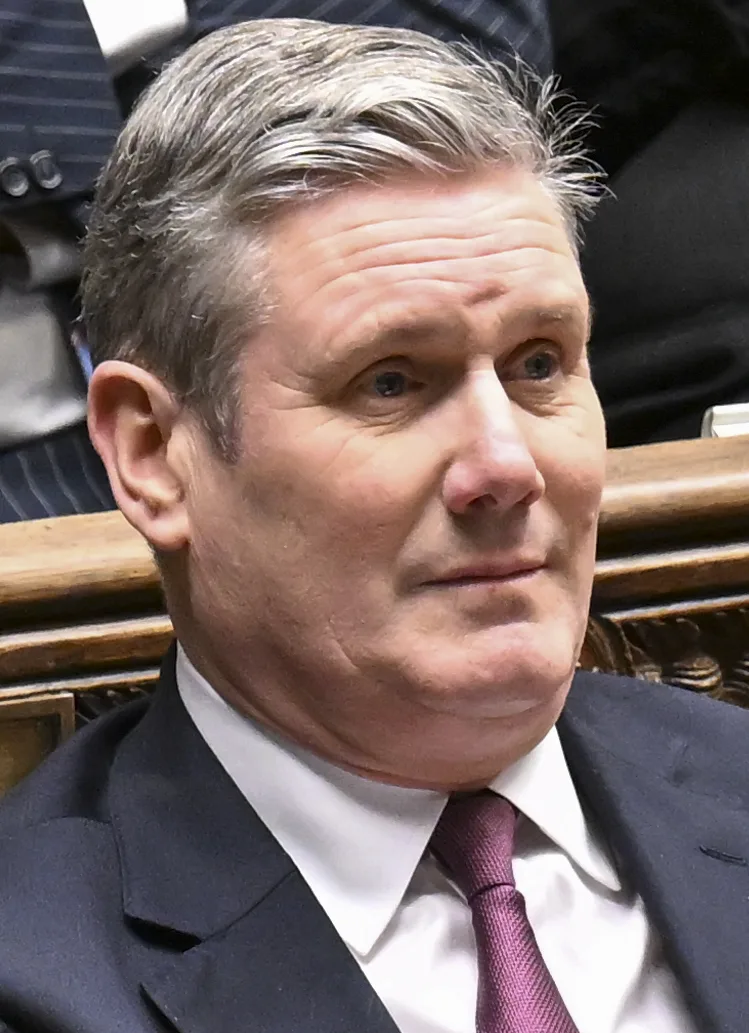
A sitting Labour MP resigned his own seat on purpose just so someone else could win it and come take his boss's job. That is the state of Keir Starmer's government right now. Andy Burnham, the 56-year-old Mayor of Greater Manchester, won the Makerfield by-election early Friday morning with nearly 55% of the vote, and he is now heading to Westminster to do exactly what everyone knows he came to do.
What Actually Happened in Makerfield
The short version: Labour MP Josh Simons looked at the state of Keir Starmer's government, looked at Andy Burnham waiting in Manchester, and decided the kindest thing he could do for the country was quit his own seat. He resigned specifically to trigger a by-election and give Burnham a path back into Parliament. This is not a conspiracy theory. Everyone involved has basically admitted it.
Burnham then went up to Makerfield, a working-class corner of Greater Manchester about 200 miles northwest of London, and beat Reform UK's Robert Kenyon by 24,927 votes to 15,696, according to NBC News. Kenyon, a former plumber, had not helped himself by leaving a trail of social media posts in which he described himself as a "sexist" and suggested some women have abortions for "vanity purposes." So, not a clean test of Reform's strength. But Burnham won anyway, and that's what matters.
The victory speech did not sound like a man planning to quietly take a backbench seat and keep his head down. "Everyone knows that politics isn't working," Burnham told the crowd. "Everyone can feel that the country isn't where it should be. Tonight could, just could, be the turning point."
How Bad Is It for Starmer
Pretty bad. The man won a landslide general election in July 2024 and has spent the nearly two years since then methodically squandering it. As NPR reports, he has failed to deliver promised economic growth, failed to fix battered public services, and made a series of unforced errors that would embarrass a first-term city councillor, including appointing Peter Mandelson, a scandal-tarnished figure with documented ties to Jeffrey Epstein, as the UK's ambassador to the United States.
A dismal showing in May's local elections sent scores of Labour lawmakers publicly demanding his resignation. He refused. Then Wes Streeting quit as health secretary, releasing a statement that said, with devastating simplicity, that "where we need vision, we have a vacuum." Then Simons resigned his seat to hand it to Burnham. At this point, according to NBC News, 110 of Starmer's own Labour colleagues have signed a letter calling for him to step down.
Starmer, to his credit or his considerable stubbornness depending on how you look at it, is not moving. "I will fight if there's a challenge," he said this week at the G7 in France, per NPR. He has also floated offering Burnham a Cabinet job, which Burnham's allies swatted away before the sentence was even finished.
Who Is Andy Burnham and Why Does He Think He Can Fix This
Burnham has been Mayor of Greater Manchester since 2017, and by most accounts he has been genuinely good at it. He oversaw a significant regeneration of the city, built a reputation for plain-speaking regional politics, and cultivated an image that is the opposite of the technocratic, poll-tested, Westminster-bubble politician that Starmer has come to represent in the public mind. The nickname "King of the North" is not ironic. People up there actually like him.
His pitch is something he calls "Manchesterism," which is essentially the argument that local, community-rooted, practical governance can be exported nationally. He told supporters in Makerfield that he would work to ensure the area's name became "forever synonymous with bringing about the change this country needs." He also took a direct shot at the American model of politics, saying Labour had a chance to build "a new politics based on unity and hope, turning away from the path that takes us to a divided, dark politics of the kind we see in the United States."
That last line will land differently depending on where you sit. But he's not wrong that the Reform UK surge, led by Nigel Farage, a man who has spent years cozying up to Donald Trump, is the specific version of that politics currently threatening to eat Labour's base in post-industrial England.
What Happens Next, Procedurally
Here is the mechanical reality of British politics that Americans consistently find baffling: the UK does not need a national election to get a new prime minister. If the Labour Party replaces its leader, that person becomes prime minister automatically. No national vote required. So this is a genuinely high-stakes internal party fight with enormous consequences for the country.
To formally challenge Starmer, Burnham needs the backing of 81 Labour MPs, which is one fifth of the party's House of Commons contingent, as NPR explains. Given that 110 MPs have already publicly signed a letter demanding Starmer resign, getting to 81 formal backers should not be the hard part. Burnham is expected to be sworn in as an MP as soon as Monday, and allies have indicated he will seek a direct conversation with Starmer shortly after.
Culture Secretary Lisa Nandy told reporters that the two men will need to "have a conversation about what comes next" within days. Burnham ally Louise Haigh put it slightly more pointedly, saying Starmer should "do what's best for both the country and the Labour Party" and "consider an orderly and managed transition." Translation: please just go quietly. Starmer has given no indication he plans to.
The Part Where a Professor Warns Us Not to Get Too Excited
Tim Bale, a politics professor at Queen Mary University of London, offered the necessary cold water for anyone ready to crown Burnham before he's even been sworn in. "So far, he's been something of a fantasy leader, a screen onto which supporters can project their pet theories as to how the government can turn things around," Bale told NBC News. "Now, presuming he takes over from Starmer, that fantasy will collide with reality, and reality always wins."
That is a fair point. Burnham has been able to run Manchester without having to manage the full weight of Britain's post-Brexit economic stagnation, its crumbling NHS, or its confrontation with Farage's Reform party at a national level. Being the popular mayor of a city you genuinely love is categorically different from inheriting a governing party that is bleeding support from both the left and the right simultaneously.
Rob Ford, professor of political science at the University of Manchester, was somewhat more optimistic, telling NPR that "the pressure on Starmer will be very hard to resist" now that Burnham is back in Parliament. Ford also noted that beating Reform in Makerfield strengthens Burnham's core argument: that he is the person who can hold off Farage's advance in the northern English working-class seats Labour cannot afford to lose.
The Dingo Take
Let's be clear about what is being attempted here. The British left, having won a massive election less than two years ago, is now trying to perform open-heart surgery on its own government because the person they elected prime minister turned out to have no particular vision for what to do with the power he won. Starmer ran an excellent campaign and has governed like a man who was surprised to win. There is a version of this that is a cautionary tale about what happens when opposition parties spend so long just trying not to lose that they forget to figure out what they actually believe.
Burnham may genuinely be different. His record in Manchester suggests he is a politician who thinks in terms of places and people rather than focus groups and triangulation. His explicit rejection of the American-style culture war model of politics, while standing in a post-industrial northern English town that Reform UK has been actively targeting, is at least a coherent theory of how you fight back against the Farage playbook. Whether that scales nationally is the question nobody can answer yet.
What is not in question is that the clock on Starmer's premiership is now loudly ticking. When your own MPs are resigning their seats to give someone else a runway to replace you, when 110 colleagues have signed a letter asking you to leave, when your Culture Secretary is publicly saying you need to "have a conversation about what comes next," the writing is not on the wall. It is on the ceiling, the floor, and every surface in between. The only person in the building who appears not to see it is Keir Starmer.



Comments