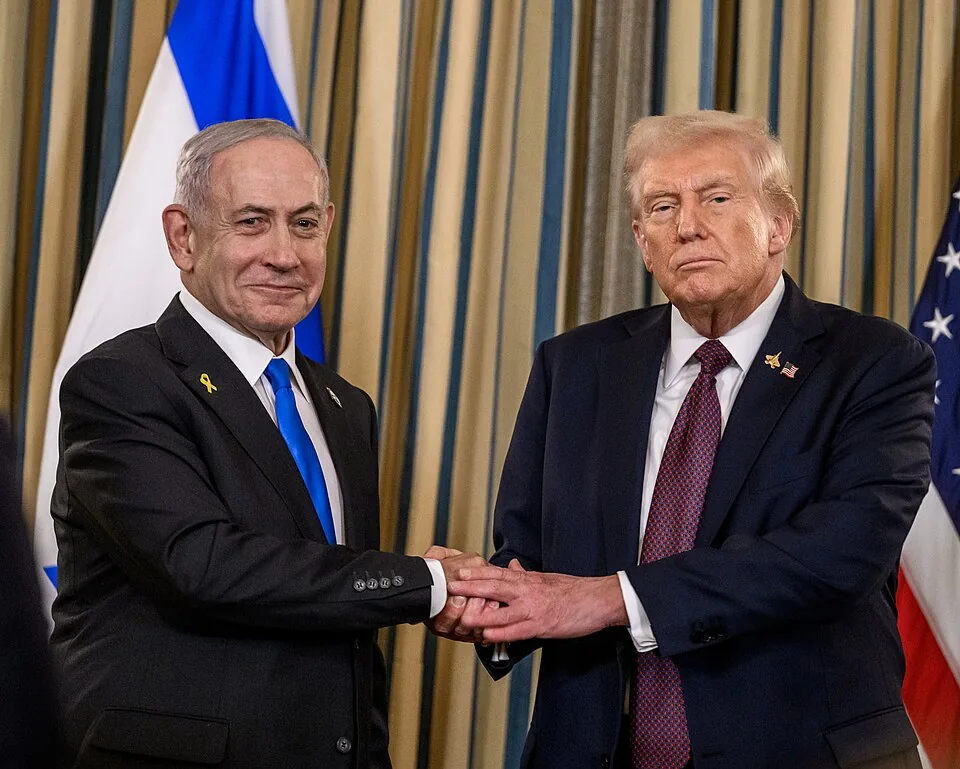
Days before Israelis voted, the President of the United States told them that if they picked anyone other than Benjamin Netanyahu, America might simply stop fighting the war the two men started together against Iran. Then Israelis voted, and exit polls suggest a majority of them voted against Netanyahu's bloc anyway. Nobody has the numbers to govern, and everybody is about to start lying about who they'll sit with.
A Stalemate With A Side Of Extortion
Here's where things stand after Tuesday's election, according to exit polls from Israel's major TV networks reported by CBS News. Netanyahu's Likud is the largest single party. But a majority of voters appear to have backed someone else, and neither Netanyahu's coalition nor the opposition has a clear path to the 61 seats needed in the 120-seat Knesset.
So it's a mess. Likud wins the most seats, Netanyahu's side loses the most votes, and the math refuses to cooperate with either camp. Welcome to Israeli coalition politics, where the thing you won and the thing you need are two entirely different things.
The country just came through three years of multifront war in Gaza, Lebanon and Syria, two direct rounds of conflict with Iran, and the worst security failure since 1948. Turnout was high because many Israelis see this vote as existential. They got a shrug from the electoral math.
Trump's Very Friendly Threat
Last week, Trump posted a full-throated endorsement of Netanyahu on Truth Social. It was less an endorsement than a hostage note. "If Israel has the wrong Leader, which would be anyone other than Bibi, America will have to do this work ourselves, and I am not inclined to do so," he wrote.
Read that again. The American president is telling a foreign electorate that the war he launched jointly with their prime minister about eight months ago will lose his support if they fire that prime minister. Vote for my guy or the war you're in the middle of gets worse for you. That is a campaign promise delivered as a menace, aimed at a country whose citizens are the ones doing the fighting and the dying.
Imagine the screaming if a foreign leader posted that about an American election. We would hear about it for a decade. When our guy does it to someone else's democracy, it's just Tuesday.
Netanyahu Wants More Time To Finish The Job
Netanyahu's pitch was simple. The campaigns in Gaza, Lebanon and especially Iran are still going, and he needs more time to finish what his government started. He wants to rebuild a coalition much like the current one, leaning on ultranationalist and religious parties, and he has been advocating for renewed strikes on Iran.
Think about what that argument admits. After three years, the war is not finished, and the man who was running the country on Oct. 7, 2023 says the solution is to keep him there until it is. It's the arsonist asking to stay on as fire chief because the building is still burning.
He is also Israel's longest-serving prime minister, which tells you how much "just a little longer" has already been spent.
The Change Bloc Hates Netanyahu And Not Much Else In Common
Running against him is a patchwork of parties with different ideologies and one shared goal: get Netanyahu out. The front-runner to lead that "change bloc" is Gadi Eisenkot, the former military chief who heads the centrist Yashar party.
Eisenkot lost his son and two nephews serving in Gaza, and he sat in the war cabinet alongside Netanyahu for much of the first year of the war. He is pitching himself as a humble veteran who wants to reunite a country he says Netanyahu split apart. About half his party's candidates are women, which is a sharp contrast to the male-dominated Netanyahu coalition.
It's a decent pitch. It's also a coalition held together by one unifying emotion, which is historically a fantastic foundation for a stable government. Ask anyone who has ever tried to run a group chat.
The Arab Parties Just Had A Historic Night And Nobody Wants To Say Thank You
Israel's two Arab parties won more seats than in any previous election. Arab voters told CBS News they have had a hard time under Netanyahu's hard-right government, and they turned out in historic numbers. Arab citizens are about 20% of the population.
Both Netanyahu and the opposition have vowed not to form a government that relies on those parties. Netanyahu made keeping them out of power a central tenet of his campaign. And now those same parties may hold the numbers that decide who governs.
The opposition could break its pledge, which is, per the reporting, a common occurrence in Israeli politics. Arab parties could also back a minority government or just abstain and let it form. Either way, a community that was told it was the problem just became the solution to everyone else's arithmetic.
What Happens Now: Weeks Of Backroom Deals Or Election Number Six
The paths forward are all ugly. Lawmakers can switch sides, which has plenty of precedent. Negotiations could drag on for weeks. The change bloc could try a minority government, which only requires more seats than the other side, not a true majority. And if nobody can build anything, the country goes back to the polls.
That is not a hypothetical. Between 2019 and 2022, Israel held five elections because of deadlock. A country at war on several fronts could end up running a sixth campaign while soldiers are still deployed.
The Dingo Take
Who benefits from this mess? Netanyahu does, every single day the process drags on. A man whose political survival depends on the war never ending has every incentive to keep the war not ending, and every week of coalition haggling is another week he stays in the chair. The same logic applies in Washington, where a president who launched a war with this guy now treats Israeli democracy as a loyalty test for his own project.
Look at what Trump actually said. Elect my friend or I might walk away from the conflict I helped start. That's not an alliance. It's a protection racket with a flag on it. If Israelis choose a different leader and America pulls back, whose decision was that? And if Israelis choose Bibi because they were told the alternative was abandonment, can anyone honestly call that a free vote?
The exit polls say most Israelis wanted something different, and the system may hand the keys back to the same guy anyway. That's the real stalemate here. It's not just the seat count. It's a country that voted for a change it may not be allowed to have, with a foreign president leaning on the scale, and a war that stays open as long as the man who needs it stays in power.




Comments