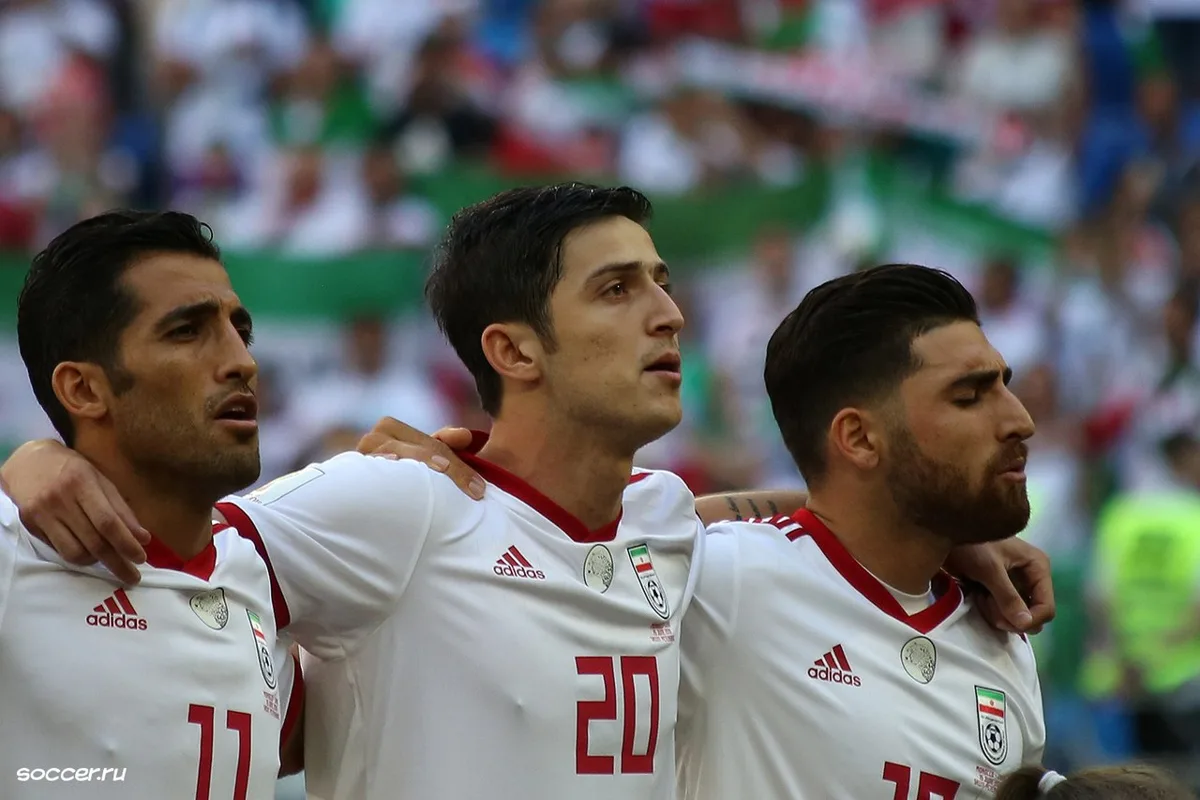
The United States is hosting the World Cup. One of the teams competing in that World Cup is being told they can fly in the day before a game and must leave the same day the game ends. That team is now filing an official complaint with FIFA, because yes, obviously they are.
Arrive Yesterday, Leave Today, Win a World Cup Somehow
Here is the situation Iran is working with. According to BBC News, Iranian players are permitted to enter the United States one day before each of their US-based group games. They must leave the country on the same day the match is played. Not the next morning. The day of. Pack your bags before the final whistle, fellas.
Iran's Football Federation had requested two days of pre-match time in each host city, which is, by any reasonable sports science standard, a completely normal ask. They wanted time for the players to adapt to conditions, hold a final training session, and do all the boring but essential things professional athletes do before a major tournament game. The US said no. Twice.
The Football Federation of Iran put it in writing: the restrictions are "inconsistent with the principle of providing equal conditions for all participating teams and may negatively affect teams' preparation processes." That is the diplomatic version. Head coach Amir Ghalenoei was less diplomatic, calling Iran the "most oppressed" team at the tournament after their 2-2 draw with New Zealand in Los Angeles.
Andrew Giuliani Would Like You to Know This Is Fine
Enter Andrew Giuliani, executive director of the White House FIFA Task Force, a job title that raises its own questions but let's stay focused. Giuliani told CBS News that Iran knew exactly what they were getting into. "The team will be allowed to come in, match day minus one, so the day before the match," he explained. "They'll be asked to leave the day that the match wraps up, so the evening of the match."
The US Department of Homeland Security, for its part, offered this to the BBC when asked about Iran's coach calling his team the most oppressed at the tournament: "The Iranian national football team agreed to these terms." Full stop. That's the whole answer. The DHS had not yet responded to the BBC's follow-up query about the federation's plans to formally complain to FIFA.
This is the part where you remember that the United States is the co-host of this tournament. Not a visa-processing bureaucracy tangentially adjacent to the tournament. The co-host. There is a difference, in theory, between those two things.
Everything Else That Has Gone Wrong
The visa situation is just the most recent item on a list that started before the tournament even kicked off. BBC News reports that multiple "integral" members of Iran's backroom staff were denied entry visas to the US entirely. Their allocation of fan tickets was revoked on the eve of the tournament. They were forced to move their team base from Arizona to Tijuana, Mexico, amid tensions connected to the ongoing conflict in the Middle East.
FIFA president Gianni Infantino visited the Iran team in their dressing room after the New Zealand game, which is the kind of gesture that reads as either genuine solidarity or a man who knows a PR crisis when he sees one arriving to manage it in person. Probably both.
Iran still has two group games left, and both are in the United States. They face Belgium in Los Angeles on June 21 and Egypt in Seattle on June 27. Under the current visa terms, the squad will fly in, play, and fly out for each one. The Belgium game kicks off at noon local time in Los Angeles. Iran wanted two days to prepare. The US said no.
The Peace Deal That Did Not Actually Fix This
There is a layer to this story that makes the whole thing even harder to process. BBC News reports that the presidents of the US and Iran have signed an initial peace deal aimed at ending the war between Iran and Israel. A peace deal. Signed. And yet the practical result on the ground at the FIFA World Cup is that Iran's football team is operating under conditions no other team faces.
It is possible to hold two thoughts at once: that US national security concerns about Iran are legitimate and complicated, and that running a global sporting tournament while subjecting one team to conditions that actively undermine their ability to compete is a genuine problem. FIFA's own principles of neutrality and fair competition are not just marketing slogans. They are the rules FIFA operates under, rules the federation itself claims to uphold.
Iran's federation is going through "appropriate channels," as they put it, to formally lodge their complaint. Whether FIFA does anything about it is a separate question entirely, given that FIFA's relationship with the concept of accountability is, to put it generously, inconsistent.
The Dingo Take
Let's be precise about what is happening here. The United States agreed to co-host the World Cup, which comes with an obligation to give every participating team a fair shot at competing. Not an identical political relationship with every country. Not warm diplomatic feelings. Just the basic logistical conditions that allow a professional football team to prepare for a match like a professional football team. That is the floor. The US is currently beneath the floor.
Andrew Giuliani telling CBS News that Iran "agreed to these terms" is technically true in the same way it's technically true that you agreed to the terms and conditions on an app you downloaded in 2019 and have never read. It does not mean the terms are fair, it does not mean they meet FIFA's standards, and it does not make the US look like a competent host of a tournament it spent years lobbying to run.
The darkest part of this whole story is that it probably does not matter. Iran will play their games. FIFA will file the complaint somewhere. Infantino will visit some more dressing rooms. The tournament will roll on. And a team of footballers who had nothing to do with decades of geopolitical hostility will keep losing preparation time because two governments cannot manage to separate sport from their unresolved grievances long enough for a squad to hold a training session.


Comments