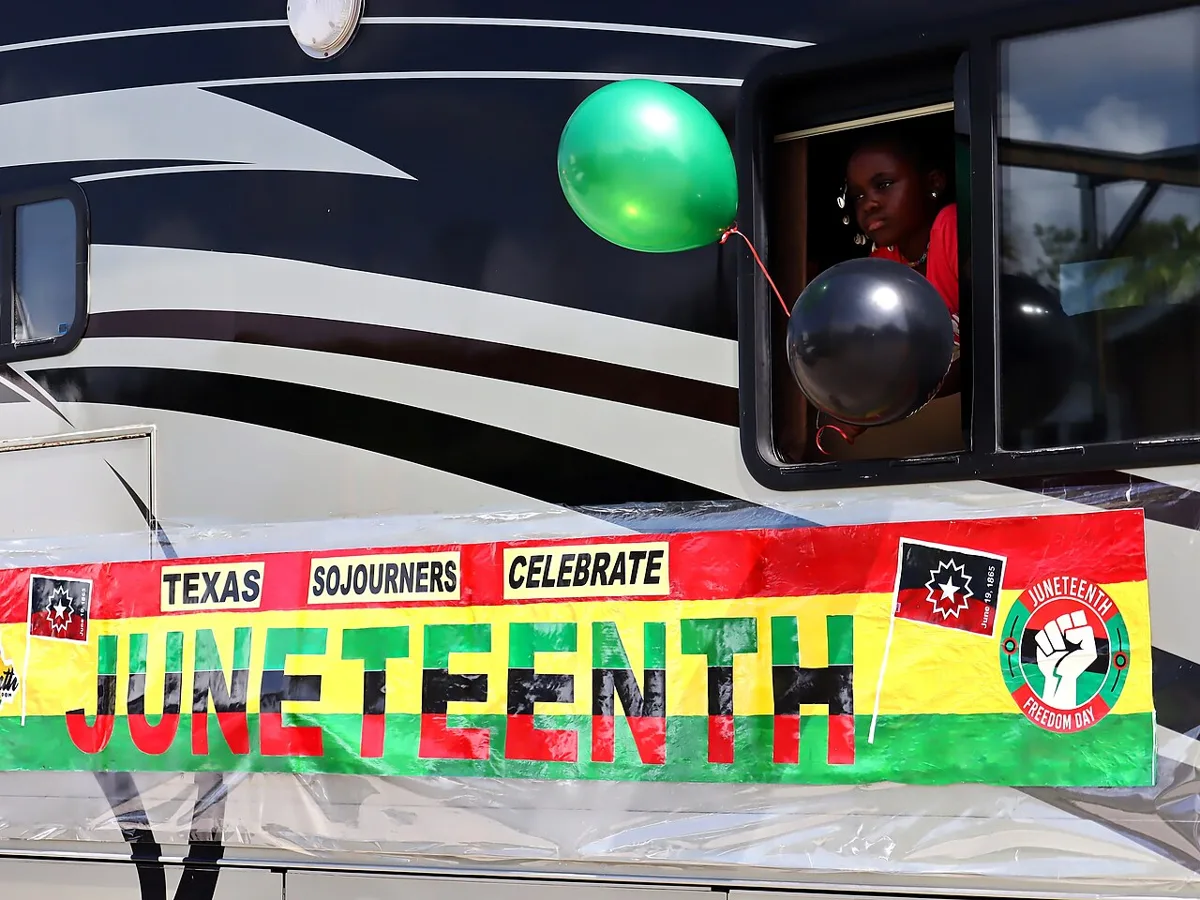
On June 19, 1865, federal troops arrived in Galveston, Texas, and told more than 250,000 enslaved people something they had technically been legally entitled to know for over two years: they were free. The Emancipation Proclamation had been signed in January 1863. The Civil War had ended in April 1865. Texas, largely untouched by Union troops and apparently unbothered by any of this, had just kept going.
Two and a Half Years Late, But the News Finally Arrived
Here's the thing about the Emancipation Proclamation that most people either never learned or quietly forgot. It did not, in any practical sense, free all enslaved people in America on the day Lincoln signed it. According to History.com, the proclamation only applied to Confederate-held territories, and specifically excluded slave-holding border states and rebel areas already under Union control.
Texas was a special case, even by the grim standards of the era. The state had seen no large-scale fighting and had virtually no Union troop presence throughout the war. Slavery there did not skip a beat. It continued, legally and practically undisturbed, for more than two years after Lincoln's proclamation, right up until Union General Gordon Granger rode into Galveston on June 19, 1865, and announced that the war was over and that enslaved people were free.
General Robert E. Lee had surrendered at Appomattox Court House in Virginia back in April of that year, as WSLS reports. Two months passed before the news reached the people in Texas who needed it most. Think about what two months means. Think about what two years means.
From Texas Tradition to Federal Recognition
The celebration of Juneteenth started in Texas and grew from there. As the National Park Service notes, the day has held profound meaning for people of African descent across the United States, marked with parades, family reunions, speeches, and barbecues. It was community-built, community-sustained, and community-celebrated long before any government decided to take notice.
Texas became the first state to recognize Juneteenth as an official state holiday back in 1979, which is a full 114 years after the events it commemorates. The federal government took another 42 years on top of that. In June 2021, Congress passed and President Biden signed legislation making Juneteenth a federal holiday, according to WSLS. So we are talking about a 156-year gap between the event and its official national recognition. The American government has moved faster on worse things.
The name itself is straightforward. Juneteenth is just a compression of June and nineteenth, which is either charmingly simple or a sign that whoever named it was working on extremely limited sleep. Either way, it stuck.
Why the Proclamation Alone Was Never Enough
The Emancipation Proclamation is one of the most mythologized documents in American history, and the mythology does real damage to the historical record. The popular version is clean and dramatic: Lincoln signs a paper, slavery ends, America moves forward. The reality, as History.com points out, is considerably messier.
The proclamation was a wartime executive order aimed at destabilizing Confederate states by declaring enslaved people in those states free. It was a military and political tool as much as a moral one, and it came with significant carve-outs. Border states like Kentucky and Missouri, which had stayed in the Union while permitting slavery, were explicitly excluded. Parts of the Confederacy already under Union control, like parts of Louisiana and Virginia, were also excluded. The proclamation was as much defined by what it left untouched as by what it addressed.
For the enslaved people of Texas, it meant nothing whatsoever until Union soldiers showed up in Galveston with guns and an announcement. That is the thing Juneteenth actually commemorates. Not a piece of paper. The moment the news arrived.
What the Day Looks Like Now
Juneteenth in 2025 is a federal holiday, which means government offices close and many Americans get a day off work, which is either a meaningful acknowledgment of history or an opportunity for mattress sales, depending on where you shop. Probably both.
The NPS notes the day is marked across the country with parades, family reunions, speeches, and barbecues, traditions that predate any federal recognition by well over a century. The communities that built this holiday did not need Washington's approval to consider it worth celebrating. The federal designation matters, but it is catching up to a reality that Black Americans have been living for generations.
The Dingo Take
Look, there is something clarifying about sitting with the actual timeline here. The Civil War ended in April 1865. Two months later, enslaved people in Texas were still enslaved, because nobody had shown up to physically enforce the new reality. The legal fact of freedom and the lived experience of freedom were entirely different things, separated by geography, military logistics, and the complete absence of any urgency among those who could have moved faster. That gap between what the law said and what people actually experienced is not a quirk of history. It is a theme.
It took Texas until 1979 to make the day a state holiday. It took the federal government until 2021. When people argue about whether systemic inequalities from this era still echo through American life, maybe consider that the country took a century and a half to officially acknowledge the day the last enslaved people in Texas learned they were free. That is not ancient history sealed behind museum glass. There are people alive today whose grandparents were alive when this was still an unofficial, uncelebrated, largely unacknowledged date on the calendar.
Juneteenth is not complicated. It is the anniversary of the day freedom finally caught up to people it had been legally promised to and then denied for years. The fact that it took this long to mark it officially is not a feel-good story about American progress. It is the story itself.



Comments