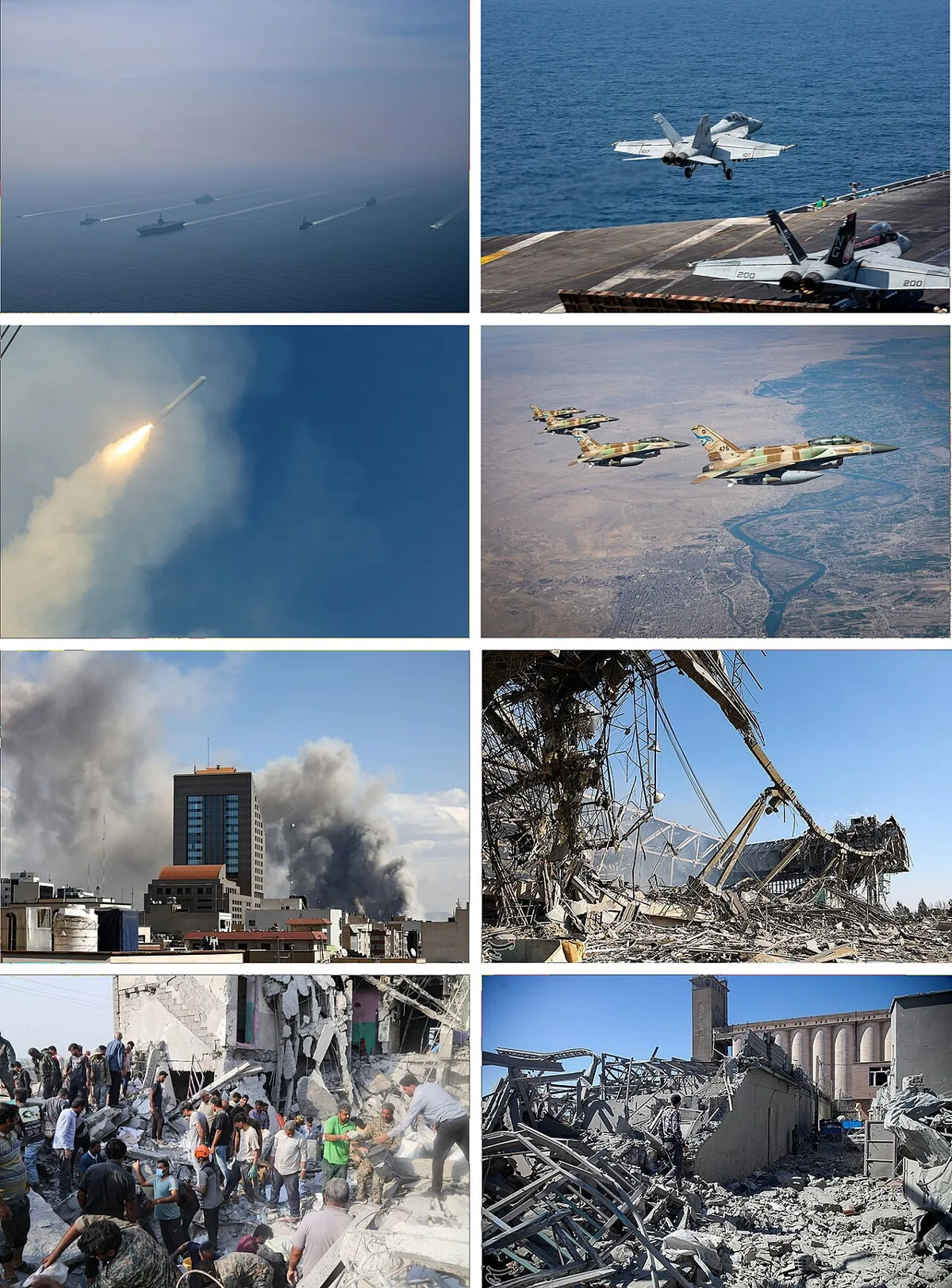
Barack Obama sat down with the Today show to open his presidential center and ended up delivering the most devastating four-sentence summary of the Iran war anyone has offered so far. Billions spent, thousands dead, a ceasefire that doesn't even address Iran's nuclear program, and America arguably in a worse position than February. Other than that, great war.
What Obama Actually Said, Because It's That Damning
Speaking with Today co-host Craig Melvin ahead of the public opening of his presidential center, Obama didn't mince anything. "We've now fought a war, spent billions and billions of dollars, put enormous strain on our military. A lot of people have died. And it feels like we're back where we were before we started the war, except maybe a little bit worse off," he said, according to NBC News.
He said he's glad to see a ceasefire and hopes it holds. Then came the knife. Under the nuclear deal his administration negotiated in 2015, Obama pointed out, Iran had formally agreed not to develop nuclear weapons. Trump pulled out of that deal in 2018, during his first term. Iran spent the next several years spinning centrifuges. Now, after a war that killed thousands of people, the memorandum of understanding signed at Versailles still doesn't fully address what Iran does with its nuclear program.
So to recap the last eight years: working multilateral agreement dismantled, Iran goes nuclear-adjacent, war starts in February, thousands die, ceasefire signed in a palace in France, nuclear question still open. Progress.
The Body Count the Ceasefire Can't Erase
BBC Verify has been tracking the casualties since the war began on February 28, and the numbers are brutal. More than 7,300 people have been confirmed killed in Iran and Lebanon alone, based on official figures from both countries. Those numbers include hundreds of children and dozens of healthcare workers. Analysts told BBC Verify the real total is almost certainly higher, because internet blackouts, government restrictions, and access problems have made comprehensive reporting nearly impossible.
In Iran specifically, official government figures put the death toll at at least 3,468 as of mid-April, including 1,460 civilians and 2,008 military personnel. The US-based Human Rights Activists News Agency counted higher, at 3,636, and described their documented figures as "absolute minimums." Among those confirmed dead: 307 children. Their deputy director Skylar Thompson told BBC Verify that authorities have routinely withheld information and that families face pressure not to speak publicly.
The opening day of the war produced one of its most contested incidents. Multiple investigations found that a US missile strike on day one hit a school in the Iranian town of Minab. Iranian officials say 168 people were killed, 110 of them children. The US military says it is investigating. Days later, a missile hit a sports hall in Lamerd during a girls' volleyball match, killing 20 people. The US denied responsibility, but experts told BBC Verify that a US-made Precision Strike Missile was likely used in the attack.
In Lebanon, the numbers are no less grim. Lebanese health authorities report 3,912 killed in Israeli strikes since the fighting restarted on March 2, including 247 children. On April 8, a wave of Israeli strikes killed at least 361 people in ten minutes, according to Lebanese authorities. Israel said it targeted 250 Hezbollah operatives that day. Lebanon's health ministry said the vast majority of the dead were civilians.
Trump's Versailles Dinner and the 60-Day Clock
Trump signed the memorandum of understanding Wednesday night at the Palace of Versailles, because of course he did. NBC News reports the MOU sets a 60-day deadline for negotiators to reach a more permanent deal to end the conflict. What it does not do is fully resolve what happens to Iran's nuclear program, which was, again, the entire stated rationale for the war in the first place.
At the G7 summit in Paris, Trump also turned on Israel's military conduct with unusual sharpness, saying "too many people have been killed" by Israeli strikes. "You don't have to knock down an apartment house every time you're looking for somebody, because there are a lot of people in those apartment houses, and they're not all Hezbollah," he said, according to BBC News. This from the president who greenlit the campaign. The self-awareness is not load-bearing.
Israel's Toll and the Hezbollah Front
Israeli authorities reported 60 people killed on their side as of June 18, most from Iranian attacks and combat with Hezbollah, including 29 civilians and 31 IDF soldiers. The conflict with Hezbollah restarted March 2, when the group launched rockets into Israel following the killing of Iran's supreme leader. Israel responded with airstrikes and a ground invasion of southern Lebanon.
Israel has accused Iran of using cluster munitions against civilian population centers, and Human Rights Watch backed that up in March, accusing Tehran of war crimes. HRW researcher Patrick Thompson told BBC Verify that cluster munitions are "unlawfully indiscriminate in violation of the laws of war." Meanwhile, seven United Nations peacekeepers have been killed in Lebanon, the most recent on June 4. Seven. UN peacekeepers. Dead.
Israeli Prime Minister Benjamin Netanyahu claimed last month that 3,000 Hezbollah fighters had been killed since the war began. Hezbollah has not released its own figures. That gap between claimed enemy combatant deaths and documented civilian casualties is where wars go to be remembered badly by history.
Obama's Center Opens Into a Country He Barely Recognizes
The timing of the presidential center opening is almost too on the nose. Here is a former president, standing at the public unveiling of his legacy, being asked to react to the wreckage of a war that traces a direct line back to his successor dismantling his signature foreign policy achievement.
Obama told Melvin the center is meant to remind people of "what's inside all of us" rather than nostalgia for the past. He acknowledged that people feel like democracy, civic habits, and shared values "have started to crumble." He said people have the capacity for civic responsibility and that elected officials must be held accountable. It was a careful, controlled statement from a man who clearly had more to say and chose not to say it.
You can agree or disagree with how Obama handled Iran during his tenure. You can debate whether the 2015 nuclear deal was the right framework. But you cannot look at the last four months and argue the alternative produced a better outcome.
The Dingo Take
Here's the thing about what Obama said on Friday: it wasn't a political attack. It was an accounting. A war was fought. Billions were spent. Over 7,300 people are confirmed dead and experts say the real number is higher. The ceasefire is real and the relief is real, but the document signed at Versailles punts the nuclear question into a 60-day negotiating window that will be handled by the same administration that created this situation. The problem that started the war is still unsolved. Obama said it feels like America is worse off than before. He's being diplomatic.
The school in Minab where 110 children died on day one of the war is not a talking point. The girls' volleyball match in Lamerd is not a talking point. The 361 people killed in Lebanon in ten minutes on April 8 are not a talking point. These are the actual costs of a war that Trump launched in February, signed away in a French palace in June, and will now spend the rest of his term describing as a historic victory. Watch for the parade.
What makes Obama's comments land so hard is the simplicity of the math. The 2015 deal kept Iran from building a bomb. Trump killed the deal. Iran built more nuclear capacity. War happened. Thousands died. Deal still not done. If you can look at that sequence and conclude the right call was to blow up the original agreement, you are either lying or you have achieved a level of motivated reasoning that deserves its own clinical name.




Comments