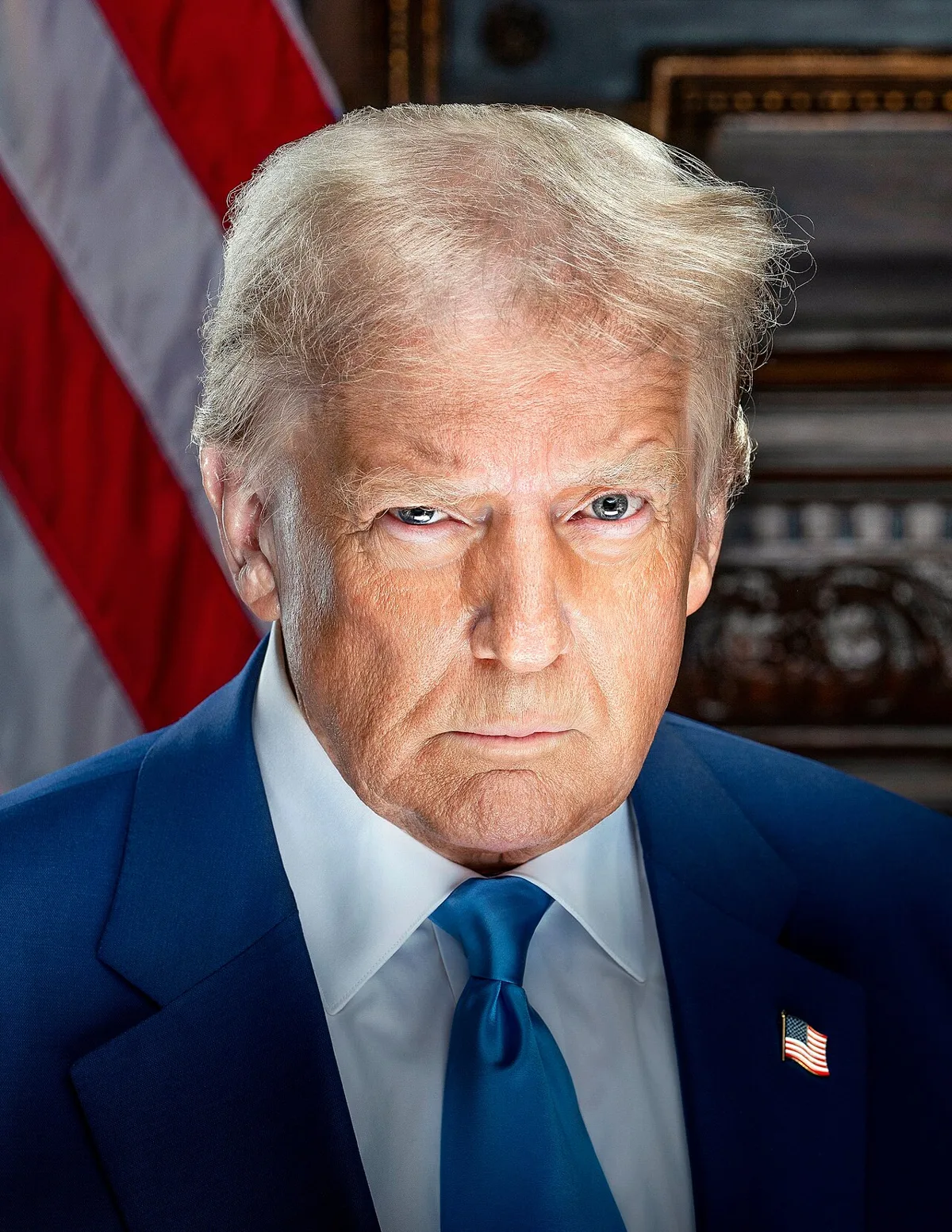
Donald Trump sat down with Axios and announced, with apparent sincerity, that he has discovered 'no limits' to his presidential power since going to war with Iran. A forthcoming book adds a layer to this that should make every sentient American put down their coffee: Trump has been privately entertaining the idea that he might be the most powerful man in the entire history of human civilization. Not the most powerful president. The most powerful person. Ever.
What He Actually Said Out Loud
According to Axios, Trump made the 'no limits' declaration during a 45-minute interview with reporter Marc Caputo for The Axios Show, airing Thursday. He didn't mumble it or walk it back. He said it. On camera. As the president of a constitutional republic that was, at least theoretically, designed around the explicit rejection of unlimited executive power.
The forthcoming book Axios references goes further, reporting that Trump has been measuring his power in what the outlet calls 'world-historical terms,' placing himself in the lineage of conquerors, dictators, and strongmen who bent entire nations to their will. He's apparently been doing comparative analysis. Himself versus the great authoritarians of human history. A normal hobby.
The Company He's Keeping in His Own Head
Here's the thing about benchmarking yourself against history's strongmen: the list of people who successfully 'bent nations to their will' is not a list of the good guys. It is a list that includes, to put it plainly, some of the worst human beings who ever drew breath. The Axios reporting makes explicit that Trump is placing himself in that lineage, not distancing himself from it.
This is not a gaffe. It's not a misquote. It's a sitting American president describing his own power in terms that his predecessors would have considered disqualifying, and that historians will spend decades trying to explain to future generations who will ask, repeatedly, how this happened.
The Iran war is the accelerant here. Axios frames the military action against Iran as the event that convinced Trump he'd crossed some threshold into a new category of power. The war gave him a feeling. And apparently the feeling was: no limits.
Why the 'No Limits' Framing Is the Real Story
Every president pushes at the edges of executive authority. That's practically a job requirement. What's different here is the framing. Trump isn't arguing that the law permits him to do something specific. He's asserting that limits, as a concept, no longer apply to him.
That is a meaningful distinction. Legal scholars and presidential historians will tell you there's a vast difference between 'I believe the Constitution gives me broad authority here' and 'I have found no limits.' One is a legal argument you can argue about in court. The other is a declaration that courts are optional.
Axios reports Trump was 'repeatedly measuring power' during that 45-minute interview in ways that go well beyond the normal chest-thumping of an American commander-in-chief talking tough about foreign policy. This was apparently reflective. Considered. He's thought about where he ranks.
The Book, the Interview, the Paper Trail
The Axios reporting draws from two distinct sources: the on-the-record television interview and a forthcoming book that has apparently been tracking Trump's private thinking on his own historical significance. The combination is notable because it rules out the usual escape hatch of 'he was just performing for the cameras.'
What you get, when you put those two things together, is a portrait of a president who says one version of this publicly and believes an even more expansive version privately. The public version is 'no limits.' The private version is apparently 'possibly the most powerful human being who has ever existed.' Whatever is lurking beneath that, we probably don't want to know.
The Dingo Take
Let's be precise about what Axios has reported here, because the precision matters. The president of the United States, in a recorded interview, said he has found no limits to his power. A book about this president reports he believes he may be the most powerful individual in the history of humanity. He is benchmarking himself against history's dictators and, apparently, not finding himself lacking.
The people who spent the last decade telling you that words like 'authoritarian' and 'dictator' were hysterical overreactions are now watching the man himself adopt that framing voluntarily. He's not offended by the comparison. He's making it. There's a version of political commentary where you bend over backwards to find the charitable interpretation of a statement like this. We're not doing that today.
What you do with a president who has declared himself beyond limits, who measures his place in history against Mao and Stalin and Hitler and finds the comparison flattering, is genuinely one of the most important political questions in American history. The institutions designed to answer that question have spent the last year and a half finding reasons not to. At some point, 'no limits' stops being a boast and starts being an accurate description of the situation. We are very close to that point, if we haven't already passed it.



Comments