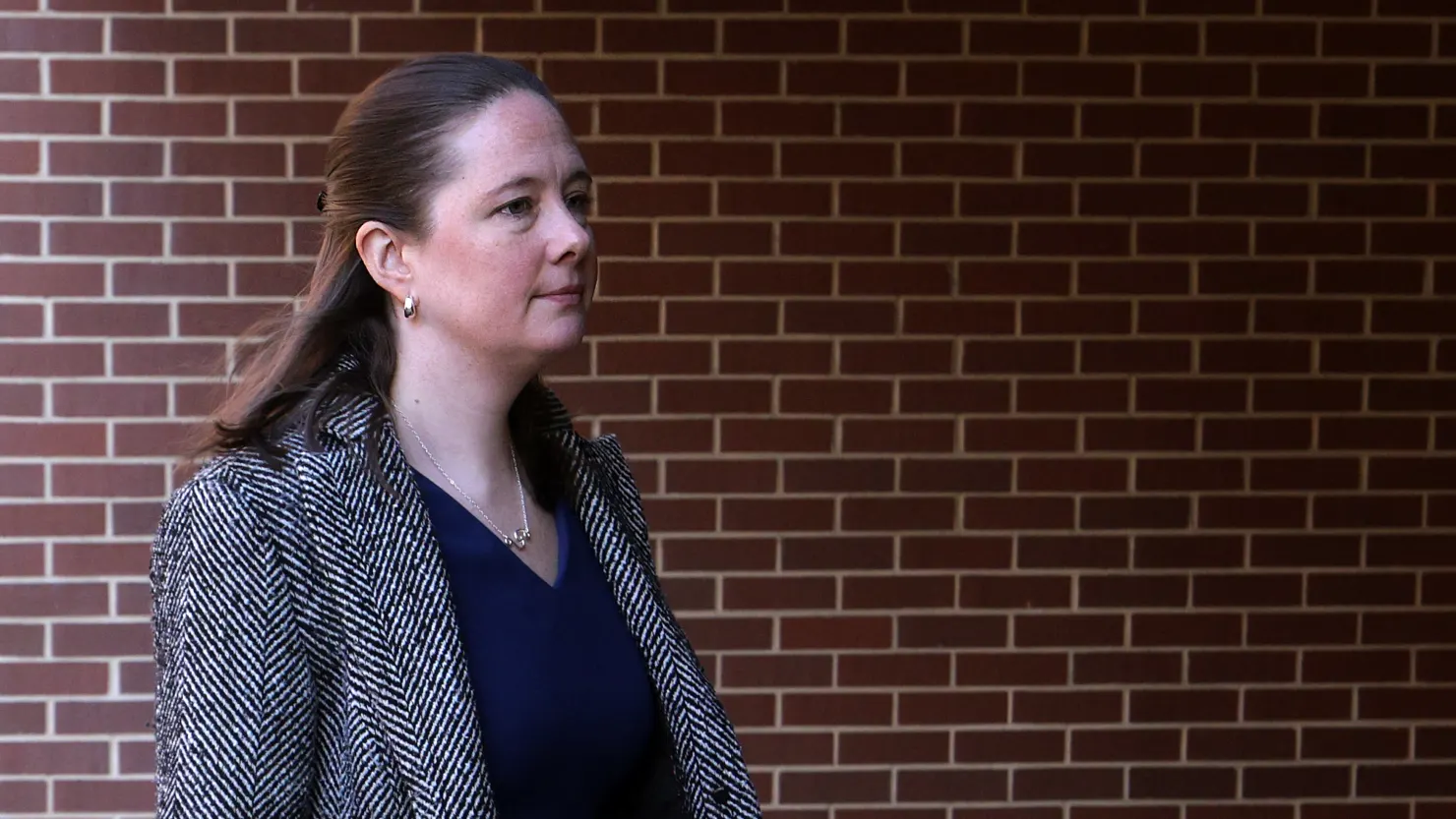
A federal judge looked at the Justice Department's legal defense for firing prosecutor Maurene Comey and called one of its core arguments something that "borders on frivolous." That is judge-speak for "did you people even try?" And the DOJ's own lawyers had already admitted the firing wasn't for cause and had nothing to do with her performance.
Judge Furman Does Not Hold Back
Judge Jesse Furman of the Southern District of New York ruled Monday that the DOJ's July 2025 termination of Maurene Comey was unlawful, as first reported by CNBC. He ordered her retroactively reinstated with back pay from her firing on July 16, 2025, through Dec. 20, 2025, the date he inferred she accepted another job.
The DOJ had argued that the attorney general could fire a federal prosecutor "at will" and without cause. Furman rejected that. He also rejected the idea that current Attorney General Todd Blanche could fix the problem after the fact by ratifying the firing in May as acting attorney general. You cannot, it turns out, backdate your way out of breaking the law.
Then came the line that made the whole thing worth reading. Of the DOJ's second statutory argument, Furman wrote that the court "need not dwell long" on it, "because the argument borders on frivolous." Federal judges do not usually talk like that unless they are genuinely offended by what landed on their desk.
The DOJ Admitted the Whole Thing
Here's the part that should make you put your coffee down. The DOJ conceded that Comey's termination "was not 'for cause' and was not based on her performance." That is not a judge's inference. That is the government's own admission in court.
So what was the firing based on? The government didn't say. Comey's lawsuit noted the DOJ never gave "any explanation whatsoever" for terminating her, and argued that "in truth, there is no legitimate explanation." The suit alleged she was fired because her father is former FBI Director James Comey, or because of her perceived politics, or both.
Furman acknowledged that claim but decided the case on other grounds. He didn't need to settle the motive question because the government had already handed him a firing with no cause, no process, and no paperwork.
Excellent Reviews, Zero Notice
Furman laid out how Comey's colleagues described her work. Supervisors and peers called her a "brilliant lawyer and a gifted supervisor," "the lawyer the office turns to when legal excellence is a must," and "an outstanding AUSA in every respect" with judgment and courtroom advocacy "among the finest in the country."
This is the prosecutor who worked on the cases against Jeffrey Epstein, Ghislaine Maxwell, and Sean "Diddy" Combs. The people who sign off on who gets to handle prosecutions like that do not hand them to mediocre lawyers.
The Civil Service Reform Act also required advance written notice, a reasonable time to respond orally and in writing, representation, and a written decision with specific reasons. Furman noted the defendants "concede, as they must, that Comey was not afforded these procedural protections." None of it happened. She was just gone.
Two Centuries of Precedent, Casually Tossed
The DOJ also argued that Article II of the Constitution gave the attorney general the power to fire Comey regardless of what Congress wrote into civil service law. Furman said the department all but admitted this argument sought "to overturn nearly two centuries of Supreme Court precedent."
His response was the judicial equivalent of a raised eyebrow. A district court, he wrote, "is bound to follow the Supreme Court's precedents unless and until the Supreme Court overturns them." In other words, nice try, take it up with the people who can actually do that.
Comey's lawyers put it more grandly in their statement, quoting the ruling that accepting the government's position "would be to unsettle the very equilibrium established by this Nation's constitutional system." They called the decision a reaffirmation that "the President is not above the law."
The Appeal Is Coming, Naturally
The DOJ said it "disagrees with this decision and will appeal in due course." The appeal waits until Furman issues a final judgment. The White House pointed CNBC to a post from the DOJ's Rapid Response account on X, which complained the ruling obstructs President Trump's constitutional authority.
Furman reserved judgment on Comey's First Amendment claim and gave her until Nov. 9 to explain why it shouldn't be dismissed as moot, now that she won on other grounds. So the retaliation question may never get a formal answer in this case.
Meanwhile, her father is under federal indictment accusing him of threatening Trump's life by posting an Instagram photo of seashells arranged to read "86 47." His lawyers are trying to get the case tossed. A previous indictment against him was already dismissed. Draw your own conclusions about the family pattern here. The reporting doesn't draw them for you, but you have eyes.
The Dingo Take
Picture a landlord evicting a tenant with no notice, no reason, and no paperwork, then telling the judge the lease doesn't apply because he owns the building. When the judge points to the law, the landlord says he'd like to argue the law shouldn't exist. When the judge says that's above his pay grade, the landlord files an appeal. That is the DOJ's performance in this case, except the tenant was one of the best prosecutors in the country and the building is the United States Constitution.
The government admitted it didn't fire her for cause. It admitted it skipped every procedural protection Congress guaranteed. Its lawyers then asked a federal judge to help rewrite two centuries of precedent so a career prosecutor could be fired for reasons nobody will say out loud. When a judge says your argument borders on frivolous, he is being polite. The unpolite version is that you got caught.
Here's what matters beyond one woman's job. A Justice Department that can purge excellent prosecutors without cause, notice, or explanation is a Justice Department where every line attorney learns what happens when the wrong last name shows up on a birth certificate. The chilling effect is the point. Maurene Comey won. But the next prosecutor deciding whether to take a politically radioactive case just watched what the cost of that decision could look like, and not everyone has the resources or the stomach to sue.


Comments