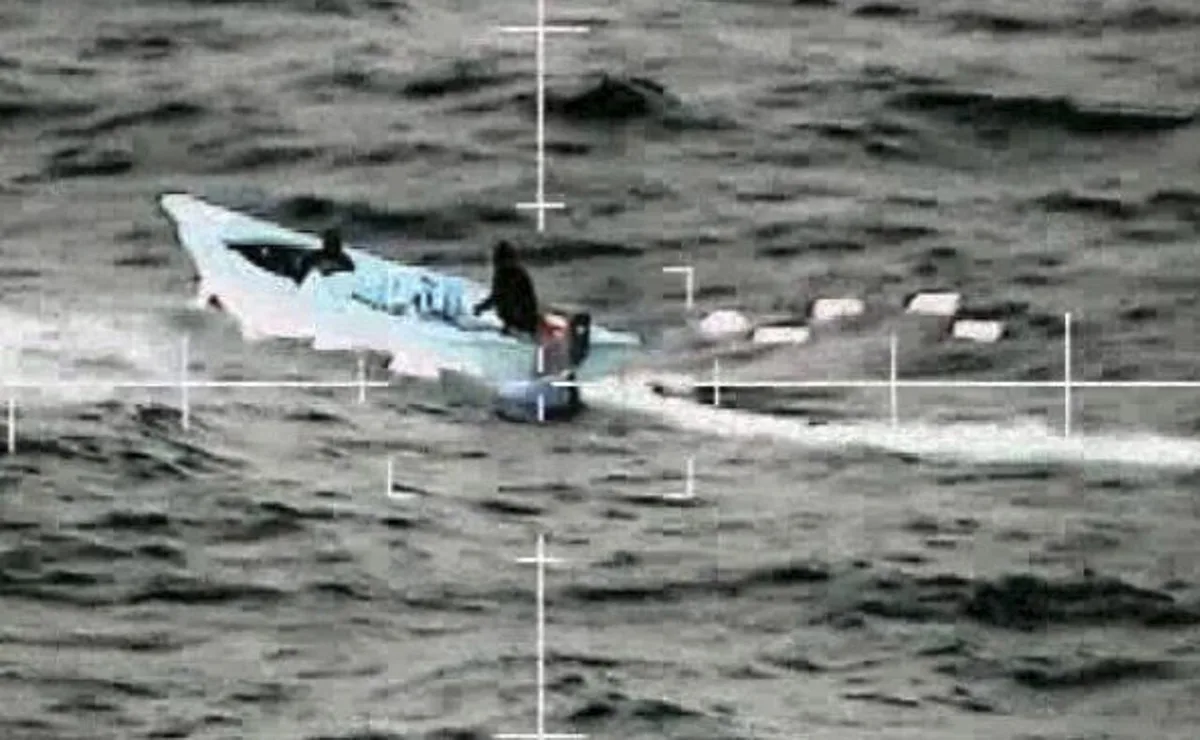
The US military blew up another boat in the eastern Pacific Ocean on Thursday, killing three more people it described as "narco-terrorists," which is a word the government is using to mean "people we killed without showing anyone any evidence." According to the Associated Press, this brings the total number of people killed in American military boat strikes since September to at least 211. Two hundred and eleven people, and the Pentagon still hasn't proven a single one of them was carrying drugs.
What Actually Happened (As Far As Anyone Can Tell)
US Southern Command announced Thursday that Joint Task Force Southern Spear carried out a "lethal kinetic strike" on a vessel in the eastern Pacific on June 18, killing three men it called narco-terrorists. The military said the boat was traveling along "known narco-trafficking routes," which is the same phrasing SOUTHCOM uses in nearly every one of these statements. It is doing a lot of heavy lifting as a justification for killing human beings.
SOUTHCOM released a video on X showing a boat speeding through open water before being hit and erupting in flames. Debris floating afterward. No names of the dead. No drugs recovered on camera. No independent verification of any kind. The statement did not say whether anyone survived the strike.
The military also confirmed a separate strike earlier this week that killed one person and left two others alive in the water. That's a detail worth sitting with. Two survivors, clinging to wreckage. Which brings us to a much uglier chapter of this story.
The Second Strike That Legal Scholars Say Was a War Crime
Back in early September, when the Trump administration first started running this program, one strike killed nine people on a boat. Two men survived and were holding onto the wreckage. The US military then struck the boat a second time, killing them.
The White House confirmed this. Their explanation was that the follow-up strike was done "in self-defense" to ensure the vessel was destroyed, and that it complied with the laws of armed conflict. As NPR reports, multiple legal scholars flatly rejected that framing, saying a strike killing survivors clinging to wreckage would have been illegal under any circumstance, armed conflict or not.
That first strike drew serious alarm from lawmakers who study military law. It is the kind of thing that, in another political era, would have triggered congressional hearings inside of 48 hours. Instead it became the opening act of a campaign that has now killed over 200 people.
The Evidence Problem, Which Is Actually the Whole Problem
Here is the core issue. The Trump administration has justified these strikes under the argument that the United States is in "armed conflict" with cartels in Latin America. Trump said so himself. The legal and military consequences of that framing are enormous, and the administration has leaned on it to authorize killing people outside any traditional battlefield without any of the usual oversight mechanisms.
But as NPR and the Associated Press both report, the military has not provided evidence that the vessels it has struck were actually carrying drugs. Not once, consistently. SOUTHCOM says the boats were on known trafficking routes. That's it. That's the proof. You were in the wrong part of the ocean.
Senators demanded this week that the Pentagon release "unedited video" of the strikes. The fact that senators have to demand this tells you everything about how much transparency the administration has offered voluntarily, which is essentially none.
Does Any of This Even Stop Drug Overdoses?
Even setting aside the legal and moral questions for a moment, critics have raised a blunt operational one: is this working? The answer, at minimum, is deeply unclear.
As NPR reports, fentanyl, the drug behind the majority of American overdose deaths, is mostly trafficked into the United States over land from Mexico, where it is produced using chemicals imported from China and India. The boats being blown up in the eastern Pacific are part of a supply chain, sure. But they are not the linchpin of the fentanyl crisis. Destroying them does not obviously reduce the number of Americans dying of overdoses in any demonstrable way that anyone has demonstrated.
Trump announced last week, per the New York Post, that SOUTHCOM had killed Hector Rusthenford Guerrero Flores, also known as Nino Guerrero, the alleged leader of Tren de Aragua. The State Department had offered up to five million dollars for information leading to his arrest. His death got a presidential announcement. The three people killed Thursday got a SOUTHCOM press release and a video clip.
The Pentagon Watchdog Is Looking Into It (Sort Of)
In May, the Pentagon's inspector general announced it would examine whether the military followed established targeting procedures during these strikes. Sounds promising. Here is the catch: the review is focused specifically on the six-phase Joint Targeting Cycle, which is a procedural framework. It is not an investigation into whether the strikes were legal. The IG's office said so explicitly.
So the internal watchdog is checking whether the military filled out the right forms, not whether blowing up boats and killing 211 unidentified people in international waters is lawful under domestic or international law. That distinction matters enormously and the administration is clearly comfortable with it.
The Dingo Take
Two hundred and eleven people are dead. The US government has not publicly identified most of them, has not shown the public evidence that their boats contained drugs, and has explicitly designed the only internal review to avoid the question of legality. A follow-up strike killed men who had survived the initial attack and were holding onto wreckage, and the White House called it self-defense. If another country's military was doing this, the State Department would be drafting a condemnation before the smoke cleared.
The Trump administration has found a formula that works politically, which is to call anyone they kill a narco-terrorist and post a video of fire on X. It's viscerally satisfying if you don't ask follow-up questions. The follow-up questions are: who were these people, what evidence do you have, why aren't you showing it to anyone, and how many dead people is an acceptable price for a drug interdiction strategy that experts say doesn't address the actual source of fentanyl deaths? Nobody in this administration has answered any of those.
Two hundred and eleven. That number will be higher by the time you finish reading this. Congress is asking for unedited video and getting stonewalled. Legal scholars are calling parts of this program potentially criminal. The Pentagon watchdog is reviewing the paperwork. And three more people are at the bottom of the Pacific Ocean with no names attached, described in a press release as a threat that has been neutralized.




Comments