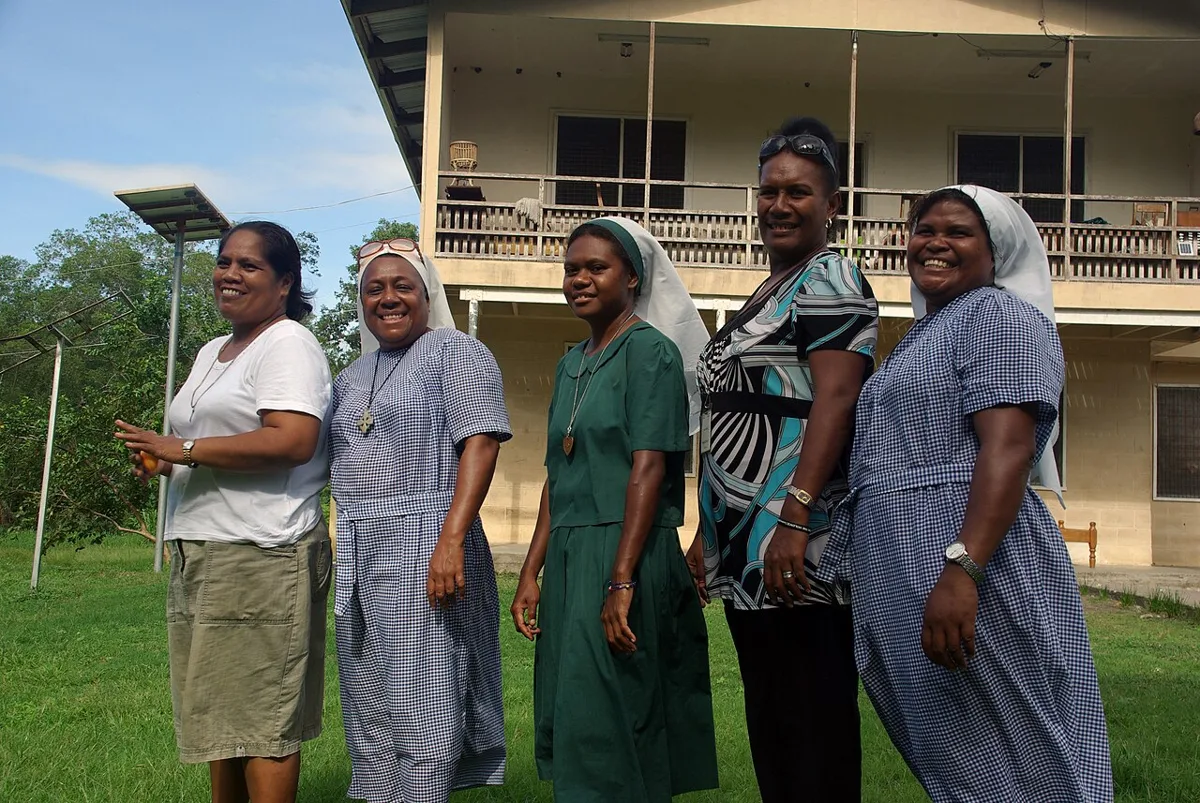
They were doctors, nurses, teachers, and social workers. They gave their entire lives to communities that needed them. Now they are old and dying in convents that cannot afford to buy them wheelchairs that actually work, and the Church has no real plan to fix that. A small pilot program launched in September 2025 is trying to do what decades of institutional neglect did not.
Seven Broken Wheelchairs for Ten Women Who Can't Walk
NPR's Sophie Neiman spent time at the Little Sisters of St. Francis convent in Nkokonjeru, Uganda, and the details she found are quietly devastating. Fourteen retired nuns live there. About ten of them have mobility issues. The convent owns seven wheelchairs. Those wheelchairs have sticky wheels and faulty hand brakes.
After morning mass, some of the sisters get wheeled out into the sun. Others just go back to their rooms because there's nothing else to do and no way to get there anyway. Father Joseph Balikuddembe, a young priest who gives the sisters communion, told NPR he worries their brains aren't being kept active enough. Then he went down the hall to give communion to the nuns too weak to get out of bed at all.
This is the daily reality for women who spent their working lives running hospitals and schools across a continent. The convent in Nkokonjeru is where members of the Little Sisters of St. Francis order begin their training, take their vows, and are eventually buried. Sister Jane Frances Nakafeero, the order's superior general, walked NPR through the cemetery row by row. Nurse. Teacher. Social worker. Doctor. The motherhouse, she said, is where they begin and where they end. Right now, the part in between is badly broken.
The Church Has 82,000 Nuns in Africa and Almost No Plan for When They Get Old
According to Vatican figures cited by NPR, there are roughly 82,000 nuns across Africa. The African Palliative Care Association estimates that between 8,000 and 10,000 of them could currently be in need of end-of-life care. That is not a rounding error. That is a system-wide failure dressed up as an oversight.
Palliative care as a formal medical discipline only emerged in the 1960s, and Nakafeero told NPR that funding and awareness for it remain scarce, especially within the Church. African religious orders are already underfunded compared to their American and European counterparts, which makes the gap worse. Young nuns at the convent take on the caregiving work themselves, helping retired sisters in and out of bed, serving meals, managing needs they were never trained to handle. What those older sisters actually lack, Nakafeero told a 2023 meeting of the African Palliative Care Association, is basic: adult diapers, wheelchairs, hearing aids, warm blankets.
Let that list sit for a second. These are not exotic medical demands. These are the bare minimum of dignified aging. And the institutions these women gave their lives to are not reliably providing them.
Two Women at a Conference Decided to Try to Fix It
At that 2023 African Palliative Care Association meeting, Nakafeero's presentation caught the attention of Jean Callahan, former chair of the Irish Hospice Foundation. Callahan was in Uganda to check on two projects her foundation had funded. She listened to Nakafeero and thought about her own grandmother, Sybil, who had left Ireland for Tanzania in the 1950s to work as a nun.
"These women, who could have been my grandmother's colleagues, are being left at the end of their lives without the basic human supports they should have," Callahan told NPR. So the two of them built something. Together they launched a pilot program through the African Palliative Care Association aimed at providing genuine hospice support to aging nuns: medical care, material supplies, psychological support, activities for the retired sisters, and actual training for the young nuns doing the caregiving with no preparation.
The program started in September 2025. Right now, researchers led by African Palliative Care Association director Eve Namisango are assessing the needs of around 50 retired sisters with the Little Sisters of St. Francis order, covering nuns from Uganda, Kenya, and Tanzania. After that assessment, caregiver training begins, with the goal of rolling out proper palliative care in Ugandan convents by 2027 and then expanding across the continent. "They have served humanity for all their useful years," Namisango told NPR. "They deserve decent, person-centered care." Hard to argue with that. Embarrassing that anyone has to argue for it at all.
Breakfast, a Sliver of Sun, and Then Back to the Room
NPR's reporting on the daily routine at the Nkokonjeru convent is worth sitting with. Mornings start with prayer in the chapel, many of the sisters in wheelchairs, gray hair showing under their habits, receiving communion from a priest who weaves down the aisle depositing wafers on lips. Then hardboiled eggs, mashed plantain, and bread at scuffed wooden tables. Then, if there is a working wheelchair available and someone to push it, a few minutes in the sun.
Then back inside. Because there is not much else.
These women ran clinics. They taught generations of children. They worked in places that had no other doctors, no other teachers, no other help coming. The person-centered care that Namisango describes is not some luxury ask. It is the absolute floor of what these women are owed. And right now, in 2026, they are not consistently getting it.
The Dingo Take
Here is what makes this story land differently than the usual institutional-neglect piece. It is not a government that failed these women. It is not a corporation that cut costs. It is the Church, the same institution that sent them to the furthest corners of a continent to do the hardest work imaginable, the same institution that will bury them in those neat rows of white crosses with pink and yellow flowers. The organization that collected their entire adult lives did not build a system to take care of them when those lives wound down. That is a specific kind of betrayal, even if nobody meant it that way.
The pilot program Nakafeero and Callahan built is genuinely moving. Two women at a conference, one thinking about her grandmother, deciding to try to fix a structural failure that affects potentially ten thousand people. That is not nothing. But it is also two women doing voluntarily what an institution with global reach and centuries of organizational capacity should have been doing by default. The fact that 2027 is the target for rolling out basic palliative care in Uganda, and continental expansion is some vaguer goal after that, tells you where the urgency level has been set.
Go back to that wheelchair number. Ten nuns with mobility issues. Seven wheelchairs. The brakes don't work. Some of them just go back to their rooms. If you ran a corporation and your retiring employees were left in that situation, you would be facing a lawsuit and a front-page story. These women took vows of poverty and service, which means they signed away the kind of leverage that would have forced better treatment. Someone else needs to provide it. The African Palliative Care Association is trying. The question is whether the institutions that benefited most from these women's labor will finally show up before the last of them are gone.



Comments