The United States and Iran have now signed the same peace agreement at least twice, possibly three times, in three different locations, and as of this week the American government cannot agree on whether the Strait of Hormuz is open, when the text of the deal will be released, or whether there will even be a signing ceremony at all. This is the deal Trump called 'complete.' This is the deal he said would be 'actually easier' in the second stage. Everything is fine.
Let's Run the Tape Back on This Disaster
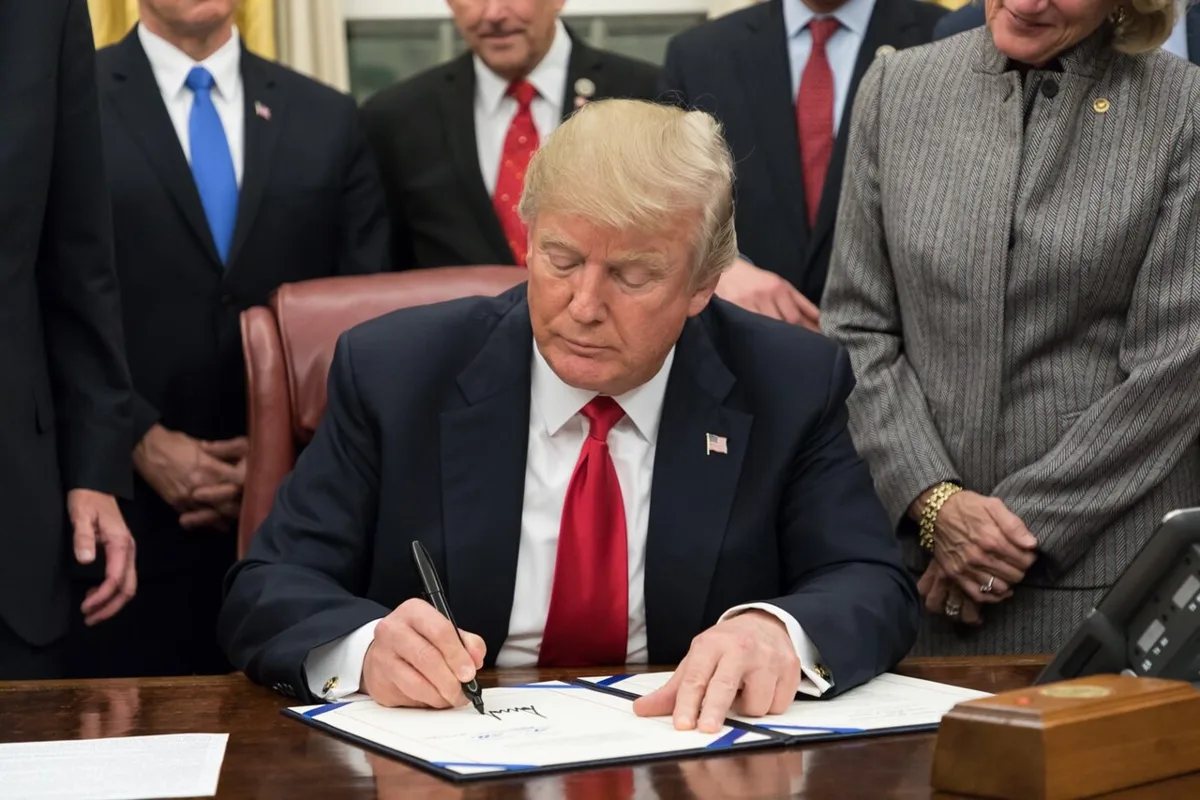
Here is what NBC News has pieced together, and try to stay with it because the timeline reads like someone fed a hostage negotiation into a slot machine. Last Sunday, the White House announced that Vice President JD Vance had signed a memorandum of understanding with Iran. Done. Signed. Deal.
One hour after Trump announced the Strait of Hormuz would be reopened as part of this 'complete' deal, he said it would actually open after a second signing ceremony on Friday. So not complete, then. Just partially complete. Or incompletely complete. The White House would like you to know both things simultaneously.
Then, during a dinner at Versailles with French President Emmanuel Macron watching, Trump and Iranian President Masoud Pezeshkian re-signed the agreement. Which raises the obvious question: if the first signing was real, what did they just do at Versailles? And if the Versailles signing is the real one, what was Vance's signature on Sunday? A rough draft? A vibe?
The Text of the Deal Was Classified Until It Wasn't, Then It Still Kind of Was
On Monday, Trump administration officials offered two separate timelines for releasing the text of the memorandum to the public. Some officials said within 24 to 48 hours. Others said not until Friday. These are not the same answer.
Trump, at the G7 summit in France, floated the idea of just reading the MOU text aloud at a press conference. He did not do that. Instead, American officials read the text to reporters on a call that ran concurrently with Trump's press conference, which is a very normal way to handle a major international agreement and definitely not the behavior of an administration that has no coherent communications strategy whatsoever.
The MOU itself, now that people can read it, states that commercial vessel traffic in the Strait of Hormuz 'will immediately start' upon signing, and that the Treasury Department 'will issue waivers for the export of Iranian crude oil' also 'immediately upon signing.' According to NBC News, it took hours after the Friday signing for the U.S. to confirm the strait was even open, and it remains unclear whether the sanctions waivers have been issued at all. Immediately, in Trump administration terms, apparently means: eventually, maybe, we'll let you know.
Even Trump's Own Republicans Think This Is a Mess
Look, when Lindsey Graham is the voice of cautious optimism in a foreign policy debate, something has gone sideways. Graham posted that he spoke with U.S. envoy Steve Witkoff and concluded that signing the MOU 'will be beneficial to the United States, in as much as the Strait of Hormuz will begin to open.' That is not exactly a ringing endorsement. That is a man grading on a very forgiving curve.
Sen. Bill Cassidy of Louisiana called the MOU 'the worst foreign policy blunder in decades' and wrote that Ronald Reagan is 'rolling over in his grave.' Sen. John Kennedy, also of Louisiana, was asked whether he's confident Iran will actually give up its nuclear ambitions. His response, per NBC News: 'Unless you were homeschooled by a day drinker, no one's confident that Iran's going to do anything.' That is a sitting U.S. senator describing his own president's flagship foreign policy achievement.
These are not members of the progressive caucus. These are reliable Republican votes who have spent years defending this administration against practically everything. When they start reaching for the Reagan comparisons and the day-drinker metaphors, you are not looking at minor internal friction. You are looking at a deal that the president's own coalition does not believe in.
Israel Just Blew Up the Timeline Anyway
Officials from Washington and Tehran were scheduled to meet in Switzerland on Friday to kick off 60 days of negotiations toward a comprehensive long-term agreement. Then Israel launched new strikes in Lebanon, Iran asked for guarantees that Lebanese hostilities would stop as the MOU requires, and Vance abruptly canceled his Switzerland trip.
According to NBC News, American intelligence agencies now assess that Israel will likely keep attacking Hezbollah in Lebanon, which could collapse the tentative U.S.-Iran framework entirely. Israeli Prime Minister Benjamin Netanyahu has already criticized the MOU publicly. His government is not a silent partner in this process. They are an active complication that the Trump administration either did not account for or decided to paper over and hope for the best.
Vance had said Thursday that the 60-day negotiating clock had already started. The clock is running. The talks have not begun. The Swiss meeting did not happen. The math on this is not encouraging.
The Bigger Problem Nobody Wants to Say Out Loud
This conflict started in February when the U.S. and Israel launched attacks on Iran. Since then, NBC News reports, Trump has offered shifting explanations for why the U.S. went to war and different answers about what he actually wants out of a deal. Both sides have continued launching strikes even while claiming a ceasefire brokered in April is still in place. Which is a ceasefire in the same way that a house fire with the garden hose running is a firefighting operation.
American gas prices are elevated. Midterm elections are coming in November. Polling shows Americans are increasingly unhappy with how Trump has handled the war. The MOU, per NBC News, differs from what Trump publicly said he wanted out of an Iran deal in the first place. So this is a war that was justified with shifting rationale, fought under a ceasefire that includes active missile exchanges, and concluded with a deal that does not match the stated goals, signed multiple times in multiple countries, with implementation details still unresolved.
Trump told the emir of Qatar this week: 'We have our deal done with Iran. It goes to a second stage, which I think will be actually easier.' The first stage involved at least two signings, a Versailles dinner, a canceled Switzerland meeting, Israeli airstrikes, and senators comparing it to the worst foreign policy blunder in decades. But sure. The next part will be easier.
The Dingo Take
Here is the core issue beneath all the signing ceremony chaos: the United States went to war with Iran in February, and four months later nobody in the American government can give a straight answer about what the peace agreement says, when it takes effect, who has signed it, how many times, or whether the other parties to it are even honoring its terms. That is not a communications problem. That is a governing problem.
The MOU language is explicit. 'Immediately' means immediately. Sanctions waivers 'immediately upon signing.' Commercial traffic 'immediately.' The document uses the word like it means something. The Trump administration is using it like a suggestion. And now the 60-day clock to negotiate a permanent deal is running while the first-stage commitments are still unresolved and the Swiss talks have already been scrapped before they started.
Sen. Kennedy's day-drinker line will get the laughs, and fair enough, it earned them. But there is something genuinely alarming about a senator from the president's own party essentially admitting, on camera, that he has no faith in the central foreign policy gambit his administration is selling as a historic achievement. The war is ongoing. The deal is shaky. The Strait of Hormuz may or may not be open depending on which hour you asked. And Trump is at Versailles with Emmanuel Macron, signing the same paper for the second time, telling everyone it's done. Some deals close. This one just keeps opening.


Comments