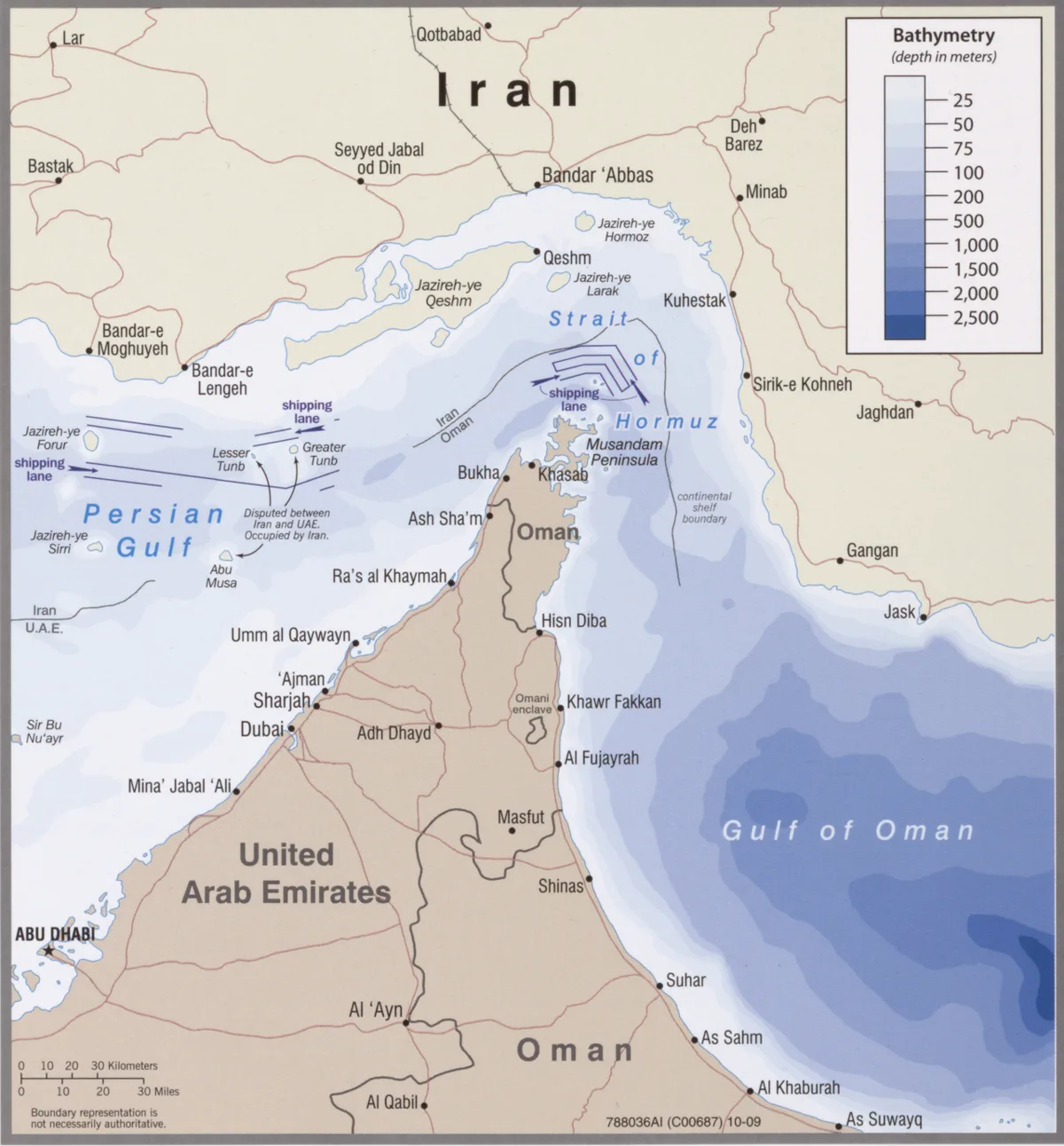
Iran's Revolutionary Guard Corps announced Saturday that it was closing the Strait of Hormuz, the narrow waterway through which roughly a fifth of the world's oil supply flows. JD Vance went on Fox News the same day and said a record 16 million barrels of oil had just moved through it. At least one of these things cannot be true.
The Announcement That Moved Markets and Confused Everyone
Iran's Khatam al-Anbiya Central Headquarters put out the closure warning Saturday, citing breaches of the ceasefire between Israel and Hezbollah in Lebanon as justification. That framing matters: this isn't Iran saying it's closing the strait because of direct military threat to its own territory. It's saying the closure is retaliation for what Israel is doing to a proxy militia across the Gulf.
That's a significant escalation in the logic of how Iran projects its leverage. The Strait of Hormuz has always been Tehran's nuclear option for economic warfare, the thing it waves around when it wants the world to pay attention. The question has always been whether they'd ever actually pull the trigger. On Saturday, they said they did. Vance said they didn't.
What Vance Actually Said on Fox News
Vice President JD Vance appeared on Fox News Saturday and was unambiguous. "We actually got 16 million barrels of oil out of the Strait of Hormuz yesterday, that is a record," he said. "So you're seeing those ships move."
A record. Not just open, but record-setting traffic. That's either the most convenient rebuttal in the history of geopolitics or it's a carefully selected data point from before the closure warning went into effect. The New York Post reports Vance said there was "no evidence" the vital waterway had been shut down. Which, sure, maybe. But Iran's Revolutionary Guard Corps issuing an official closure order is itself a form of evidence, even if tankers are still physically moving.
Israel Hit Lebanon Again Hours After a New Ceasefire Took Effect
Here's the context that's doing a lot of heavy lifting in this story. Lebanese Civil Defense reported that Israeli airstrikes against what Israel described as Hezbollah targets killed at least 16 people in Lebanon on Saturday, just hours after a new truce went into effect. That's the ceasefire breach Iran is citing to justify the Hormuz closure.
So the chain goes: new ceasefire, Israeli strikes, Lebanese casualties, Iranian closure announcement, American vice president on cable news saying everything is fine and actually oil shipments just hit a record. This is the geopolitical equivalent of a kitchen fire while the host is telling guests dinner is going great.
Witkoff and Kushner Are in Switzerland Doing... Something
Vance also confirmed during the Fox News appearance that US envoy Steve Witkoff and Jared Kushner, the president's son-in-law and apparently permanent fixture of American diplomatic efforts regardless of which crises are active, were "on the ground" in Switzerland. The purpose, Vance said, was technical talks as part of next steps in the memorandum of understanding.
The memorandum of understanding in question is presumably related to the broader Iran nuclear framework the administration has been piecing together. The fact that those talks are happening in Switzerland while Iran's military command is announcing closure of the world's most important oil shipping lane is either a sign of extraordinary diplomatic multitasking or a sign that the left hand and right hand in this situation have never been formally introduced.
Why This Strait Is Actually That Important
For anyone who needs the quick geography lesson: the Strait of Hormuz is roughly 21 miles wide at its narrowest point and sits between Iran and Oman. About 20 percent of global oil supply and nearly a third of the world's liquefied natural gas passes through it. Saudi Arabia, Iraq, Kuwait, the UAE, and Iran itself all depend on it for exports.
Closing it, or even credibly threatening to close it, is enough to spike oil markets instantly. Iran has threatened this move repeatedly over the decades, particularly during periods of US sanctions pressure. They have never fully followed through. The question every energy market analyst is now asking is whether this time the announcement reflects a real operational decision or whether it's the same geopolitical bluster Iran has run before. Vance's answer, essentially, is that it's bluster. Iran's Revolutionary Guard Corps would like to disagree.
The Dingo Take
Here's the honest read on this situation. Iran announcing Hormuz is closed while Vance announces record oil throughput is not necessarily a contradiction, depending on the timing. Closure warnings don't flip a physical switch. Ships that were already in transit keep moving. The closure announcement may be legally operative in Iran's view while oil continues to flow for another 24 to 72 hours as tankers clear the zone. That's not nothing. That's actually a very tense 72 hours for the global economy.
What's harder to square is the broader diplomatic picture. Kushner and Witkoff are doing technical nuclear talks in Switzerland while the Revolutionary Guard is doing Hormuz closure announcements in the Persian Gulf. The ceasefire in Lebanon lasted, by Lebanese Civil Defense's account, a matter of hours before Israeli airstrikes resumed. The administration's position seems to be that all of this is manageable and moving in the right direction. That position relies heavily on optimism as a load-bearing wall.
We're watching an American vice president use oil throughput statistics as the primary argument that a major military-strategic threat isn't real. That might be correct. It might also be the sort of thing that looks very different in a week. The Strait of Hormuz has been Iran's trump card for fifty years. If they've finally decided to play it, a record oil shipment from the day before is not the argument that will matter.





Comments