A ceasefire in Lebanon materialized and then evaporated in roughly the same news cycle on Saturday, as Israeli strikes killed at least seven people in southern Lebanon, including two children, hours after reports of an agreement first emerged. The persistent fighting is now threatening to blow up the fragile interim deal between the United States and Iran that the Trump administration has been trumpeting as a historic achievement. So: great start.
What 'Ceasefire' Apparently Means Now
According to the Associated Press, Israeli strikes hit the southern Lebanese town of Nabatiyeh and surrounding villages on Saturday, with Lebanon's National News Agency reporting at least seven people still trapped under rubble. Among the dead: a family of four, two parents and their two children, killed in a strike on the village of Barish.
This came after Friday's fighting, which the AP reports killed at least 47 people in Lebanon and four Israeli soldiers. Israeli military spokesman Brig. Gen. Effie Defrin said Israeli forces were operating in a 'forward defense zone' and would continue doing so. Which is one way to describe bombing a country you've supposedly agreed to stop bombing.
Israel's ambassador to Washington, Yechiel Leiter, posted on X Friday that Israel 'remains firmly committed to an immediate ceasefire' if Hezbollah honors the agreement. Meanwhile, Israeli Prime Minister Benjamin Netanyahu separately posted that he had ordered the Israeli army to strike 'powerfully' at 150 Hezbollah targets, killing dozens of militants. Both of those things happened on the same day, from the same government. Make it make sense.
Hezbollah's Position, Which Is Also a Mess
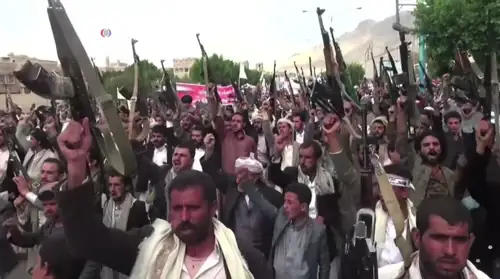
Hezbollah is not exactly covering itself in diplomatic glory here either. In public, the group has said it will abide by a ceasefire if Israel does. In practice, the AP reports that an Israeli military official said Hezbollah fired more than 50 projectiles at Israeli forces in southern Lebanon overnight Friday into Saturday, which is what prompted Israel's renewed strikes.
A Hezbollah official, speaking anonymously because they were not authorized to comment publicly, told the AP that Qatar, the U.S., and Iran were all working to broker a ceasefire but stopped short of confirming any deal was actually in place. So the official position is: there might be a ceasefire, we might be part of it, rockets are still flying, good luck.
Hezbollah has made its conditions clear: Israel must commit to withdrawing from southern Lebanon, which it currently occupies large swaths of, before Hezbollah will halt attacks. Netanyahu has equally clearly vowed to keep Israeli forces there until every threat to Israel is eliminated. These two positions do not overlap.
The Bigger Problem: This War Is Eating the U.S.-Iran Deal Alive
Here is why this matters beyond the immediate, horrible human cost. The AP reports that the broader interim agreement between the United States and Iran, signed digitally earlier this week, is now under serious threat because neither Israel nor Hezbollah signed it, and both are ignoring it.
The deal, which the AP notes has already reopened the Strait of Hormuz after Iran closed it when the war began in late February, was supposed to be the foundation for stopping all military operations in Lebanon and getting Iran-U.S. nuclear talks started in Switzerland. The Hormuz closure alone was a gut-punch to global energy markets. Getting it reopened was genuinely significant. Watching it all fall apart because no one can keep the guns quiet for a single weekend is something else entirely.
U.S.-Iran talks scheduled to begin in Switzerland on Friday did not happen. Iranian officials refused to travel, insisting the Lebanon fighting must stop first. JD Vance also postponed his trip. Iran's Foreign Ministry told ISNA news agency that Pakistan's interior minister would arrive in Tehran as part of ongoing mediation efforts. That is a long way from Geneva.
The Nuclear Talks That Were Already Going to Be Hard
Even if the fighting stopped tomorrow, the Switzerland talks were never going to be easy. The AP reports that Iran maintains its nuclear program is for peaceful purposes, while the International Atomic Energy Agency notes Tehran has a large stockpile of uranium enriched to levels just short of weapons-grade. That stockpile, the IAEA says, is sufficient to build multiple atomic bombs if Iran chose to go that route.
The 2015 nuclear deal that Trump scrapped during his first term took more than 18 months to negotiate. The interim agreement gives the two sides 60 days to produce a nuclear deal, though that can be extended. The incentives on the table are substantial: eventual lifting of all international sanctions, a $300 billion reconstruction fund, and the right to sell Iranian oil freely, which the U.S. has already allowed following the interim signing.
So the carrot is enormous. The stick is a region on fire. And the people who would actually have to stop shooting at each other to make any of this work are not parties to the agreement.
Two Weeks of War, One Very Fragile Week of Diplomacy
To back up slightly: Hezbollah and Israel went to war in early March, just days after the U.S. and Israel launched strikes on Iran on February 28, the AP reports. Hezbollah fired rockets and drones at civilian communities in northern Israel. Israel seized large swaths of southern Lebanon. Tens of thousands of people on both sides of the border have been displaced.
The interim U.S.-Iran deal was signed this week, and by any measure, getting Iran to reopen the Strait of Hormuz and agree to nuclear talks is a diplomatic achievement. The deal was signed digitally, which Iran's Foreign Ministry noted means the Switzerland meeting was not strictly urgent. But the longer Lebanon burns, the harder it gets to sell any of this as progress.
Netanyahu's office did not immediately respond to questions about the ceasefire efforts on Saturday, according to the AP. Which, in the context of all of the above, tells you exactly where Israeli priorities sit right now.
The Dingo Take
There is a version of this story where the U.S.-Iran interim deal is viewed as a genuine foreign policy achievement. Reopening the Strait of Hormuz matters. Getting two adversaries to a framework for nuclear talks matters. The $300 billion reconstruction fund and sanctions relief are real incentives, and real diplomacy produced them. That version of the story deserves to exist.
But that version gets harder to tell every hour that Israeli jets are flying low over Lebanese coastal cities and children are dying under rubble in villages that nobody outside Lebanon has ever heard of. Netanyahu has every political incentive to keep fighting and zero incentive to stop. Hezbollah has made withdrawal its precondition and Israel has made staying its policy. Neither of them signed the deal that is supposed to end this. The U.S. apparently thought that would be fine.
Two children are dead in Barish. A Lebanese soldier was killed by a drone strike on a motorcycle in Kfar Rumman. Mediators are scrambling. JD Vance is not on a plane to Geneva. And somewhere in Washington, someone is drafting a press release about historic diplomatic progress. The gap between those two realities is not a communications problem. It is the whole problem.


Comments