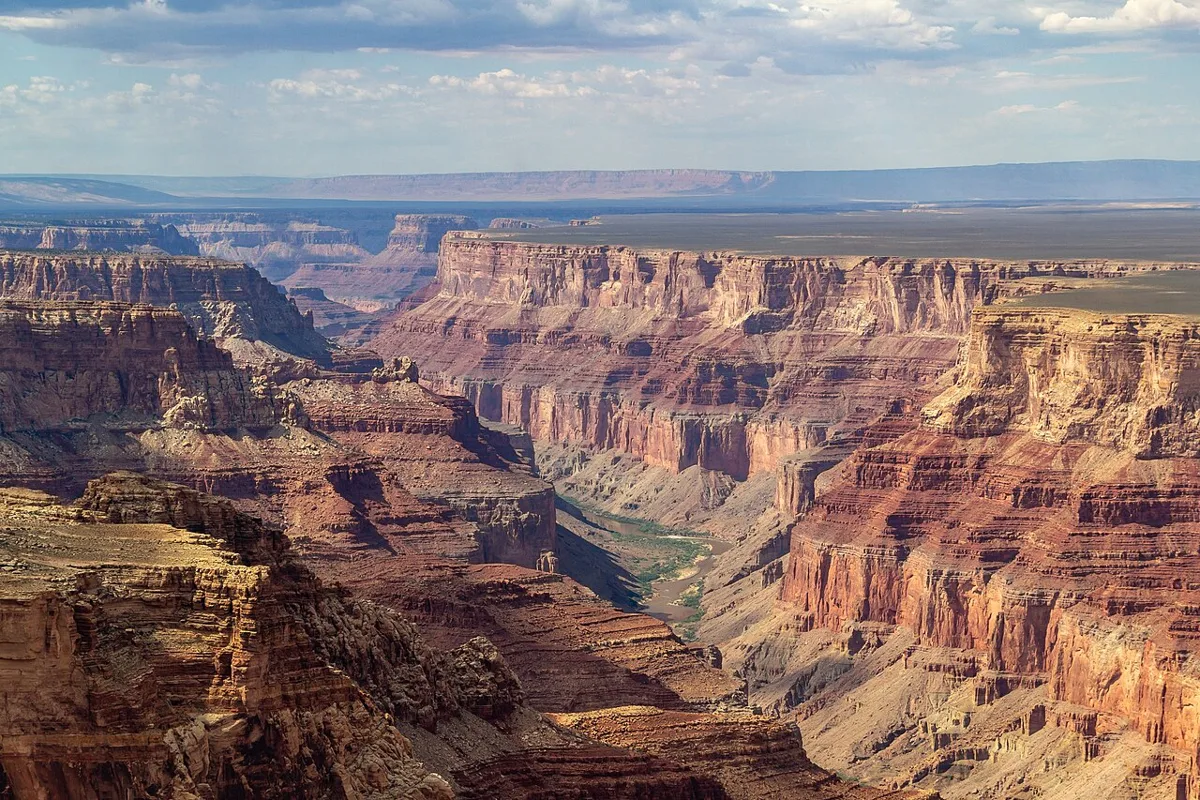
Three people are dead after hiking into one of the hottest places on earth during a week when temperatures in the Grand Canyon's inner canyon exceeded 109 degrees Fahrenheit in the shade. All three died before rescue crews could reach them. The park service wants you to know this did not have to happen.
Who Died and When
According to the National Park Service, a 72-year-old man became ill from the heat on June 12 while hiking the South Kaibab Trail. He was dead before rescue crews arrived.
Four days later, on June 16, a 67-year-old man and a 68-year-old woman suffered what appeared to be heat-related illnesses on the North Kaibab Trail. Both of them also died before help got there. Two separate incidents, six days apart, three people gone.
The New York Post reports that despite rapid response teams and aerial support, first responders reached all three victims too late. The bodies were transported to the Coconino County Medical Examiner's office, and investigations into all three deaths are ongoing.
109 Degrees. In the Shade.
Let's be very clear about what we are talking about here. The inner canyon of the Grand Canyon, the part you hike down into, can exceed 109 degrees Fahrenheit in the shade during midday hours. Not in direct sunlight. In the shade. The rock walls absorb heat all day and radiate it back at you like a brick oven that forgot to turn itself off.
This is not a hidden fact buried in a government document somewhere. The park service warns about this constantly, loudly, and in multiple languages on signs that are physically impossible to miss on your way to the trailhead. And yet, every summer, people hike straight into the furnace anyway.
The Grand Canyon has seen an uptick in heat-related illnesses in recent weeks, according to the National Park Service. The park has officially urged inner canyon hikers to stay off trails between 10 a.m. and 4 p.m. That is a six-hour window in the middle of the day when park officials are essentially saying, please do not be on this trail, it will kill you.
The Cruelest Part of Grand Canyon Heat
Here is the thing that catches people off guard every single year. Hiking down into the Grand Canyon feels wonderful. It is a steep descent into cooler air with spectacular views. Your legs feel fine. The scenery is staggering. You feel great.
The canyon collects you on the way down and then charges you full price on the way back up. You turn around and suddenly you are climbing a steep, exposed trail in triple-digit heat with whatever water you brought, which was probably not enough, at the hottest part of the day. Your body temperature spikes. Muscle cramps set in. Then confusion. Then it is over.
This is not a freak accident scenario. This is a known, documented, predictable pattern that kills people at the Grand Canyon with grim regularity every summer. Heat exhaustion becomes heat stroke shockingly fast, and once you are deep in the canyon, there is no quick way to get help to you.
This Is Not a New Problem
The Grand Canyon kills about a dozen people a year, and heat is consistently among the leading causes. The park service has poured enormous effort into warning systems, ranger patrols, water stations, and public education campaigns specifically designed to stop exactly what happened this week.
None of that is sufficient if people decide the warnings do not apply to them. A 72-year-old hiking the South Kaibab Trail in June at midday is not a tragic mystery. It is the predictable outcome of ignoring some of the most visible safety guidance in the entire American national park system.
That sounds harsh. It is. But three families are getting the worst phone calls of their lives this week, and the honest service we can do them is to say clearly: the park told you not to do this. If you are planning a Grand Canyon hike, write that down somewhere.
The Dingo Take
There is a version of this story where we talk about climate change, about how summers are getting longer and hotter and the Grand Canyon's danger window is expanding year by year. That version is true and worth discussing. But it would also let individual decision-making completely off the hook, and that feels wrong when three people are dead in a single week.
The park service issued specific guidance: no inner canyon hiking between 10 a.m. and 4 p.m. That guidance existed before these three people set out on their hikes. The temperatures were not a surprise. The Grand Canyon does not hide what it is. Every trailhead sign, every park ranger, every visitor center pamphlet is screaming the same thing in your face: this place will kill you if you treat it casually in summer.
If you are planning a trip to the Grand Canyon this summer, hike before sunrise or after sunset. Carry more water than you think you need and then carry more. Know the difference between a hard hike and a death trap, because in June, at midday, in the inner canyon, those two things are the same. The park is spectacular. It will absolutely still be there at 5 a.m.



Comments