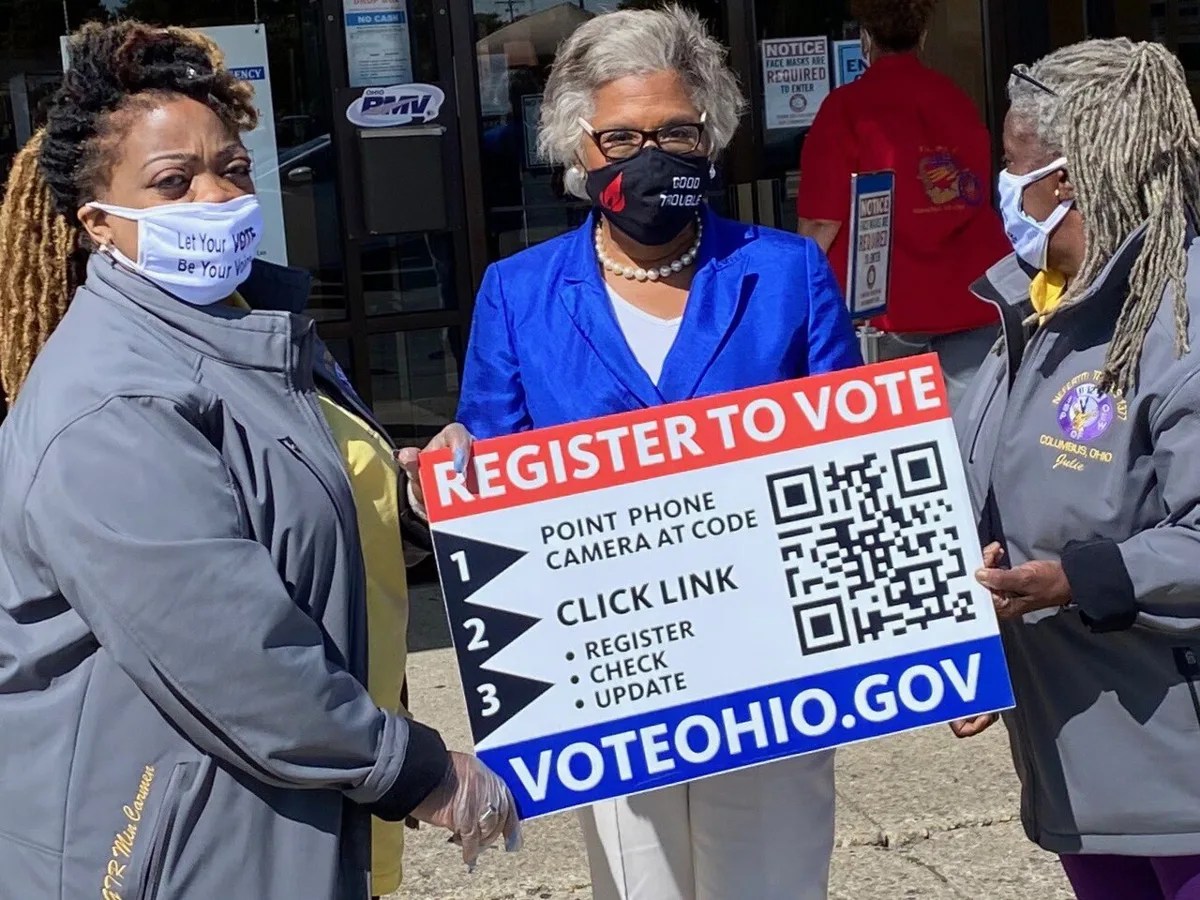
Four million Americans will turn 18 this year. Fewer than a third of them will be registered to vote by November. That's not an accident, a mystery, or a generation of kids who don't care. It's a system that was built badly and then left that way.
The Numbers Are Embarrassing
In a typical midterm year, fewer than 30% of 18-year-olds are registered to vote, according to US census data cited by The Guardian. Compare that to nearly 75% of Americans aged 45 and up. We have somehow built an electoral system where the people most affected by long-term policy decisions are the ones least likely to have a say in them.
This is not a fringe problem. This is millions of people, every single year, aging into eligibility and then quietly falling through the cracks of a registration apparatus that was designed in a different era and has never been updated to reflect how young people actually live their lives.
The conventional read on this is that teenagers are apathetic, glued to their phones, too busy posting to care about polling places. That narrative is wrong, and the data is pretty direct about it. When 18-year-olds are actually registered, they show up. In Pennsylvania, more than 80% of registered 18-year-olds voted in both the 2020 and 2024 general elections, as The Guardian reports. The problem isn't motivation. The problem is access.
The DMV Pipeline Is Broken and Nobody Fixed It
The backbone of voter registration in this country is the DMV. The 1993 Motor Voter law made state DMVs the primary voter registration agencies, and 24 states plus Washington DC have some version of automatic registration baked into the process. Sounds fine, right? Except the system has a massive, obvious flaw that everyone has apparently agreed to ignore.
Teen driving rates have collapsed over the past two decades. Only 44% of 17-year-olds and 60% of 18-year-olds have licenses, according to The Guardian. That's 4.25 million young Americans who simply aren't walking through a DMV door as they come of age. The pipe exists. The water just isn't going through it anymore.
And for the teens who do try to register through other channels, say, online, the wall gets higher. Twenty-nine states require a driver's license or state ID to complete an online registration form. So no license means no easy DMV registration and no easy online registration. The system has two doors and they're both locked for a significant chunk of eligible young voters.
California's 'Automatic' Registration That Isn't Very Automatic
California loves to present itself as the gold standard of progressive governance. Then you look at this: up to 45% of eligible teens opt out of pre-registering through California's DMV automatic registration system, according to state data cited by The Guardian. Nearly half. In the state that lectures the rest of the country about democracy.
This is what happens when you design a technically automatic system with enough friction and confusing opt-out language that it stops being automatic in any meaningful sense. You get to call it automatic, collect the credit, and quietly watch nearly half of your young voters disappear anyway. It's the civic equivalent of a gym membership.
High Schools Are the Obvious Answer That Most States Refuse to Use
Here is the fix that is sitting right in front of everyone. While 40% of Americans don't go to college, nearly everyone goes to high school. It is one of the very few remaining universal institutions in American life. It is, as The Guardian's piece by Civics Center founder Laura W. Brill argues, the logical place to make voter registration a standard part of growing up in this country.
Most states already have laws on the books requiring high schools to help students register. Most states also don't enforce them. Only three states, Tennessee, Louisiana, and Maine, have designated high schools as official voter registration agencies. Three states.
The results in states that have actually tried are not subtle. Oregon sits at 86% youth registration. Michigan is at 77%. The kids in those states didn't suddenly become more politically engaged than kids in Pennsylvania or Ohio, both of which register less than 25% of their eligible young voters. Their states just made it easier. That's the whole story.
Who Benefits From Keeping Young People Off the Rolls
Let's be clear about something the polite commentary on this subject tends to soft-pedal. Registered young voters are a political threat to incumbents and to parties that rely on older, whiter, more conservative electorates. Low youth registration is not a bug that nobody noticed. For a lot of people in power, it is a feature.
That doesn't mean there's some unified conspiracy. It means that the politicians and legislatures with the power to fix this have very little electoral incentive to do so, and in some cases have strong incentive not to. The inertia is convenient. The status quo has winners.
Organizations like the Civics Center and the League of Women Voters are doing the ground-level work in schools to register students, and that matters. But as Brill's piece in The Guardian makes clear, voluntary community organizing can't substitute for structural reform. Laws need to change. Schools need to be designated as registration agencies. Pre-registration programs need to be built so that opting in is the default and opting out requires effort.
The Dingo Take
Four million people turn 18 this year. Most of them will go into November without a vote. And the response from the political class, with a handful of state-level exceptions, has been somewhere between a shrug and active obstruction. If you wanted to design a system that quietly suppressed youth political power while maintaining total plausible deniability, you'd build basically exactly what we have. A DMV pipeline for a generation that doesn't drive, an online system that requires documents millions of young people don't have, and a high school network that has laws on the books and doesn't enforce them.
The comparison to Oregon and Michigan matters more than people give it credit for. Those states proved the problem is solvable. Not with some revolutionary intervention, but with functional systems and basic follow-through. That most states haven't done this is a choice. Call it what it is.
Young voters, when they are registered, show up. They vote. They affect outcomes. Every two years we have this exact conversation, run the same statistics, publish the same op-eds, and then watch the same percentage of 18-year-olds slide past their first election without ever getting a ballot. At some point the question stops being 'why aren't we fixing this' and starts being 'who exactly is making sure we don't.'




Comments