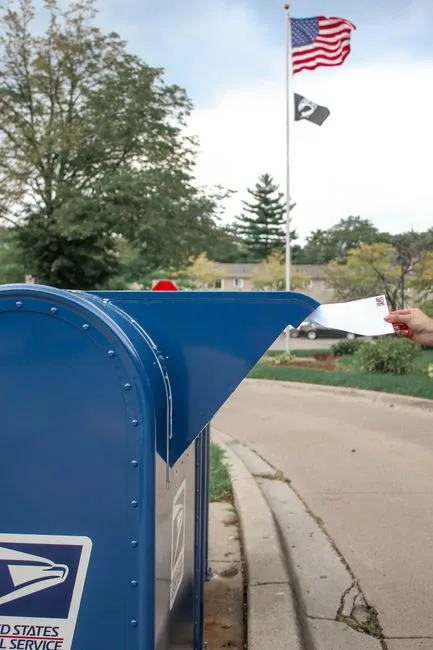
Donald Trump signed an executive order in March giving himself the power to decide who gets a mail ballot in America. Two courts have now told him to go pound sand. So naturally, his Justice Department is running to the Supreme Court asking them to let it happen anyway, with the midterms three months out.
What Trump's Order Actually Does
Here's the thing. This isn't some bureaucratic tweak to election administration. According to The Guardian, Trump's March executive order directs the government to build a federal "state citizenship list" of eligible voters, and then instructs the US Postal Service to deliver mail ballots only to people whose names appear on that list. If you're not on the list, no ballot arrives at your door. Full stop.
The list itself would be assembled by US Citizenship and Immigration Services and the Social Security Administration, two agencies not historically known for running elections, because running elections is not their job. The whole architecture of the order assumes the federal executive branch can dictate voter eligibility criteria, a power that the Constitution explicitly reserves for states and Congress. Trump just decided that was someone else's problem to sort out in court.
Trump sold the order publicly as a safeguard against noncitizen voting. The Guardian notes that noncitizen voting has been shown to be rare and is already a felony that can result in deportation. So the cure being proposed here is a federal takeover of mail ballot delivery to solve a problem that existing law already addresses and that barely exists in practice.
The Courts Have Said No. Twice.
Democratic officials in 23 states and the District of Columbia sued almost immediately, arguing the president simply does not have the constitutional authority to restructure how elections work. US District Court Judge Indira Talwani in Boston agreed in June, blocking the order for the plaintiff states ahead of the November 3 midterm elections. The Guardian reports that Talwani was nominated by Barack Obama, a fact the administration's allies will absolutely use to dismiss her ruling while ignoring that she was, you know, correct on the law.
The administration appealed. This past weekend, a First US Circuit Court of Appeals panel looked at the case and upheld Talwani's block. Two courts. Two rulings. Both saying the same thing: this order cannot stand.
A normal administration might take that as a signal to reconsider. This one filed an emergency appeal to the Supreme Court asking justices to let the order take effect while the litigation continues. Attorneys for the plaintiff states have argued the changes are ripe for abuse and could cause chaos heading into a national election. That's a very diplomatic way of describing what happens when millions of voters go to check their mailboxes and find nothing.
Why the Supreme Court Ask Is the Whole Game
The DOJ isn't asking the Supreme Court to rule on whether the executive order is constitutional. Not yet. They're asking the court to lift the injunction, to let the changes go into effect right now, while the lawsuit slowly grinds through the courts. That's the emergency appeal play. Win the injunction fight, and the order operates through the midterms regardless of how the underlying case eventually resolves.
By the time any final ruling comes down, November 3 will be ancient history. Voters in 23 states who were knocked off a hastily assembled federal citizenship list will have already missed their ballots. Elections will have already happened. The damage is the point.
This is not a conspiracy theory. It is the straightforward logic of how emergency injunction battles work in cases with hard electoral deadlines. The administration knows this. Its lawyers know this. The question now is whether six justices on a court that has already shown a strong appetite for executive power expansions will let it happen.
What Twenty-Three States Fighting Back Actually Looks Like
It is worth pausing on the scale of the opposition here. Twenty-three states and DC didn't just grumble about this order. They organized, filed suit, and have now successfully held two courts long enough to keep the block in place with the election approaching. That's a significant coalition, and it reflects how seriously state election officials across the country are taking this.
The core constitutional argument is not complicated. Article I of the Constitution gives Congress the authority to regulate federal elections. States set their own rules for state races. The president runs the executive branch. The president does not run elections. Trump's order attempts to route around that entire framework by treating mail ballot delivery as a postal service logistics question the executive can simply direct. Attorneys in the case have been clear that the practical consequences of letting this stand would be chaos, and not the accidental kind.
The Guardian reports the Massachusetts block specifically covers the plaintiff states. States that didn't join the lawsuit could theoretically see these rules go into effect if the Supreme Court acts. That's a patchwork of election rules by litigation outcome, which is an absolutely spectacular way to run the world's oldest continuous democracy.
The Dingo Take
Let's be honest about what's happening here. The Trump administration wrote an executive order restructuring how mail ballots get delivered in America, two separate federal courts told them it was unconstitutional, and instead of accepting that the courts exist for a reason, they sprinted to the Supreme Court demanding emergency relief before the midterms. The legal strategy is transparent: delay the final ruling long enough that the order operates through November 3 regardless of how this eventually ends. You don't have to squint very hard to see it.
The noncitizen voting rationale is a ghost argument. It's the stated justification for a sweeping federal power grab over election administration, built on a problem that is already illegal, already rare, and already prosecuted. The order doesn't target a real threat. It targets the mechanism by which millions of American citizens, disproportionately elderly, disabled, and working-class voters who can't easily get to a polling place, cast their ballots. If that sounds like a feature rather than a bug to you, you're probably working in this White House.
The Supreme Court will decide whether to lift the injunction. That court has a six-justice conservative majority that has shown, repeatedly, that it is comfortable with expansive interpretations of executive authority. So buckle up. Because if six justices decide that an emergency exists here, twenty-three states worth of mail ballots could vanish from doorsteps before America votes in November, and the administration will call that election integrity.

Comments