
Vice President JD Vance walked out of nuclear talks in Switzerland on Monday and told reporters that Iran had agreed to let UN nuclear inspectors back into the country, possibly as soon as that very day. Iran's foreign ministry then walked up to a microphone and said, essentially, that none of that is true. This is either a massive diplomatic miscommunication or someone at the table is playing games, and the fate of about 900 pounds of highly enriched uranium is sitting in the middle of it.
What Vance Said vs. What Iran Said
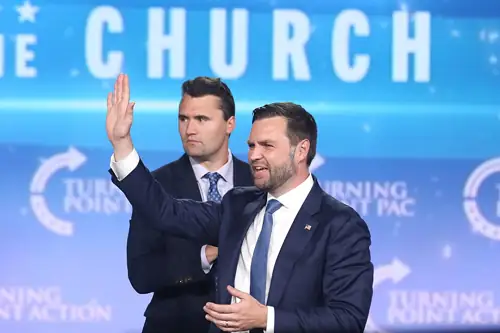
After the first round of US-Iran talks at the Swiss resort of Bürgenstock wrapped up Monday, Vance was in a generous mood. He told reporters that discussions with the International Atomic Energy Agency could begin 'as soon as today,' and that inspectors would be returning 'at a minimum this week.' Donald Trump backed him up with a Truth Social post declaring Iran 'will agree to have Major Weapons Inspections.' Treasury Secretary Scott Bessent went even further, saying Tehran had explicitly committed to IAEA access as part of the deal.
Iran's foreign ministry spokesman Esmail Baqai then held his own press conference Tuesday and dismantled that entire narrative in a few sentences. According to BBC News, Baqai said Tehran had made 'no new commitments' on nuclear inspectors, and that any future engagement with UN inspectors would happen strictly 'under existing procedures set by Parliament and the Supreme National Security Council.' CBS News also reported Baqai saying Iran has 'not had a meeting with the director general of the International Atomic Energy Agency, nor do we have any plans' for inspections of the damaged nuclear sites. The IAEA, wisely, said nothing.
900 Pounds of Highly Enriched Uranium, Buried Under Rubble
Here is why this particular disagreement is not a minor diplomatic spat. The site that everyone actually cares about is Isfahan, which was among the Iranian nuclear facilities struck by US and Israeli forces during last summer's 12-day war. CBS News reports that IAEA officials believe Iran's stockpile of roughly 900 pounds of highly enriched uranium is currently buried under rubble there. That material is enriched to 60% purity. Weapons-grade requires 90%. That gap is not as wide as it sounds.
Iran suspended IAEA access to those bombed sites immediately after the strikes, and the UN's nuclear watchdog pulled its remaining inspectors out of the country entirely the following month, according to BBC News. So right now, nobody with independent authority actually knows what is happening at Isfahan. The rubble is there. The uranium is presumably there. And the inspectors are not.
The Sanctions Waiver That Actually Happened
While the inspection question remains genuinely unresolved, something concrete did happen Monday: the US Treasury issued a 60-day sanctions waiver that BBC News describes as dismantling 'central pillars of Washington's long-running embargo.' The emergency licence, running until August 21, authorizes the production, sale, and delivery of Iranian crude oil and petrochemicals. It unlocks banking transactions, insurance, and transportation. Iranian oil can even be imported directly into the United States under the terms of the relief.
This is a big deal. Iran has spent years running complex shadow networks just to sell its own oil. For the next 60 days, it can sell that oil in US dollars for the first time in decades, according to BBC News. In exchange, Bessent said Tehran committed to keeping the Strait of Hormuz open and allowing IAEA access. Given that Iran is now publicly denying the IAEA commitment, it is a reasonable question to ask what, exactly, the United States got for that waiver.
The Strait Is Technically Open, Sort Of
Meanwhile, the Strait of Hormuz is moving ships again, if not quite at the rate the world economy would prefer. CBS News reports that Monday was the busiest day for transits since the war began, with at least 35 commercial vessels crossing the waterway according to maritime tracking firm Kpler. That sounds promising until you note that normal pre-war traffic was around 120 vessels per day, which means Monday's record is still roughly one-third of where it needs to be. The strait handles about a fifth of the world's oil and gas exports under normal conditions.
Iran's chief negotiator is not exactly promising a full return to business as usual, either. CBS News reports that he told state media the Strait of Hormuz will 'never return to its pre-war conditions' and that Iran intends to maintain control of the waterway. The Qatari and Pakistani mediators who brokered the Switzerland talks did announce a 'communication line' to reduce incidents and ensure safe passage for commercial vessels, so there is some structure in place. Whether it holds is a different question.
Four Working Groups and a 60-Day Clock
The official output of the Bürgenstock talks, beyond the competing press conferences, is a joint statement from mediators Qatar and Pakistan saying both sides agreed to 'a roadmap towards reaching a final deal within 60 days.' Iran's state news agency IRNA reported Tuesday that four working groups will be established covering sanctions termination, nuclear affairs, reconstruction and economic development, and monitoring and implementation of whatever gets agreed. Iran's Deputy Foreign Minister Kazem Gharibabadi confirmed the structure.
Vance called the foundation 'very good' and batted away a moment of drama from Sunday, when Iran's Foreign Minister Abbas Araghchi appeared to skip a photo opportunity with the vice president. Vance told reporters that despite the social media speculation about Iran walking out, the two sides 'proceeded to talk to them for like the next nine hours,' according to CBS News. He also acknowledged that Trump's Truth Social threats during the talks complicated things, explaining to Iranian negotiators that the president was merely responding to Iranian 'trash talk.' Cool and normal diplomacy.
The Dingo Take
Let's just sit with the basic sequence of events here. The United States granted Iran a sweeping 60-day sanctions waiver, the most significant loosening of economic pressure in decades. Scott Bessent said Iran committed to IAEA inspections as part of that exchange. JD Vance told the international press corps that inspectors could be on the ground that same day. And then Iran's government publicly said, on the record, that none of that is true and no new commitments were made. The Treasury already issued the waiver. The oil can already flow. What exactly is the leverage now?
This is not a new pattern. Negotiating with Iran has frustrated every American administration since 1979, and Vance himself told reporters that he finds the Iranians 'extremely confusing as negotiators.' That's a diplomatic way of saying what the rest of us can see plainly: Iran is extremely good at letting the other side announce agreements Iran has not actually agreed to. You come out of the room with a handshake, they come out with a press release about how they made no new commitments. It has worked every time.
The 60-day clock is ticking. Somewhere under the rubble in Isfahan, 900 pounds of nearly weapons-grade uranium is sitting unobserved. The working groups haven't convened. The final deal doesn't exist. And the White House is already on the record claiming a concession that Iran is publicly denying. Whatever happens next in those four working groups, it is going to be a very long 60 days.



Comments