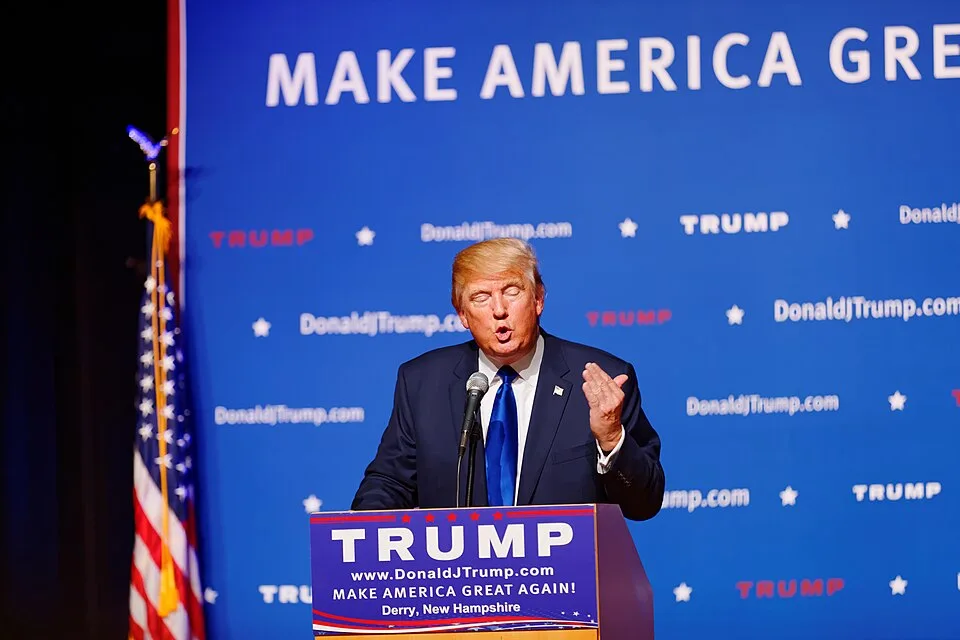
On Saturday, Donald Trump decided not to bomb Iran. That's the news. A president who spent weeks threatening a 'massive bombing campaign' looked at the clock, looked at the diplomats, and chose door number two. Now the entire Middle East is holding its breath waiting to see what happens by Wednesday.
What's Actually on the Table
According to Axios, the U.S., Iran, and Oman are closing in on an interim agreement to reopen the Strait of Hormuz, the narrow chokepoint through which roughly a fifth of the world's oil supply flows every single day. Two regional sources and a U.S. official all confirmed to Axios that Washington is aiming for an announcement as early as Wednesday.
The deal isn't a full nuclear agreement. It's a narrower, more urgent arrangement: resume the ceasefire between the U.S. and Iran, reopen the strait, and get back to the table on the larger nuclear question. Think of it as a handshake that buys everyone a little more time before someone does something catastrophic and irreversible.
Oman has been playing the quiet middleman role it has performed in U.S.-Iran back channels for decades. Muscat has no interest in watching a war explode across the Persian Gulf, and frankly, neither does anyone else in the region who'd like to keep their oil infrastructure intact.
The Bombing Threat That Wasn't — This Weekend, Anyway
Here's the part that deserves a little more attention than it's getting. Axios reports that Trump made a deliberate decision on Saturday to stand down from threats of a massive military strike against Iran, specifically to give diplomacy more runway. That means the threat was real enough that it had to be actively called off. Someone had to pick up a phone and say: not yet.
That is not a normal sentence to type about a weekend. 'The president decided not to launch a massive bombing campaign' is the kind of thing that should be rattling windows and dominating every front page. Instead it's a clause in a wire story about a deal that might happen Wednesday.
The caveat buried in the Axios reporting is the part worth underlining: if a deal isn't reached soon, Trump could still green-light the strikes. The diplomatic window is open. It is not bolted open. Wednesday is not a soft target.
Why the Strait of Hormuz Matters So Much
For anyone who hasn't refreshed their geography lately: the Strait of Hormuz is a roughly 21-mile-wide passage between Iran and Oman that connects the Persian Gulf to the open ocean. Saudi Arabia, Iraq, Kuwait, the UAE, and Qatar all ship their oil out through it. When Iran closes or threatens to close it, oil markets panic. When it actually closes, the global economy starts making unpleasant noises.
Iran has periodically threatened to shut the strait as a pressure lever for years. Whether they actually had it closed or merely threatened to is something the Axios reporting doesn't fully specify, but the urgency of a deal specifically to reopen it tells you everything you need to know about the current state of play. This isn't theoretical. Somebody's tankers are going nowhere right now.
The economic stakes alone explain why Oman, a country that shares a coastline with the strait, has every reason to lock both sides in a room until they sign something. Oman's entire strategic identity depends on being the stable, neutral party in a neighborhood that is spectacularly unstable.
The Nuclear Deal Ghost Hovering Over All of This
The interim agreement, if it happens, is designed to restart negotiations over a nuclear deal. Which means the actual goal here is something much bigger and much harder than reopening a shipping lane. The strait is the immediate crisis. The nuclear program is the existential one.
Trump walked out of the 2015 JCPOA during his first term. Iran responded by steadily advancing its enrichment program to the point where, by most assessments, it is now closer to weapons-grade capability than at any point in the negotiations era. Whatever deal eventually gets negotiated will have to address a program that is substantially more advanced than the one Obama's team was working with.
That's the game being played here. Wednesday's announcement, if it comes, is a base hit. The home run is years away, if it comes at all.
The Wednesday Deadline and What Happens If It Slips
Diplomatic deadlines in the Middle East have a storied tradition of meaning approximately nothing, but this one has extra weight because of what's waiting on the other side of failure. Axios makes clear that Trump retains the option to authorize strikes if the deal falls apart. That's not a throwaway line. That's the entire negotiating structure.
The U.S. is essentially telling Tehran: we are choosing not to bomb you right now, and we would like to continue choosing that, but we need something from you by Wednesday. It's coercive diplomacy with an expiration date printed right on the label.
What happens Thursday if there's no deal is the question nobody wants to answer out loud. The sources who spoke to Axios were apparently confident enough in the timeline to put it on the record. Let's hope their confidence is better calibrated than the last several rounds of Middle East diplomacy, which have a well-documented history of surprising everyone in the worst possible direction.
The Dingo Take
You are supposed to read 'Trump decided not to bomb Iran' as reassuring news. And on one level, sure, a bombing campaign didn't happen, which is objectively better than a bombing campaign happening. But let's sit with the structure of this for a second: the reason the diplomats are scrambling to hit a Wednesday deadline is that the alternative is a president green-lighting military strikes against a country with a serious missile program, significant proxy networks across the region, and the ability to shut down one of the most critical energy chokepoints on earth. The 'good news' is that we haven't done that yet. This is the bar.
The Oman channel is real, the talks appear to be genuine, and the people involved on all sides reportedly want a deal. That matters. Diplomacy isn't nothing. But every piece of this rests on the assumption that Trump's decision to hold off on Saturday will hold through Wednesday, and that whatever gets signed will be durable enough to restart nuclear talks that have been functionally dead for years. That is a lot of weight to put on an interim agreement announced on a Wednesday in August.
If the deal comes together, Trump will claim he pressured Iran to the table with maximum force threats and won. Iran will claim it negotiated from a position of strength and got concessions. Oman will say nothing publicly and quietly accept everyone's gratitude. And the actual nuclear program, the one that keeps nonproliferation experts awake at night, will still be sitting there, waiting for the next round. Watch Wednesday. Then watch Thursday.





Comments