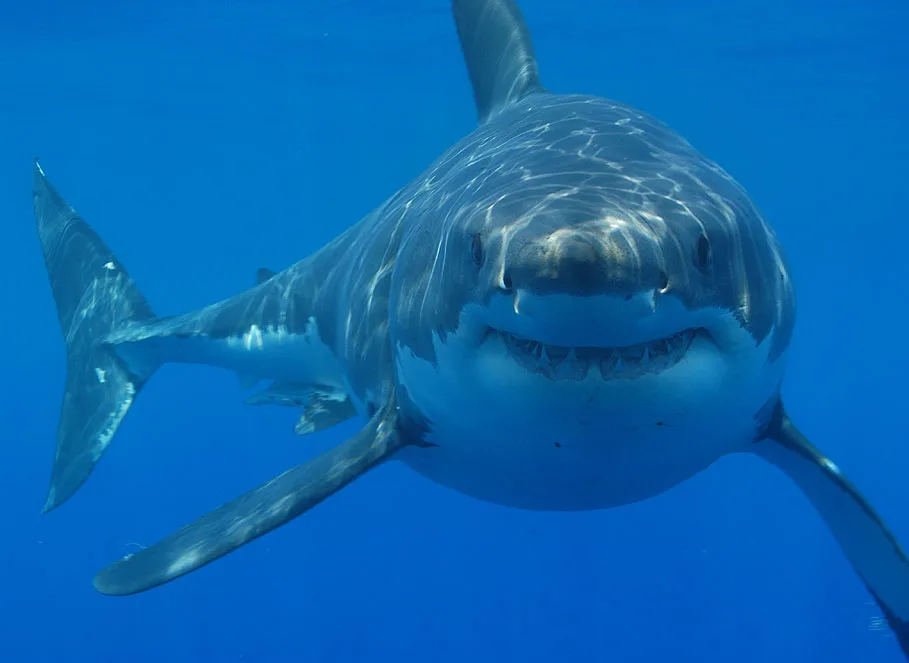
A 12-year-old American boy is in stable condition after a shark took a bite out of him in the Exuma Cays on Tuesday afternoon, the Royal Bahamas Police Force confirmed Wednesday. He was swimming near Staniel Cay with his brother when the attack happened around 3:30 p.m. This is, depending on how you count, somewhere between the fourth and sixth time Americans have had this exact bad day in the Bahamas in the last two and a half years.
What We Know About the Attack
According to the Royal Bahamas Police Force, the boy was in the water with his brother as part of a family tour of the Exuma Cays when a shark attacked him. He was transported by boat to New Providence, the island where Nassau sits, and received medical treatment there. As of Wednesday, his condition is stable.
The RBPF did not say what kind of shark it was, what injuries the boy sustained, or anything else that might help us understand the full picture. The Bahamian authorities have been, to put it charitably, light on specifics across several of these incidents. We know the boy is alive and receiving treatment, and that is the most important thing.
Staniel Cay is not some obscure corner of the map. The waters there are a major draw for tourists, full of coral reefs, shipwrecks, sea turtles, stingrays, and yes, sharks. CBS News reports the area is popular for swimming, snorkeling, and scuba diving. People show up there specifically because the wildlife is abundant. The sharks are part of the attraction, right up until they aren't.
The Bahamas Has a Pattern Here
The Bahamas ranks ninth in the world for unprovoked shark attacks, according to the International Shark Attack File, a global database tracking human-shark encounters. For context, the Bahamas is a relatively small country. Ninth place, globally, is a notable achievement in a category no tourism board wants to lead.
To be fair, CBS News points out that the raw numbers are still extremely rare: just 30 confirmed unprovoked attacks across the entire Bahamian archipelago in the last 400 years. So statistically, you are fine. Probably. But if you zoom in on the last couple of years, the tempo has been picking up in ways that are hard to ignore.
In December 2023, a Boston woman died after a shark attacked her while she was paddleboarding with a family member. In January 2024, a 10-year-old boy from Maryland was bitten on the leg and hospitalized. In February 2025, two American women were attacked off Bimini Bay, one of them seriously. Then in August 2025, a 63-year-old American man spearfishing off Abaco was severely injured and had to be airlifted to the United States for treatment. And now this. A 12-year-old, Tuesday afternoon, Staniel Cay.
Spearfishing, Paddleboarding, Swimming With Your Brother
Look at the list of victims and you notice something: these are not people doing extreme things. One woman was paddleboarding. A kid was swimming with his sibling on a family vacation. Another kid was just in the water in the Bahamas in January. The spearfisher was doing something that interacts with sharks more directly, sure, but even that is a common recreational activity in those waters.
The point is not that people should stop going to the Bahamas. The water there is genuinely spectacular and the shark attack rate across four centuries is, as the numbers show, objectively low. The point is that something worth paying attention to has been happening with some regularity since late 2023, and the conversations around each individual incident tend to treat it as a one-off rather than part of a pattern worth examining.
Researchers who study the International Shark Attack File have noted that human-shark encounters can cluster around specific conditions: water temperature, prey availability, seasonal migration. No one has publicly connected those dots to this particular stretch of Bahamian incidents, at least not yet. But the question is worth asking out loud.
The Kid Is Going to Be Okay
The most important update, again, is that the boy is in stable condition. He is 12 years old, he got bitten by a shark on a family vacation, and he is alive and receiving care. Whatever injuries he sustained were serious enough to require a boat transfer to Nassau for treatment, but not so serious that authorities are describing his situation as critical.
His family has not been identified publicly, and the RBPF has not released further details. That is probably the right call. The family is dealing with something traumatic and does not need their vacation nightmare turned into a cable news scrum. They deserve privacy while their kid recovers.
The Dingo Take
Here is the uncomfortable thing about shark attack coverage: every individual story gets treated as a freak occurrence, a one-in-a-million bad luck event, a reminder that nature is wild and unknowable and that you should probably go back to the beach tomorrow because the odds are in your favor. And individually, that framing is technically accurate. Thirty attacks in 400 years is not a crisis. It is barely a blip.
But a dead Boston woman in December 2023, a bitten Maryland kid in January 2024, two injured American women in February 2025, a severely mauled man airlifted out in August 2025, and now a 12-year-old in June 2026 is a run of incidents that deserves more than a paragraph of historical context and a reminder that sharks are part of the local ecosystem. At some point, someone with actual marine biology expertise should be on television explaining whether something has changed in those waters, and what swimmers should know about it.
Instead, we get stable condition, no further details, no species identified, no pattern acknowledged. The boy is going to be okay, which is genuinely good news. But the next family boarding a boat to Staniel Cay deserves better information than what the Bahamian police have been willing to put in a press release.



Comments