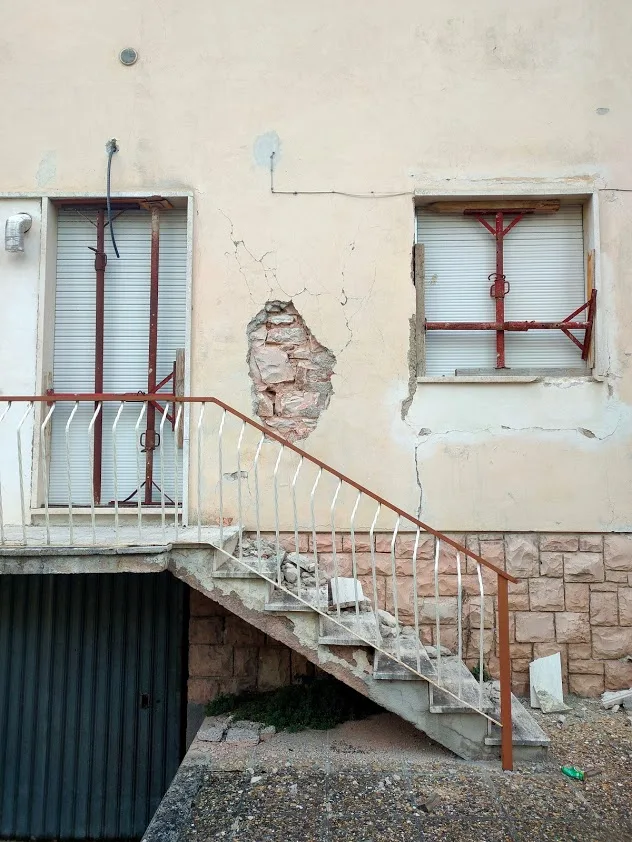
Venezuela just got hit with two massive earthquakes in the span of seconds. Not one. Two. A magnitude 7.2 followed almost immediately by a 7.5, both striking roughly 100 miles west of Caracas, and the U.S. Geological Survey is already warning that high casualties and extensive damage are probable.
What Actually Happened Out There
According to Axios, the first quake, a 7.2, hit near Morón, a town sitting along Venezuela's Caribbean coast, at a depth of 13.6 miles. Seconds later, before anyone could process what was happening, a second tremor clocked in at 7.5. Same general area. Same terrifying moment.
To be clear about what those numbers mean: a 7.5 is not a "big earthquake" in the polite, cable-news sense of the phrase. It is a catastrophic seismic event. The kind that drops bridges and pancakes poorly reinforced concrete buildings in the span of about thirty seconds. The kind that reshapes what a city looks like.
Reports of building damage in Caracas were already coming in Wednesday, along with damage in communities spread across the country. Venezuela is a large country. The fact that shaking was felt and structures were affected across multiple regions tells you something about the raw energy these two quakes unleashed.
The USGS Red Alert Is Not a Drill
The U.S. Geological Survey issued a red alert following the quakes, specifically warning of "shaking-related fatalities and economic losses" and flagging that "high casualties and extensive damage" were probable. Axios confirmed the alert language. Red is the top tier. This is not the USGS being cautious or covering its bases.
The depth matters here too. At 13.6 miles for the first quake, you are looking at a relatively shallow event. Shallow earthquakes hit harder at the surface because the energy has less distance to dissipate before it reaches people, buildings, and everything else sitting on top of the ground. Deeper quakes spread energy over a wider area but with less surface intensity. Shallow ones are brutal and local. This was both shallow and enormous.
What we do not yet know, because reporting was still breaking as of Wednesday, is the confirmed death toll, the full extent of structural collapse, and whether there is any tsunami risk given the Caribbean coastal location of the epicenter. Those details will define how bad this ultimately gets.
Venezuela Was Not Ready for This
Here is some necessary context. Venezuela is a country that has been in economic freefall for years. The Maduro government has presided over the collapse of public infrastructure, the exodus of millions of citizens, and a healthcare system that was already struggling to function before anything went wrong on Wednesday. Hospitals running low on supplies. Power grids held together with prayers and electrical tape. That is the baseline situation into which two magnitude 7-plus earthquakes just landed.
Disaster response capacity in Venezuela is deeply compromised by years of economic mismanagement and political dysfunction. International aid organizations have had complicated relationships with Caracas, and the political situation does not make rapid outside assistance automatic or easy. The people most likely to be buried under rubble right now are also the people least likely to have robust emergency services arriving quickly.
None of this is to say rescue and recovery will not happen. It will. But the starting conditions for handling a disaster of this scale are far worse than they would be in a country with functioning institutions and economic stability. That gap between the scale of the event and the capacity to respond is where the real death toll gets written.
Two Quakes in Seconds: What That Tells Us
The sequence of two major quakes within seconds of each other is not the normal way these events unfold. Typically, when seismologists talk about a "foreshock" and a "mainshock," the mainshock comes first and is followed by aftershocks of lesser magnitude. What happened here, a 7.2 followed by a 7.5, is closer to what researchers call a doublet: two ruptures on what may be the same fault system, releasing energy in rapid succession.
The practical consequence for anyone on the ground is that the second quake arrived before people had any real chance to respond to the first. Buildings already stressed by the 7.2 would have had no time to stabilize before the 7.5 hit. Anyone who had dropped to the floor or moved to a doorway during the first tremor was still in motion when the second one started. The compounding effect of that kind of sequence on structural damage and human injury is significantly worse than either quake in isolation would have been.
The Dingo Take
Two earthquakes. Seven-point-something each. Within seconds. If you are looking for a story that requires no additional editorial spin to be devastating, here it is.
The USGS red alert for probable mass casualties is the kind of language that should dominate every news alert on every phone in the Western Hemisphere right now. Whether it will is a different question. Venezuela's political situation has a way of complicating how loudly the international community responds when things go wrong there. The suffering of ordinary Venezuelans, which was already considerable before the earth started moving, does not get televised the same way it does in countries with more diplomatic standing. That is a grotesque calculus, and it deserves to be named directly.
Right now, the priority is information: casualty numbers, structural collapse data, whether coastal communities near Morón are facing any secondary threats. As that reporting develops, pay attention to it. The magnitude numbers alone should tell you this is not a minor story that will be wrapped up by the weekend news cycle. This is going to get worse before it gets better.



Comments