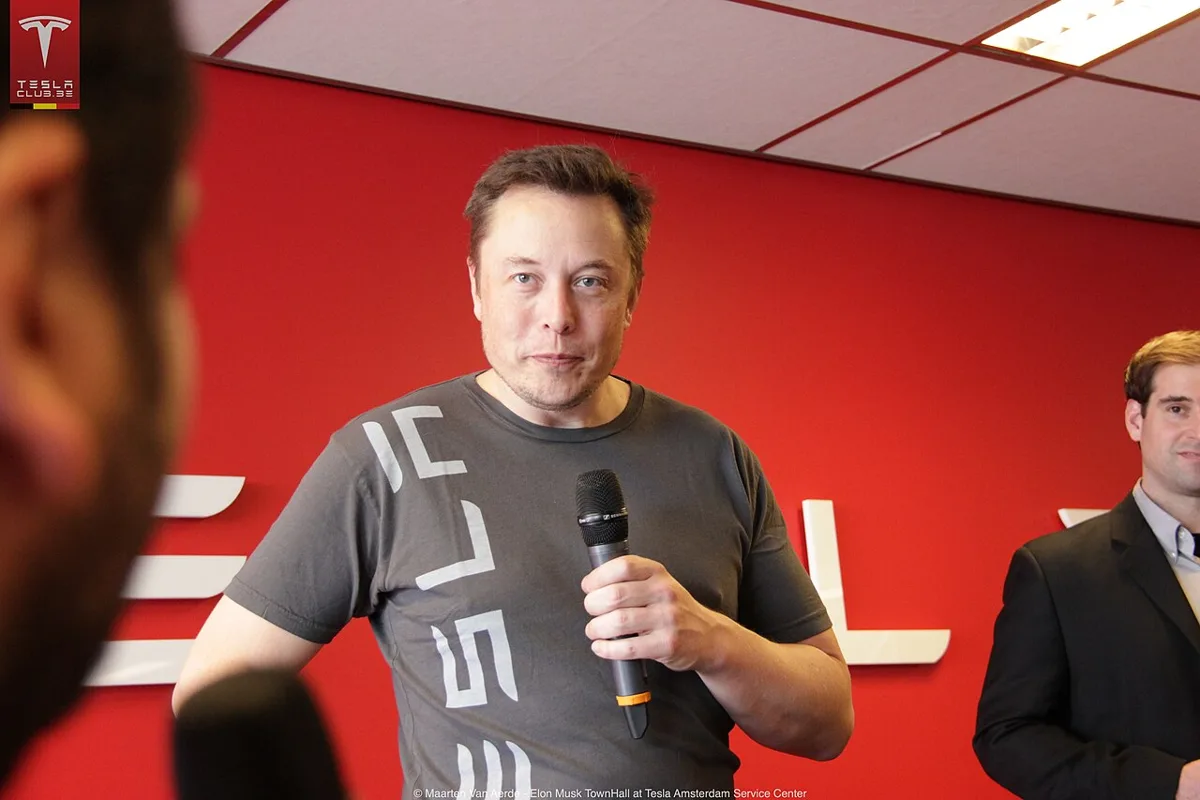
A sitting member of Congress cited a peer-reviewed medical journal linking Elon Musk's USAID cuts to 4.5 million child deaths. Musk's response was not a rebuttal, not a counter-study, not a press conference. It was a threat to sue the guy and a suggestion he belongs in prison. Totally normal stuff.
What Khanna Actually Said
Here is the full, unspun version of what started this. Rep. Ro Khanna, Democrat from California and a widely rumored 2028 presidential candidate, appeared on a podcast and made a pointed comparison. "They're celebrating that he created 4,400 millionaires," Khanna said of Musk, "but they don't talk about the 4.5 million children around the world who he possibly sentenced to death by dismantling USAID."
That figure came from the Lancet Group, a respected medical journal. Khanna was not making numbers up on the fly. He was citing published research and attributing it correctly. That is, for the record, exactly what members of Congress are supposed to do when they criticize policy.
The policy in question is real and well-documented. By March of last year, USAID had cut roughly 83% of its programs, according to Secretary of State Marco Rubio himself. Not a Democratic talking point. Rubio's own accounting.
Musk's Measured, Thoughtful Response
Just kidding. Elon Musk posted "Time to sue this liar" on X, the social media platform he owns, and then followed it up with "Robber Khanna should be in prison." Two posts. No citations. No data. No engagement with the Lancet study whatsoever.
This is the wealthiest person in human history, a man whose fortune has crossed into the trillionaire range, responding to a congressional critique of his government work by threatening litigation and floating criminal punishment. Against a congressman. For doing congressman things.
It is genuinely worth sitting with how strange that is. Musk ran a quasi-governmental cost-cutting operation with enormous real-world consequences, those consequences are now being scrutinized by elected officials, and his answer is to reach for a lawyer.
Khanna Is Not Particularly Scared
Fox News Digital caught up with Khanna outside the Capitol on Thursday, and he was not exactly trembling. "This is what he does," Khanna said. "It's symptomatic of our times that billionaires, and now a trillionaire, can threaten to sue members of Congress for doing their job. He won't intimidate me."
When asked whether he would actually show up to court if Musk followed through, Khanna had maybe the best possible answer. "Grok says he doesn't have a case," Khanna said, citing the AI chatbot that Musk's own company built and that Musk's own platform hosts. Let that sink in. The congressman is using the defendant's robot to evaluate his own legal exposure and finding it favorable.
The legal reality backs Khanna up even without Grok's blessing. Members of Congress have broad speech and debate protections for statements made in the performance of their duties. A lawsuit over a podcast appearance where a congressman cited a medical journal about public policy would face some very significant headwinds in any court that takes constitutional law seriously.
The Actual Policy Underneath This Drama
Let's not let the circus completely bury the substance, because the substance matters. USAID, before Musk's DOGE operation got to it, funded a vast range of programs across the developing world, including disease prevention, food aid, maternal health initiatives, and clean water projects. Critics of the agency, many of them legitimate, pointed to genuinely absurd line items: transgender comic books in Peru, Iraqi Sesame Street episodes, the kind of spending that is easy to mock and nearly impossible to defend.
But as Fox News itself acknowledged in its own reporting, critics of the cuts argued that Musk's operation failed to differentiate between actual waste and programs keeping people alive. Eighty-three percent of USAID programs cut is not surgical. It is a chainsaw, not a scalpel. The Lancet's researchers apparently had thoughts about what that looks like in mortality terms.
Musk has not, to date, produced a competing study. He has not held a press conference walking through the methodology of the cuts and explaining which programs survived and why. He has posted on X and threatened to sue a congressman. These are not the same thing.
The 2028 Angle Nobody Is Pretending Isn't There
Khanna is a progressive from Silicon Valley with national ambitions, and a public feud with the most famous and controversial businessman on the planet is not exactly bad for his profile. Fox News flagged his 2028 presidential aspirations right in their own piece. That context is real and fair to name.
But here is the thing about cynical framing cutting both ways: Musk also has obvious incentives to silence criticism of his DOGE work before it calcifies into the dominant historical narrative. A lawsuit, even a frivolous one, is expensive and distracting. The threat of one, aimed at a politician who hasn't yet locked up major donor support, can do damage without ever seeing a courtroom.
The power asymmetry here is not subtle. One side has a trillion dollars and owns the platform where the argument is happening. The other side has a House seat, some podcast appearances, and a Lancet citation. Khanna is right that this dynamic is worth naming out loud, whatever you think of his politics.
The Dingo Take
Here is what a functioning democracy is supposed to look like: a member of Congress, citing peer-reviewed research, publicly criticizes a policy enacted by a powerful private citizen who was handed extraordinary influence over federal spending. The powerful private citizen, rather than defending his record with evidence, threatens to bankrupt the congressman and suggests he belongs in jail. One of these behaviors is normal. The other one is authoritarian cosplay from a man who has apparently decided that accountability is for other people.
Musk's DOGE operation cut 83% of USAID programs. The Lancet, not exactly a fringe publication, produced research on what that means in human lives. The correct response to that research, if you believe it is wrong, is to argue with the research. Produce a counter-study. Walk through the data. Explain which programs were genuinely wasteful and which were not. What you do not do, if you are a serious person who is confident in the righteousness of your decisions, is immediately sprint to your lawyer and your posting fingers.
The fact that Musk's own AI told Khanna he doesn't have a case is almost too perfect. Grok has read more law than Musk's rage-posting would suggest, and it reached a pretty obvious conclusion. Threatening to sue people for citing journals is not a winning legal strategy. It is, however, a pretty clear signal that the man doing the threatening would rather be feared than examined. Khanna is doing the right thing by not obliging him.




Comments