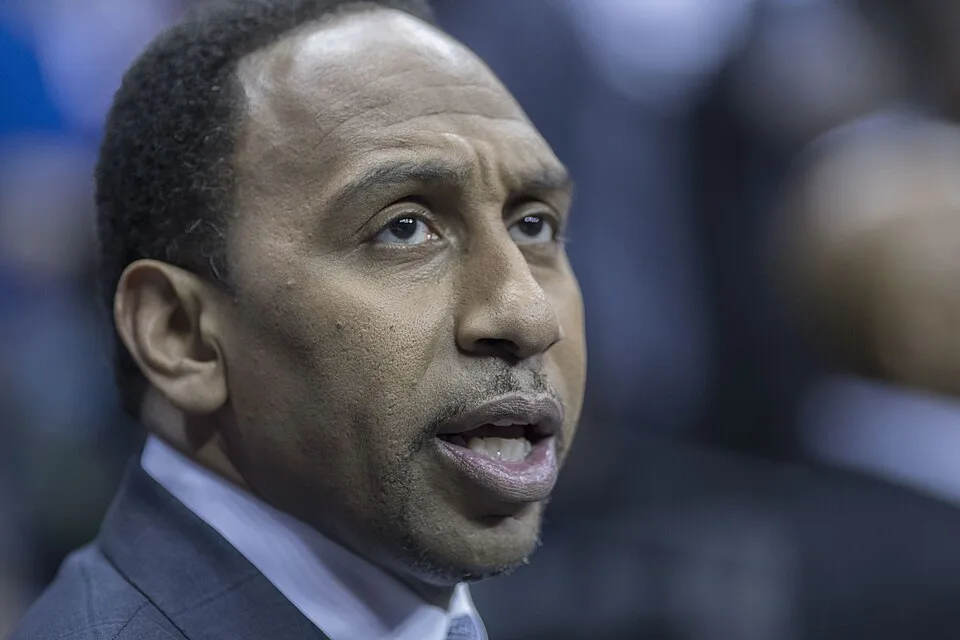
Stephen A. Smith, a man whose entire brand is saying the loud part louder, has turned his attention from NBA trades to presidential net worths. On Wednesday's episode of his 'Straight Shooter' podcast, Smith asked the question that a lot of people whisper but rarely shout: how exactly did Bill Clinton and Barack Obama get so obscenely rich? It's a legitimate question wrapped in a deeply complicated answer, and Smith is not entirely wrong to ask it.
What Smith Actually Said
Let's start with the quotes, because the framing matters here. Smith was not launching a partisan attack on Democrats out of nowhere. He opened by saying he does not care what money politicians pocket for themselves, as long as Americans are doing well. 'If the American people are prospering, get yours,' Smith said, per the New York Post. 'It's a capitalistic society.'
But Smith was quick to add the other half of that sentence. 'I'm cool with it if the American people are prospering, but last time I checked, that's not the case.' That second part is doing a lot of work. Smith is not arguing that wealth is inherently corrupt. He is arguing that wealth accumulation at the top while ordinary people struggle is a problem worth naming, no matter which party the wealthy person belongs to.
His targets were Clinton and Obama specifically. 'Clinton was a lawyer in Arkansas,' Smith said. 'Grew up poor, relatively broke. How the hell him and the Clinton Foundation is worth hundreds of millions of dollars beat me.' He applied the same logic to Obama, noting that a presidential salary tops out at $450,000 a year, and asking how someone departs office worth over $200 million.
The Numbers Are Real, and They Are Enormous
Smith is not making this up. A Forbes investigation found that Bill and Hillary Clinton have netted approximately $240 million since Bill left the White House. The bulk of that came from Bill himself: $189 million in book deals and $106 million in paid speeches. That is not a typo. One hundred and six million dollars for giving speeches.
Obama's situation is somewhat different in scale but similar in shape. A separate Forbes investigation put Obama's net worth at around $70 million in 2024, up from roughly $20 million accumulated during his combined 12 years as a senator and president. The jump came largely from book deals and, yes, speaking fees. Netflix also handed the Obamas a reported $50 million production deal after he left office.
None of this is illegal. All of it is, in the strictest technical sense, explainable. But 'explainable' and 'something the public should just accept without discussion' are two very different things.
The Revolving Door Has Been Running for Decades
Here is the thing about the post-presidential wealth machine: it is not a secret, and it is not new. American presidents and senior politicians have cashed in on their connections and credibility for generations. What has changed is the scale. The speaking circuit exploded in the nineties, and the sums involved have grown grotesque since.
Hillary Clinton famously charged Goldman Sachs $225,000 for a single speech in 2013, which became a genuine liability during her 2016 presidential campaign. Obama pulled similar fees from Wall Street firms after leaving office. The argument from defenders is always the same: private individuals and corporations are free to pay whatever the market will bear. That is technically true. What it obscures is why Goldman Sachs thinks a 45-minute chat with a former president is worth $225,000. Access and influence do not disappear the moment someone leaves office. Sometimes they get more valuable.
The Clinton Foundation added another layer of complexity, because it mixed genuine charitable work with a fundraising operation that relied heavily on foreign governments and corporations that had business before the State Department while Hillary Clinton ran it. The foundation raised legitimate ethics questions that were never fully resolved. That is not a Fox News talking point. That was the conclusion of a lot of journalists who spent years reporting it out.
But Let's Be Honest About the Context Here
Smith raised these questions while apparently offering cover to Donald Trump, whose financial conflicts of interest while serving as president are in a completely different category. Trump has used the presidency to funnel money directly into his own businesses. Foreign governments booked rooms at Trump hotels to curry favor. His Mar-a-Lago club charges members $1 million a year for access to a sitting president. Crypto investors have literally purchased Trump-branded memecoins that went straight into his family's pockets.
Obama and Clinton got rich after leaving office by doing legal things that are nonetheless worth scrutinizing. Trump is doing it while holding the office, which is a different moral and legal situation entirely. Smith's framing, 'I don't give a damn what money politicians slide into their own pockets from time to time,' extends considerable benefit of the doubt to active corruption while he focuses on passive enrichment.
Asking hard questions about Clinton's foundation money or Obama's speaking fees is fair game and worth doing. Doing it in a way that implicitly normalizes what Trump is running right now is a choice with consequences.
Why This Conversation Is Worth Having Anyway
None of that means Smith's underlying point is wrong. The concentration of wealth among political elites, regardless of party, is a genuine problem for democratic accountability. When former presidents command $100,000 speaking fees from the same financial institutions their administrations were supposed to regulate, something has gone sideways.
The revolving door between public service and private enrichment has been eroding public trust in government for decades. People are not wrong to be angry about it. They are not wrong to look at the gap between what a president earns in salary and what they earn the moment they leave and ask some pointed questions. That skepticism should be bipartisan, directed at everyone who passes through those revolving doors.
Smith is a sports commentator who occasionally wanders into politics with the subtlety of a man who has never once been told to lower his voice. But he is not always wrong when he gets there, and the instinct here, that leaders should only get very rich if the people they serve are also doing well, is not a crazy one.
The Dingo Take
Look, Stephen A. Smith asking about presidential wealth is a little like a guy with a foghorn asking why everyone keeps looking at him. The performance is loud and the nuance gets lost in the volume. But the underlying question has real teeth. How does a community organizer from Chicago or a broke lawyer from Arkansas end up worth hundreds of millions of dollars? The answer involves book deals and speaking fees and production contracts, all of which are legal. Whether they should be, or whether the access and influence being sold through those deals is compatible with a functioning democracy, is a conversation this country genuinely needs to have.
The problem is that Smith raised it while apparently shrugging at Trump's active, ongoing, and considerably more brazen financial corruption. Criticizing Obama's Netflix deal while giving a pass to a president who is running a meme coin scheme from the Oval Office is not an act of brave political independence. It is a bit of an own goal. You can hold both things at once: the post-presidential wealth machine is worth scrutinizing, and what Trump is doing right now is worse, more direct, and happening in real time.
The American people are, as Smith noted, not prospering. Median wages are flat, housing is unaffordable, and the economic anxiety is real and justified. The anger about political elites getting obscenely rich is legitimate. Just do not let anyone use that legitimate anger as a cudgel that only swings left while the guy currently in the White House sells access like it is a subscription service.


Comments