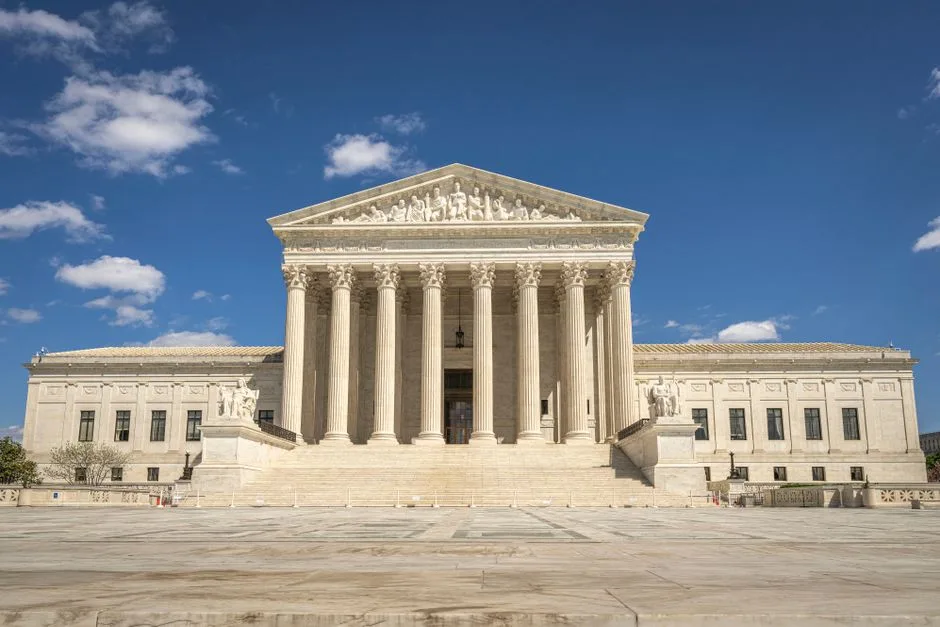
The Supreme Court handed the Trump administration a ruling on June 25th that immigration experts say could wipe out Temporary Protected Status entirely by the end of this year, leaving more than a million people who've lived legally in the United States for decades suddenly facing deportation. About 330,000 people from Haiti and Syria are affected immediately. The rest are watching the clock run out.
What TPS Actually Is, Because You Deserve to Know
Congress created the Temporary Protected Status program in 1990. The idea was straightforward: if your home country is too dangerous to return to because of war, political collapse, or natural disaster, the U.S. would protect you from deportation and let you work legally here. The homeland security secretary can grant that designation in stretches of six to eighteen months at a time.
This isn't some obscure loophole. Citizens of El Salvador have had TPS continuously for 26 years. As NPR reports, some TPS holders have been in the United States for a quarter century, raising families, paying taxes, and living alongside hundreds of thousands of American citizens who are their spouses and siblings. This is not a population that snuck through a crack in the system. They were explicitly invited to stay.
Congress built in a legal protection mechanism for exactly this kind of long-term situation. The Supreme Court just handed the Trump administration the keys to dismantle it.
What the Supreme Court Actually Ruled
The June 25th ruling did two things simultaneously, and the second thing is the one that should terrify you. First, it allowed the Trump administration to move forward with cancelling TPS for Haiti and Syria specifically. That's the immediate damage: 330,000 people losing their status right now.
But the ruling also made something much larger explicit: the secretary of homeland security decides who gets TPS and who loses it, and courts don't get to second-guess that call. As NPR explains, that language effectively hands the Trump administration a blank check to strip TPS from anyone still holding it, with minimal judicial recourse.
The administration has already terminated TPS for ten countries, affecting more than a million people total. Four countries still have active designations: Lebanon, El Salvador, Sudan, and Ukraine. All four expire later this year. Do the math.
The Government's Answer: Just Get a Green Card, Man
DHS Secretary Markwayne Mullin went on CNN Sunday to explain the administration's position, and the explanation was something. "Either try to fill out the paperwork and be here under permanent status or we'll help you get back to your home country," Mullin said, according to NPR's reporting. He added that people who've been here 18 years have had "plenty of time to establish their status" and "chose not to."
Here's the problem with that framing, and it's a pretty large problem. There is no TPS-to-green-card pathway. It does not exist. Todd Schulte, president of the immigrant advocacy organization FWD.us, told NPR plainly: "There is no TPS to green card pathway." Asylum claims mostly have to be filed within a year of arriving. Marrying a U.S. citizen is one option. That's about it.
And here's the part that should make your jaw drop: the Trump administration has simultaneously curtailed or frozen most of the alternative pathways that do exist. According to NPR, DHS paused processing all immigration applications for people from countries on the travel ban list for more than six months. Haiti, Syria, Venezuela, and Afghanistan were all on that list. Courts have ordered DHS to resume reviewing those paused applications, but NPR reports progress has been slow. So the government's answer to "how do TPS holders get legal status?" is essentially "try the doors we've already locked."
The Program May Not Exist By December
Julia Gelatt, associate director of U.S. immigration policy at the Migration Policy Institute, a nonpartisan think tank, put it to NPR without hedging: "We may even end up by the end of this year without anybody who has temporary protected status."
Read that sentence again. A program that has existed for 36 years, protecting people from countries the U.S. government itself has designated as too dangerous to return to, could functionally cease to exist within six months. Not reformed. Not scaled back. Gone.
DHS did not respond to NPR's questions about the future of the remaining TPS designations. Any extensions or terminations would be announced in the Federal Register, which is the government's way of doing things quietly and hoping you're not paying attention.
What Happens to the People
Schulte told NPR that "there is no precedent in modern immigration history for revoking status for a population like that," referring specifically to the Salvadoran community that has held TPS for 26 consecutive years. These aren't recent arrivals waiting to see if conditions improve back home. They are embedded in American life in every measurable way.
And for those wondering whether they can at least try to pursue other legal options: NPR reports that those options are increasingly being used as traps. Immigration officers have been conducting arrests at courthouses. People who show up to pursue legitimate legal pathways are getting detained. "Where there is [an option] people are finding that that's often a way that they're being funneled into being arrested," Schulte said. "Which is absolutely a travesty."
The administration is not offering a path forward. It is offering a choice between leaving voluntarily and waiting to get picked up.
The Dingo Take
Let's be clear about what's happening here, because the word "temporary" is doing a lot of heavy lifting in the administration's talking points. The Trump administration is not ending a program for recent arrivals who were always meant to return home after a brief crisis. It is retroactively redefining the terms of an agreement the U.S. government made with people who organized their entire lives around it, some of them for 26 years. Mullin going on CNN to say these folks had "plenty of time" to sort out their status is a spectacular piece of bad faith from a guy whose own department blocked the very mechanisms by which they could have done exactly that.
The Supreme Court's role in this deserves more outrage than it's getting. The court didn't just rule on Haiti and Syria. It handed the executive branch a doctrine: the secretary of homeland security can end TPS for anyone, anytime, and courts can't stop it. That's not a ruling about two countries. That's a structural demolition of the legal protection the program was designed to provide. The administration didn't need Congress to kill TPS. It just needed five justices to confirm that one cabinet secretary could do it unilaterally.
A million-plus people who followed the rules, stayed legal, built lives, raised American kids, and paid into the same tax base you do are now being told the rules changed and good luck with that. The cruelty here isn't incidental. It's the point. And the mechanism being used to deliver it is a Supreme Court ruling that most Americans won't read, about a policy most Americans can't define, affecting people who have been their neighbors for a generation.





Comments