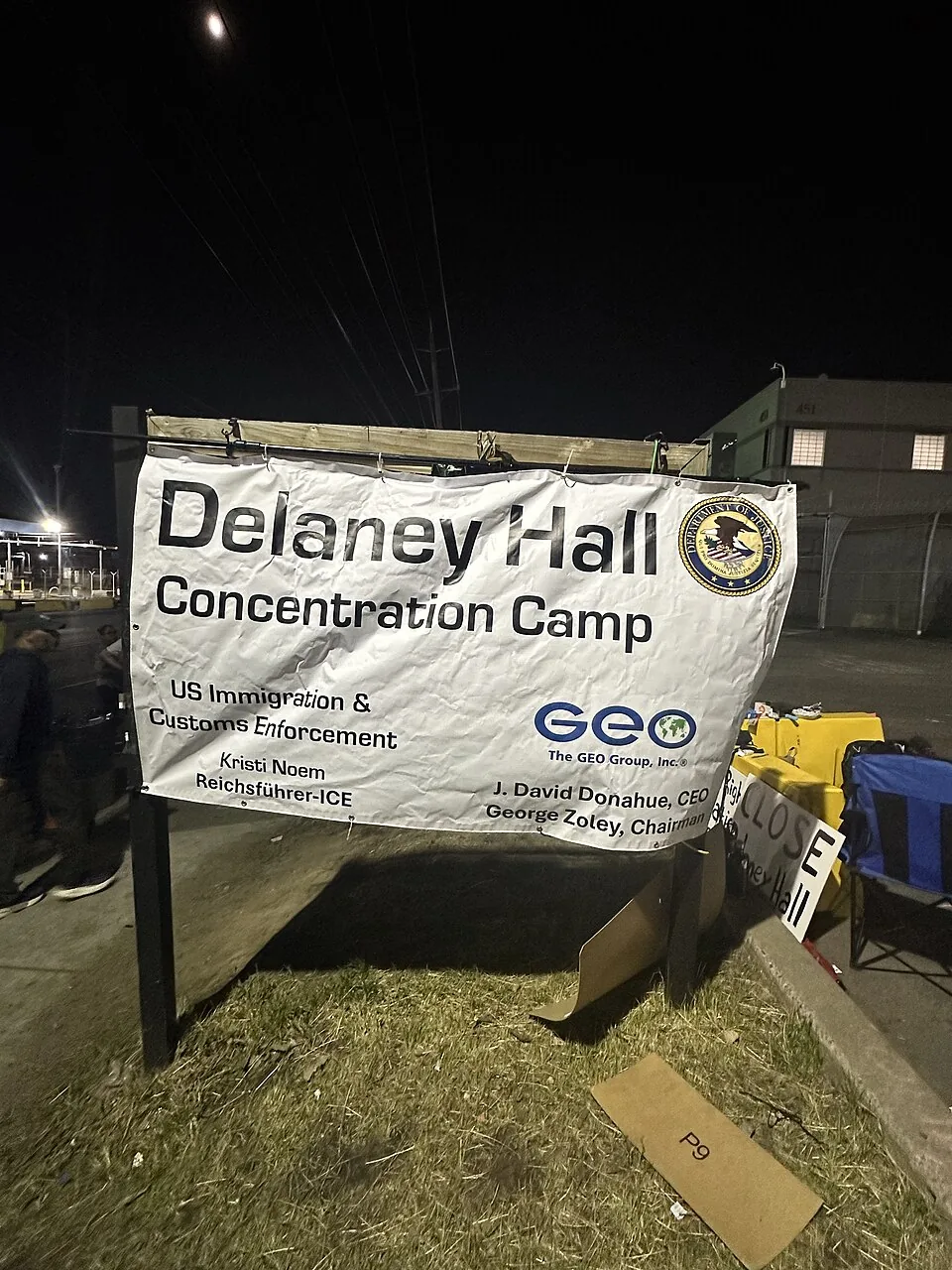
A Guatemalan immigrant named José Chajón-Raxón had a seizure at a Newark ICE detention facility, got hospitalized, got released from custody, and then died. ICE's response? That's not our problem anymore. Conveniently, they changed the policy earlier this year to make sure it legally isn't.
The Third Body, The Third Shrug
According to The Guardian, Chajón-Raxón is the third immigrant to die after being held at Delaney Hall, a detention facility in Newark, New Jersey that ICE reopened in May 2025 as part of the Trump administration's immigration crackdown. A nurse witnessed him experiencing "seizure-like activity." Medical personnel were called. He was transported to a hospital.
Then ICE released him from custody on July 22, four days after he arrived. And after that, the Department of Homeland Security has nothing for you. No timeline of what happened at the hospital. No details about whether he left before he died. No explanation of when exactly he died. Just a clean bureaucratic handoff into the void.
Chajón-Raxón's death didn't even become public knowledge until New Jersey Democratic Representative Rob Menendez disclosed it last week, in the middle of attention surrounding yet another death at the same facility. The public learned about this man's death accidentally, as a footnote to someone else's tragedy.
The Loophole They Built on Purpose
Here is the part that should make you put down whatever you're eating. Earlier this year, the Trump administration quietly reversed a Biden-era policy that required ICE to report deaths occurring within 30 days of someone being released from custody. They just stopped doing that. No fanfare, no press conference, no explanation offered to the American public.
The DHS statement on Chajón-Raxón's death was almost brazen about it: "Per ICE policy, when an individual is no longer in ICE custody then ICE will no longer be responsible for monitoring or reviewing deaths that may occur. This is common sense."
Common sense. They called it common sense. Rep. Menendez told the Associated Press that the policy change creates a deliberate "loophole" that lets ICE release someone from detention and then claim zero responsibility to investigate their death or tell Congress and the public about it. You release the person, the clock stops, and whatever happens next is somebody else's statistical problem. Brilliant system, if your goal is to make deaths disappear from the ledger.
Delaney Hall's Very Bad Year
Delaney Hall has been a slow-motion disaster since the moment it reopened. The Guardian reports that Edwin López-Cornejo, a Salvadoran man, died earlier this month after a medical emergency while in ICE detention there. Jean Wilson Brutus, a Haitian man who had also been detained at Delaney Hall, died in December. Three deaths connected to one facility in under a year, and we only know about all of them because a congressman kept showing up and asking uncomfortable questions.
Beyond the deaths, the facility has racked up a catalogue of other allegations. Human rights advocates and Democratic lawmakers have raised concerns about physical abuse by guards and detainees being served spoiled food. In late May, at least 300 detainees organized a hunger and labor strike. Weeks later, women in a separate unit launched their own hunger strike, demanding improvements and the release of women under 21, women with medical conditions, and mothers.
ICE, for its part, maintains that detainees receive appropriate medical care. Three deaths in under a year at one facility suggests the agency's definition of "appropriate" deserves some scrutiny.
Fifty People Dead and Counting
Delaney Hall is not an outlier, it is a window. The Guardian reports that more than 50 people have died in ICE custody nationwide since Donald Trump took office. Fifty people. Rights organizations have repeatedly raised alarms about medical care and conditions across the detention system, and the administration's response has been to change the policy so fewer deaths officially count.
Let that sit for a second. The number was getting bad enough to cause political problems, so the solution wasn't to improve conditions. The solution was to redefine the counting rules so the number gets smaller. Release someone who is actively dying, and their death becomes statistically invisible. That's not a bug in the system. That is the system working exactly as designed.
The Dingo Take
You are supposed to believe that releasing a seizing man from custody four days into his detention and then losing track of him entirely is "common sense" policy. That the third death connected to a single reopened detention facility in roughly a year is just an unfortunate coincidence. That a government agency stripping its own reporting requirements around in-custody deaths right when the death toll was climbing is an unrelated administrative tidying exercise.
It isn't. The policy change is the story inside the story. When a government stops counting something, it's not because the thing stopped happening. It's because they decided it was more convenient to stop watching. The Biden administration put the 30-day reporting rule in place because people were dying after release and disappearing from the official record. The Trump administration looked at that accountability mechanism and removed it. Chajón-Raxón's death proves exactly why the rule existed in the first place.
What we know is this: a man had a seizure in a government facility, was shuffled through a hospital, was released from custody while his fate was still unresolved, and then died. And we only know any of it because one congressman kept showing up. Without Rob Menendez making noise, José Chajón-Raxón would be a name on no official list, in no official report, accountable to no one. That's not a breakdown in the system. That's the system delivering exactly what it was rebuilt to deliver.





Comments