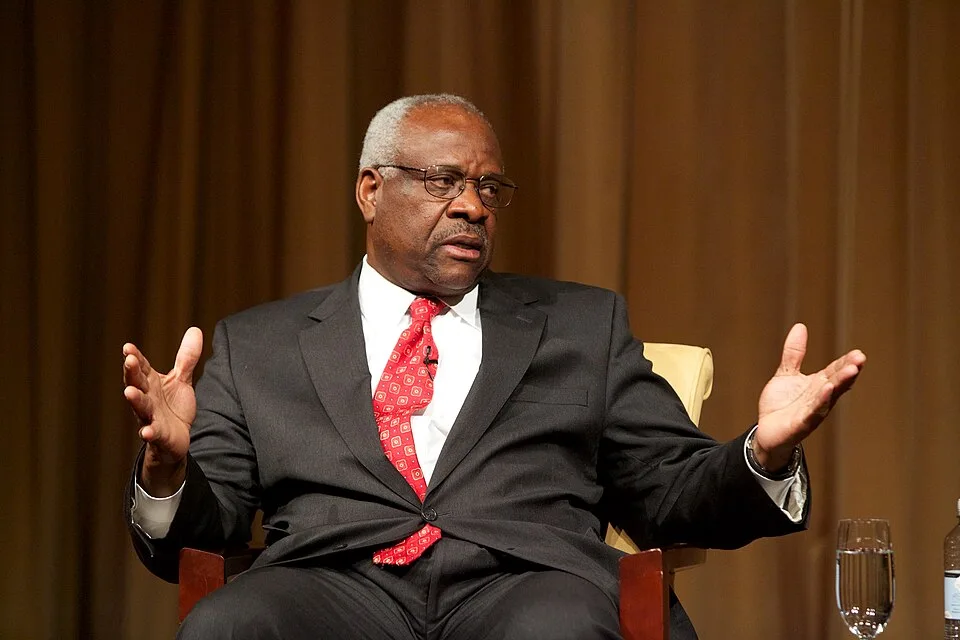
Two sitting Supreme Court justices just published a formal call to demolish the foundational legal protection for press freedom in America, and they did it in a case brought by Alan Dershowitz against CNN. Yes, that Alan Dershowitz. Yes, that CNN. The absurdity of the vehicle does not make the destination any less terrifying.
What Thomas and Gorsuch Actually Said
The Supreme Court declined to take up Dershowitz v. CNN, a case in which the former Harvard law professor claimed the network deceptively edited a clip of his defense during Trump's first impeachment trial to make him sound like he was saying the opposite of what he actually said. The court passed. Case over.
Except Justices Clarence Thomas and Neil Gorsuch couldn't let it go without a statement. According to Fox News, the two conservatives wrote in dissent that the 'actual malice' standard that governs defamation cases involving public figures 'bears no relation to the text, history, or structure of the Constitution.' That standard, established in the landmark 1964 ruling New York Times Co. v. Sullivan, requires public officials and public figures to prove a publisher acted with knowing falsity or reckless disregard for the truth before they can win a defamation case. Thomas and Gorsuch want it gone.
This is not some offhand remark. This is two sitting justices formally signaling, in writing, attached to a Supreme Court decision, that they are ready to burn down six decades of First Amendment law.
A Quick Civics Refresher on Why Sullivan Exists
New York Times v. Sullivan came out of the civil rights movement. An Alabama commissioner named L.B. Sullivan sued the Times over a full-page ad that criticized how Montgomery treated civil rights protesters. Sullivan wasn't even named in the ad. An all-white Alabama jury awarded him damages anyway, and the clear intent was to use defamation law as a weapon to silence Northern newspapers covering the movement.
The Supreme Court reversed it. The court held that public officials cannot win defamation cases without proving 'actual malice,' meaning the publisher knew the statement was false or acted with reckless disregard for the truth. This was not a radical idea. It was a recognition that democratic self-governance requires the ability to criticize the people in power without facing financial ruin every time they don't like the coverage.
Thomas and Gorsuch's historical counter-argument, per Fox News, is a real treat: they pointed to the Sedition Act of 1798, which resulted in a congressman getting prosecuted for saying John Adams had an 'unbounded thirst for ridiculous pomp, foolish adulation and selfish avarice.' Their argument, apparently with a straight face, is that this represents a preferable legal tradition. Thomas Jefferson let the law expire in 1801 and pardoned everyone it had ensnared. The two justices are citing a law that the third president killed because it was a tyrannical embarrassment.
Trump Has Been Asking for Exactly This Since 2016
Let's not pretend this dissent exists in a vacuum. As Fox News reports, Trump pledged at a 2016 campaign event to 'open up our libel laws' so that journalists who write 'purposefully negative and horrible and false articles' could be sued. 'We're going to have people sue you like you've never got sued before,' he said, specifically naming the New York Times and Washington Post.
Ten years later, two of the court's conservative justices have published the legal blueprint for doing exactly that. Trump has his own active defamation suit against CNN over the network's use of the term 'Big Lie' to describe his claims about the 2020 election. According to Fox News, that lawsuit, combined with this dissent, leaves open the possibility that the court could eventually revisit Sullivan entirely. The justices willing to do it just told you who they are.
This is not a coincidence of timing. This is a movement.
Dershowitz Is Thrilled, Which Should Tell You Something
Alan Dershowitz told Fox News Digital that 'all the judges agreed that CNN lied about me,' and that the actual malice standard is 'an impossible standard that I believe will be overruled in years to come.' He is probably right that courts agreed CNN's editing was misleading. He lost anyway because he couldn't prove actual malice under the Sullivan standard, which is precisely how the standard is supposed to work.
The standard is demanding by design. The whole point is that a hard-charging democracy produces rough, sometimes wrong, sometimes unfair coverage of powerful people, and powerful people should not be able to weaponize defamation suits to make that coverage stop. Dershowitz is a public figure who has spent decades cultivating media access for himself and his clients. The idea that he is the sympathetic plaintiff who should end press freedom as we know it is the kind of thing that sounds like a pitch meeting that got out of hand.
And yet here we are.
What Overturning Sullivan Would Actually Mean
Strip away the legal jargon and the stakes are simple: if Sullivan goes, powerful people can sue news organizations into silence or bankruptcy over critical coverage without having to prove the outlet was acting in bad faith. The cost of litigation alone would do the job. Smaller outlets would fold. Larger ones would self-censor. Investigative journalism covering public officials would become functionally impossible to publish without lawyers signing off on every paragraph.
Trump has already demonstrated he understands this. According to Fox News, his lawsuit against CBS News settled, with CBS paying him, quote, 'a lot of money.' His lawsuit against the Wall Street Journal over Epstein coverage was recently dismissed, but the point of these suits is not always to win in court. It is to make the math of covering him terrifying enough that outlets think twice.
A world without Sullivan is a world where that calculus shifts permanently in favor of whoever has the most money and the least shame about spending it.
The Dingo Take
Two Supreme Court justices just used a case about Alan Dershowitz and a cable news chyron to propose dismantling the legal architecture that allows a free press to cover the government. They grounded their argument partly in a 1798 law that was so obviously authoritarian that Thomas Jefferson killed it the moment he got to the White House. If your legal theory makes John Adams look like the reasonable one, you should maybe sit with that for a moment.
The timing is not subtle. Trump has been calling for this since before his first term. He now has justices he appointed ready to deliver it, an active lawsuit against CNN of his own, and a political base that has been primed for a decade to see press freedom as an elite conspiracy against them rather than a structural protection for everyone. The pieces are in place. What's missing is one more case, the right plaintiff, the right moment.
Here is what nobody wants to say plainly: if Sullivan falls, the United States press will face a legal environment closer to Hungary or Turkey than to anything resembling a free democracy. That is not hyperbole. That is the logical endpoint of what Thomas and Gorsuch published on Monday, in writing, with their names on it. They told you exactly what they want. The only question is whether enough people are paying attention to care.





Comments