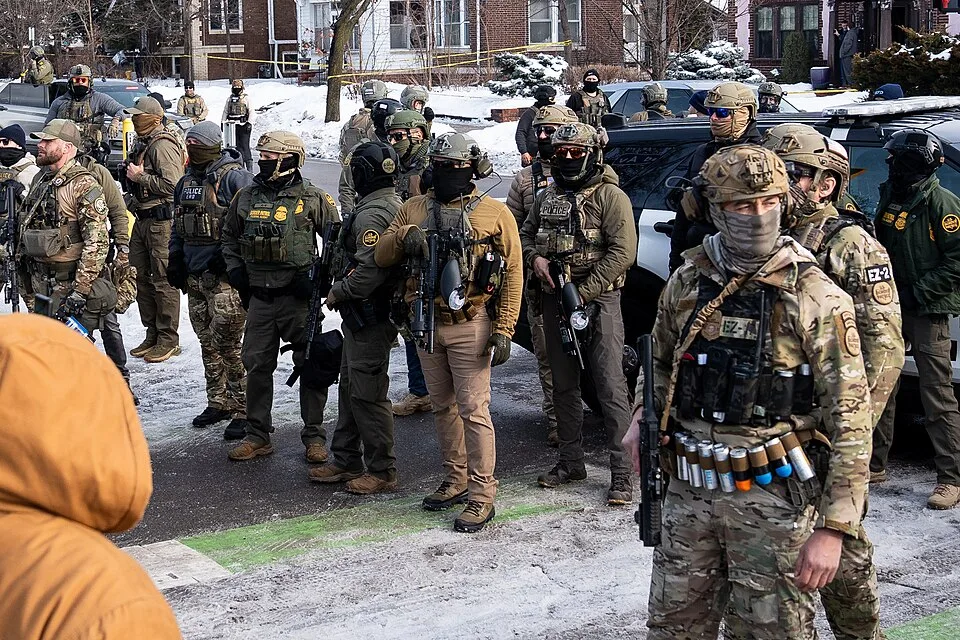
The Trump Justice Department, which spent years calling mask mandates tyranny, just sued a major American city to protect the right of federal agents to wear masks while on duty. A federal judge sided with them Thursday, temporarily blocking Philadelphia from enforcing its ban. Yes, this is real life.
What Philadelphia Actually Did
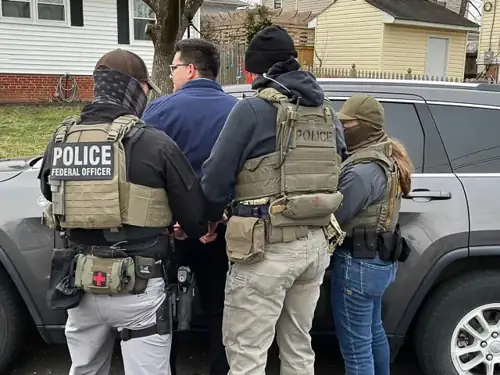
Philadelphia passed a local ordinance placing restrictions on federal officers operating within city limits, including a ban on those officers wearing masks while on duty. The city's logic wasn't hard to follow: if you're a federal agent operating in our streets, throwing people into unmarked vehicles, we'd like to know who you are. The kind of accountability that most people, under most circumstances, would consider pretty basic.
The ordinance was one of several local regulations the city put in place as the Trump administration dramatically expanded its use of federal agents for immigration enforcement operations, many of which have drawn allegations of masked, unidentified officers detaining people with little transparency about who was doing the detaining or why.
What the DOJ Argued
The Justice Department filed suit against Philadelphia in mid-June, according to The Hill, arguing the ordinance was a quote "blatantly unconstitutional" attempt by a local government to regulate the conduct of federal agents. The DOJ's complaint claimed the mask ban would "endanger officers and reduce operational effectiveness."
Let's sit with that framing for a second. The federal government's argument is that knowing who is arresting you is a threat to the people doing the arresting. The operational effectiveness in question is, at least in part, the effectiveness of rounding people up in a city where a lot of people would prefer that not happen. The DOJ is asking the courts to confirm that federal agents get to decide how visible they are to the public they are supposedly serving.
The Judge's Ruling
A federal judge granted the DOJ's request for a temporary block, preventing Philadelphia from enforcing the mask ban while the legal challenge plays out, The Hill reports. This is a preliminary injunction, not a final ruling on the merits, so the underlying fight about whether a city can regulate how federal officers operate within its borders is very much still live.
But the temporary block matters. Federal agents can now continue wearing masks during operations in Philadelphia while the courts sort out whether the city ever had the authority to unmask them in the first place. The legal question is genuinely complicated. The political reality of what it enables is considerably less ambiguous.
The Masks Conversation Nobody Wanted to Have
It is objectively funny, in the darkest possible way, that we are here. The conservative movement that spent 2020 through 2022 treating a paper surgical mask as the physical embodiment of government overreach is now in federal court arguing that the government's agents have a constitutional right to cover their faces while exercising extraordinary powers of detention.
To be scrupulously fair: there are legitimate reasons law enforcement officers, federal or otherwise, sometimes wear masks. Undercover operations exist. Witness protection is real. Officer safety from retaliation is a genuine concern in some contexts. These are not invented arguments. But the specific context here is highly visible immigration enforcement operations in a major American city, where the core complaint from civil liberties groups and local governments has been that nobody can identify who is doing what to whom. That context does a lot of work.
What This Fight Is Actually About
Philadelphia is one of several cities that have tried to put guardrails on how the Trump administration's federal agents operate locally. The administration has been aggressive in pushing back, using DOJ lawsuits as a tool to preempt local resistance before it can take hold.
The deeper fight is about federalism, and it cuts in uncomfortable directions for both sides. Conservatives have historically loved states' rights and local control, right up until local control means a blue city deciding that federal immigration sweeps need some transparency requirements. The Trump administration's position, bluntly stated, is that federal authority is absolute within its own domains and that cities have no business placing any conditions on how federal officers conduct themselves on city streets. That's a sweeping claim with implications well beyond mask policy.
The Dingo Take
Here's what's genuinely worth paying attention to in this story. A presidential administration that ran partly on the idea that government should be more accountable and less secretive is in court, right now, arguing that the public has no right to see the faces of government agents with the power to take away your freedom. Not a theoretical power. A power they have been exercising, repeatedly, in American cities. The masks aren't incidental. Anonymity is a feature, not a bug.
Philadelphia tried to do something straightforward: if you're going to operate in our city, be identifiable. That seems like the absolute floor of what accountability looks like. The DOJ called it blatantly unconstitutional. A federal judge, at least temporarily, agreed with the DOJ. We'll see how the underlying case plays out, but the fact that this is even a legal battle worth having tells you a great deal about where we are.
The administration that made endless political hay out of Anthony Fauci wearing a mask on television is now protecting its agents' right to wear masks while arresting people. If you can hold both of those things in your head at the same time without your vision going slightly blurry, you are made of stronger stuff than most of us.

Comments