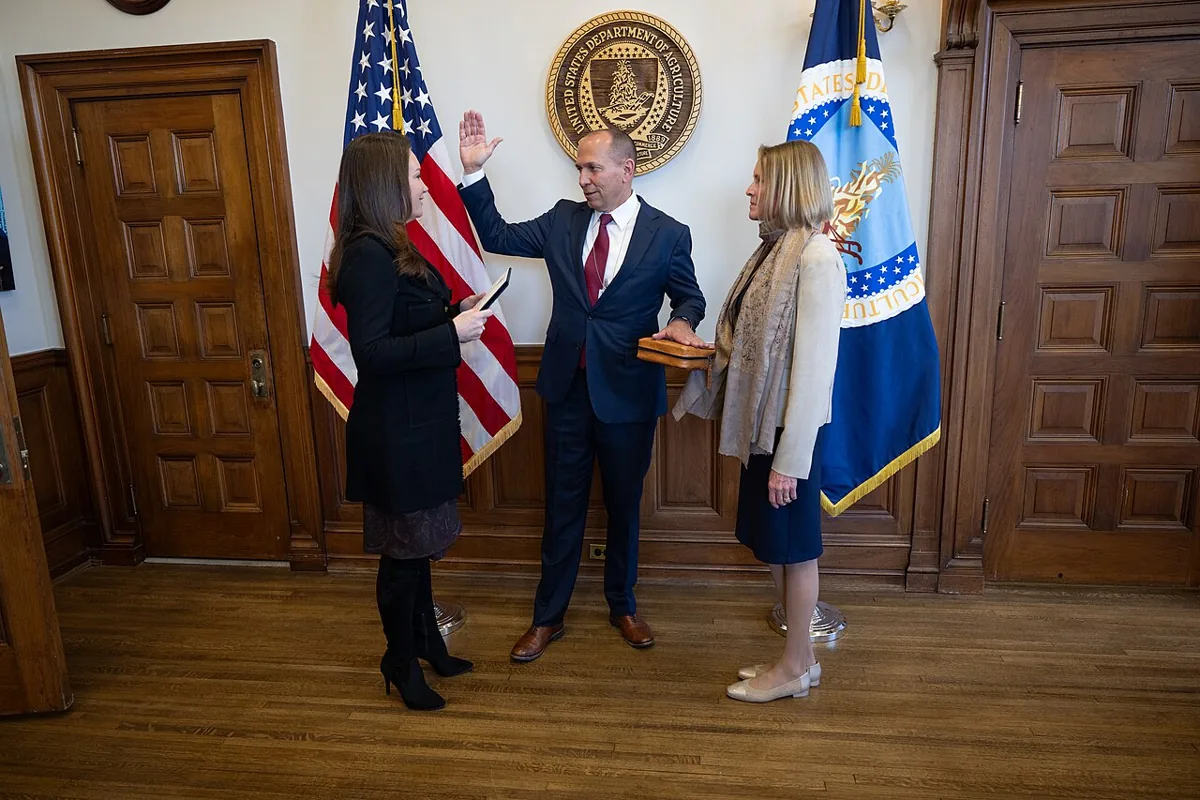
The man who runs the US Forest Service reportedly spent July on the phone pressuring agency officials to send nine aircraft, including air tankers and helicopters, to fight a seven-acre campfire. The reason, according to the Washington Post, is that the fire was burning near his personal 480-acre ranch in Idaho. Aircraft were pulled from other active fires to get there.
A Very Small Fire Gets Very Big Treatment
The Cabin Creek fire started around July 12 from an unattended campfire in Idaho's Sawtooth National Forest. It topped out at seven acres. By July 15, the Forest Service declared it 100% contained. In the grand, terrifying ledger of American wildfires, this one barely registers as a footnote.
And yet, according to the Washington Post's reporting, the response it received was extraordinary. The Post's analysis of flight paths found roughly nine aircraft working the blaze on July 12 alone, including helicopters, air tankers, and tactical planes. Six current and former Forest Service officials told the Post that this level of response was far beyond what a fire of that size, posing no significant threat to life or property, would normally receive.
What was different about this particular seven acres of burning Idaho scrub? Michael Boren, the USDA's undersecretary for natural resources and environment and the man who directly oversees the Forest Service, owns a 480-acre ranch in the Sawtooth National Recreation Area. The fire was close to it.
The Calls Nobody Wants to Admit Were a Problem
The Washington Post reports that while the Cabin Creek fire was burning, Boren contacted Forest Service officials at both the regional and national levels multiple times. The subject of those calls: why weren't more aircraft being deployed to the fire? One Forest Service official, speaking anonymously, described the pressure Boren applied to get more resources on the ground.
The Post also reviewed communications from the response period, which it says corroborate that Boren personally contacted agency staff. This is not secondhand gossip from disgruntled employees. There is a paper trail.
Perhaps most damning, the Post also spoke to two agency officials who confirmed that at least some of those nine aircraft were diverted from other fires in Idaho to respond to Cabin Creek. Other fires. Burning while planes were rerouted to protect the ranch of the guy who signs off on Forest Service priorities.
The USDA Explanation Is Something Else
The USDA issued a statement Friday that deserves to be read slowly and carefully. According to the statement, Boren's contact with agency officials was entirely routine because, as undersecretary, he is expected to communicate regularly with the agencies he oversees. The spokesperson called it, with a straight face, a "non-story."
The statement also said that Boren "did report a fire that was near property he owns, just as one would hope any citizen in an area under threats from wildfires would do." Right. Just like any citizen would do, if that citizen had the direct phone numbers of regional and national Forest Service leadership and the institutional authority to make those calls feel like something more than a tip.
The statement closes by insisting that Boren never pressured leadership or ordered more resources to the fire. This is the part where you notice the statement does not actually deny that he called repeatedly, or that nine aircraft showed up, or that some of them came from other fires.
The Oversight Problem Nobody in This Administration Wants to Say Out Loud
Boren is not some distant bureaucratic figurehead. As undersecretary of agriculture for natural resources and environment, he sits directly above the Forest Service in the chain of command. When he calls to ask why more aircraft aren't fighting a fire, the people receiving that call know exactly who is asking.
The Guardian notes that this is the same Forest Service the Trump administration has been gutting through layoffs and budget cuts, the same agency whose staff are stretched thin fighting actual large-scale fire emergencies across the American West. The idea that its leadership was fielding repeated calls from their boss about a seven-acre fire while that was going on is not, to use the USDA's word, a non-story.
There are federal ethics rules specifically designed to prevent officials from using government resources in ways that benefit their personal financial interests. Whether what Boren did clears that bar is now exactly the kind of question that investigators, journalists, and several very uncomfortable Forest Service employees are going to be sitting with for a while.
The Dingo Take
You are supposed to believe that nine aircraft, including air tankers, scrambling to a seven-acre campfire, with some of those aircraft pulled off other fires, is just what normal, routine, non-pressured Forest Service resource allocation looks like. You are supposed to believe that the man who oversees the entire agency called regional and national officials multiple times purely as a concerned citizen, ranch owner totally aside. You are supposed to read the USDA's statement and conclude there is nothing to see here.
That is a lot of believing they are asking you to do. The Washington Post reviewed the flight records. The Post reviewed the communications. Six officials, current and former, said the response was abnormal. One official specifically described pressure being applied. The USDA's rebuttal to all of this is essentially: senior officials make calls, and anyway Boren is a good neighbor who reported the fire. That is not a defense. That is a subject change wearing a blazer.
The cruelest detail in this whole story is the other fires. Somewhere in Idaho in July, there were other wildfires burning with slightly fewer aircraft than they might otherwise have had, because those resources were needed at a seven-acre blaze in the Sawtooth recreation area. Nobody is going to count what that cost. Nobody in this administration is going to ask. That's the thing about being the person who oversees the agency that would investigate you.




Comments