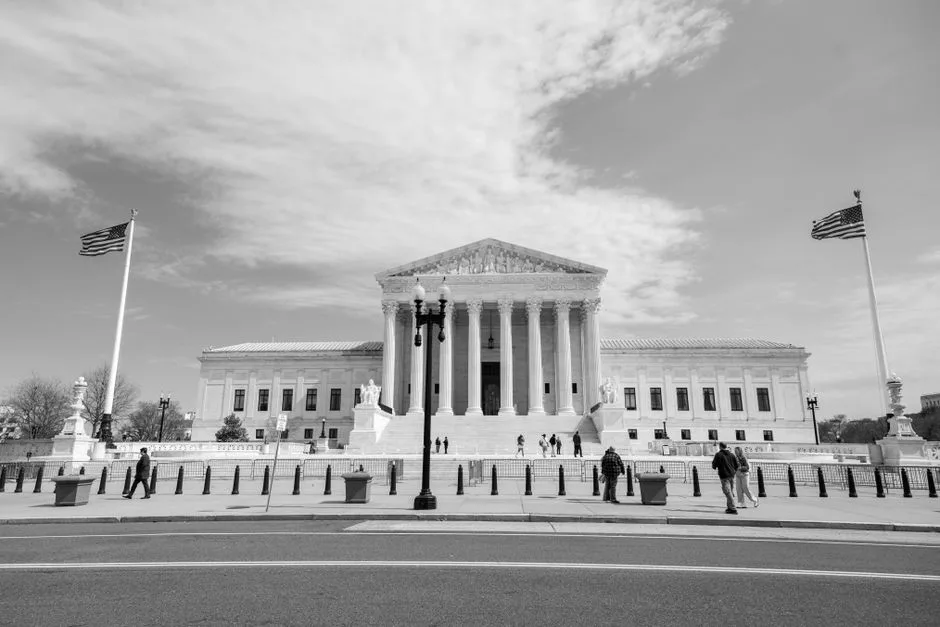
The Supreme Court just wrapped up one of the most consequential terms in modern American history, and the verdict is in: Congress lost. Not on one issue. Not on a close call. Across the board, on money, jobs, votes, and health, nine people appointed for life just decided they know better than the 535 elected ones.
What Actually Happened This Term
According to Axios, the court spent its just-completed term systematically sidelining Congress while concentrating authority in the two branches it apparently likes: the presidency and itself. After this term, Congress cannot insulate federal regulators from presidential control, cannot limit political party spending, and cannot require race-conscious voting districts. That is not a rough patch. That is a demolition.
Think about what those three things actually mean in practice. Regulators who were supposed to operate independently, the people whose whole job is to not be politically pressured into letting corporations poison rivers or commit securities fraud, now answer directly to whoever is sitting in the Oval Office. Political parties can spend without meaningful limits. And voting maps that were drawn to ensure communities of color have actual representation? Gone. All in one term.
The Long Game Conservative Lawyers Have Been Playing
This did not happen by accident. Axios reports that conservative lawyers have argued for decades that the Constitution grants all executive power to the president, full stop. Every appointment to the court by Republican presidents over the last thirty years was a down payment on exactly this outcome. The Federalist Society has been working this brief since Ronald Reagan was in office, and they finally have the bench they need to cash it in.
This is the part where people normally say "both sides do it" and reach for a bothsidesism life raft. They can try. But Democrats have not spent forty years building a legal movement explicitly designed to transfer power from an elected legislature to an executive branch they could reliably control. That is a specific project with a specific ideological home, and it is now bearing fruit in real time.
Why This Is Worse Than It Sounds, If You Can Believe That
Here is the thing about stripping Congress of its power that does not get said plainly enough: Congress, for all its dysfunction and embarrassment and general awfulness, is the branch you can actually vote out. You cannot vote out a Supreme Court justice. You do not get to vote on whether the president can fire the head of the Federal Reserve or gut the SEC. Those decisions just happen now, handed down from people with lifetime appointments and no electoral accountability whatsoever.
The decisions about your money, your job, your vote, and your healthcare, as Axios puts it directly, now shift toward the president and toward nine justices. That sentence should be tattooed somewhere prominent. The people most affected by these decisions are the people with the least ability to influence them. That is not a quirk of the system. At this point, it is the system.
Where Congress Is in All of This
Congress, for its part, has spent the last several years doing an impressive impression of a legislature that has given up. The Republican majority in the House has functioned less as a co-equal branch of government and more as a rotating cast of performance artists auditioning for a cabinet position. The Senate has confirmed judges at historic rates while largely abandoning any pretense of oversight.
And look, Democrats deserve some of the blame here too. When they had the majority, the urgency to reform the court, to codify rights into statute, to push back against the slow erosion of legislative authority, was never quite sufficient. There was always another election cycle to worry about, always a reason to wait. Well. They waited.
The Court Is Not Done
One term. That is what we are talking about. This court, with its current supermajority, has been on the bench together for less time than it takes some people to finish a graduate degree, and it has already rewritten the rules on abortion, guns, administrative power, and now the basic structural balance between Congress and the executive. There is no reason to think this is the ceiling.
Conservative legal scholars have a wish list that makes this term look like a warm-up. Presidential immunity, already dramatically expanded in the last couple of years, could go further. The scope of what Congress can even legislate on is very much a live question before this court. The phrase "we will see what the next term brings" used to be neutral. Right now it has the energy of standing at the top of a ski slope and wondering how steep it gets.
The Dingo Take
Let us be honest about what is happening here, because the word "historic" gets used so often it has lost all texture. This is not a court that is refereeing a dispute between competing legal philosophies. This is a court that is actively, deliberately, and successfully executing a legal and political project that conservatives mapped out decades ago. The project is to move power away from a messy, pluralistic, democratically accountable Congress and toward institutions they can control. They are doing it. It is working.
The founding fathers, whatever their many significant flaws, were pretty obsessed with one specific idea: that concentrating power in too few hands was the thing a republic could not survive. They built an entire structure around the notion that ambition had to counteract ambition, that no single branch should be able to run the table. What this court is doing, term by term, ruling by ruling, is the precise thing those guys stayed up late arguing about in Philadelphia trying to prevent. Enjoy explaining that to your civics class.
There is no clean ending here. No election you can circle on a calendar that fixes this, no legislative package waiting in the wings. The court is what it is for a generation, and it has made abundantly clear what it intends to do with that time. The question is whether the people who are supposed to care about this, the lawmakers, the voters, the press, treat it with the urgency it deserves, or whether we all collectively decide to be shocked again next July when the next term wraps up and Congress loses something else it needed.




Comments