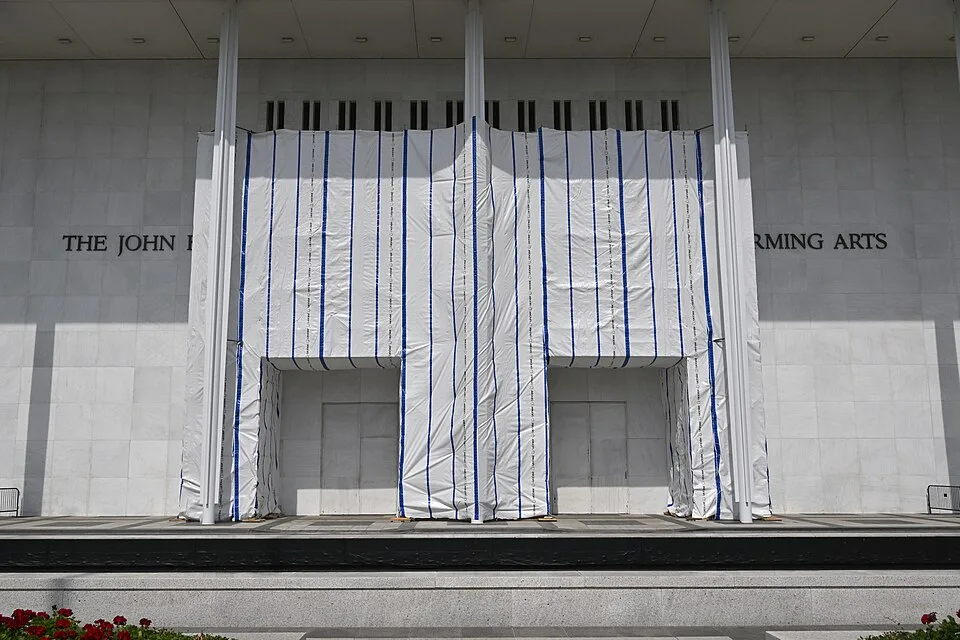
A federal judge said no. Congress never said yes. So the Kennedy Center board just went ahead and did it anyway. On Thursday, the board voted to slap Donald Trump's name back onto the John F. Kennedy Center for the Performing Arts, according to multiple reports cited by Axios, in what is either a brazen act of institutional defiance or the most expensive vanity plate in Washington history.
Here Is What Actually Happened, Start to Finish
Trump, being Trump, wanted his name on the Kennedy Center. The administration pushed through a renaming. A federal judge ruled back in May that this was not legal, because the Kennedy Center's name is enshrined in federal statute, and only Congress has the authority to change it. Not the president. Not a board. Congress.
That ruling should have been the end of it. It was not the end of it. The center removed Trump's name by June, complying with the court order. Then on Thursday, Axios reports, the board got back together and voted to put the name right back on. Which is, to be precise about it, the board voting to defy a federal judge's direct ruling.
What 'Defying a Court Order' Actually Means
Let's be clear about the legal reality here. This is not a gray area. A federal judge issued a ruling. The ruling was followed. Now the same institution has reversed course and done the thing the court said it cannot do. That is not a policy disagreement. That is not a different legal interpretation. That is contempt of court, dressed up in a board resolution.
The judge's reasoning in May was not complicated. The Kennedy Center's official name exists in federal law. You cannot rename a congressionally established institution by executive preference or a board vote. The Constitution has a process for changing laws. It involves Congress. It does not involve a roomful of Trump appointees with a gavel.
The Board That Suddenly Stopped Caring About Judges
Worth asking: who exactly is on this board right now? Trump has spent the better part of his second term stuffing federal boards, commissions, and institutions with loyalists, and the Kennedy Center is no exception. The administration installed new board members earlier this year as part of a broader effort to reshape the center's programming and identity. The people who just voted to defy a court order are, in large part, people Trump put there.
This is how the playbook works. You do not need to win in court if your people control the institution. You just wait, regroup, and try again. If the courts push back, you push back harder. The question is whether anyone with actual enforcement authority is going to do something about it, or whether we are all just going to watch this happen and update our Wikipedia entries accordingly.
JFK Is Somewhere Having a Very Bad Week
There is something almost cosmically absurd about all of this happening at a building named for John F. Kennedy. A president murdered in 1963, memorialized by Congress in a performing arts center meant to reflect American culture and excellence, now at the center of a legal standoff over whether a living president can attach his name to the dead one's building against the explicit orders of a federal court.
The Kennedy family has previously made clear their feelings about Trump's renaming efforts. Congressional Democrats have made their objections loudly known. None of that stopped Thursday's vote. The board appears to be operating on the theory that if you repeat an illegal action confidently enough, it eventually becomes policy.
So What Happens Now
That is genuinely unclear, and the fact that it is unclear is itself the story. In a functional system, defying a court order triggers consequences. Judges have tools: contempt findings, sanctions, enforcement mechanisms. Whether any of those get deployed here depends on whether someone files a motion, whether the judge acts, and whether the executive branch cooperates with any resulting enforcement. Historically, the executive branch cooperating with judicial enforcement against itself is not a strength of this administration.
Axios notes this is a developing story, which is a polite way of saying we are all watching in real time to find out whether American institutions are going to hold or not. No pressure.
The Dingo Take
You are supposed to believe this is normal board governance. A group of appointed officials reviewed the situation, considered the relevant federal court ruling, and then voted to do the exact thing the federal court ruled they cannot do. Totally routine stuff. Happens all the time.
It does not happen all the time. What is happening is that the administration has figured out that controlling institutions matters more than winning legal arguments, because if your people run the building they can just keep doing the thing regardless of what judges say. This is not a bug in the strategy. It is the strategy. Flood the zone, ignore the rulings, exhaust the opposition, and eventually the name is just on the wall and nobody has the energy to keep fighting about it.
The federal judge who ruled on this in May has a decision to make. So do the lawyers who could file for contempt. So does every institution that is watching this to see how it plays out. Because if a board can openly defy a court order about something as low-stakes as a building's name and face zero consequences, the lesson for every other institution being pressured right now is obvious and ugly. This is a test. And so far, the answer is that the board voted to fail it on purpose.



Comments