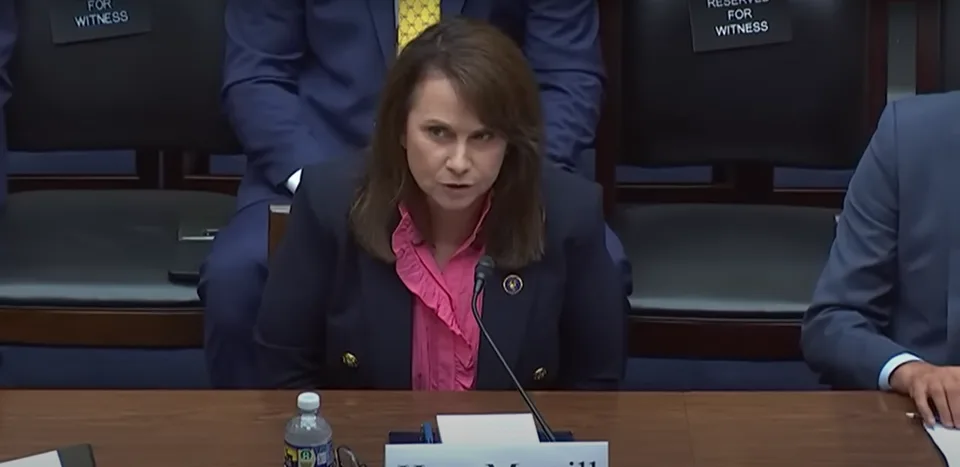
Louisiana's attorney general got a 16-count criminal indictment dropped on her Thursday for allegedly threatening local elected officials who tried to let an exonerated man take the job voters gave him. By Friday morning, the state's supreme court had already pumped the brakes on the whole thing. Buckle up, because this story has everything: a wrongful conviction, a stolen election result, journalists in handcuffs, and a governor promising pardons at the speed of light.
The Man at the Center of All This
Calvin Duncan spent nearly three decades in prison for a murder he did not commit. He was exonerated. He is listed on the National Registry of Exonerations. Then, last November, the people of New Orleans elected him as Orleans Parish criminal court clerk with 68% of the vote.
That should have been the end of the story. A man wronged by the system fights his way back, wins a democratic election by a landslide, and gets to work. Instead, as Fox News and The Guardian both report, Louisiana Republicans at the urging of Governor Jeff Landry pushed through a law that simply abolished the elected position Duncan had just won, handing its duties to a different clerk's office. The seat Duncan won ceased to exist before he could sit in it.
Duncan has said publicly he believes the whole maneuver was retaliation against him specifically. It is genuinely difficult to look at the timeline and argue otherwise. Landry and Attorney General Liz Murrill have refused to acknowledge Duncan as exonerated, despite what the national registry says.
So What Exactly Did Murrill Do?
After the law passed, New Orleans officials tried to find a way to seat Duncan anyway, or at least create a legal path for him to take the office voters had given him. Murrill's response was to send letters warning eight city officials, including Mayor Helena Moreno and District Attorney Jason Williams, that they could face removal from their jobs under Louisiana's so-called "usurper" laws, which prohibit supporting an unauthorized officeholder.
A New Orleans grand jury looked at those letters and decided they constituted criminal intimidation and malfeasance. Sixteen counts worth. Special prosecutor Laurie White, a former judge, told reporters after the indictment was unsealed that she expects the case to be, quote, "very simple" and "very open and shut." Bond for Murrill was set at $400,000, according to Fox News.
Murrill fired back immediately on X, calling the charges "retaliatory, meritless, and unconstitutional" and vowing she would not back down. Whether the charges stick or not, the image of the state's top law enforcement officer getting booked is not one the Louisiana Republican Party is going to enjoy.
The Governor Who Won't Stop Talking
Jeff Landry did not take the news quietly. He told reporters he would pardon Murrill "as fast as the law allows." He called the grand jury a "kangaroo" court. He declared that "the criminal justice system is a circus at its finest in Orleans." And then, in a follow-up post, he announced he was ordering the state police to immediately investigate the grand jury proceedings themselves.
Let's be clear about what that means. The Republican governor of Louisiana is using the state police to investigate the grand jury that just indicted his Republican attorney general for allegedly intimidating Democratic city officials. The man has no sense of irony, but he has a very clear sense of how to use institutional power.
The Louisiana Supreme Court did grant Murrill's request for a stay of proceedings on Friday, finding she had made a compelling argument about what it called "disturbing defects" in the grand jury process and the trial court's handling of things. The court's order specifically preserved her right to file motions to quash the indictment, as well as motions for the recusal of the special prosecutor or the trial judge.
Journalists in Handcuffs, Because of Course
Here is the part of this story that should make every person who cares about the First Amendment stop scrolling. When the grand jury indictment was being returned Thursday, Judge Leon Roche sealed the courtroom without explanation, according to The Guardian. This is a problem because the public has a legal right to access court proceedings, and Louisiana law specifically requires grand jury returns to be made in open court.
WWL Louisiana, a Guardian reporting partner, protested the closure. For their trouble, an investigative producer named Danny Monteverde and the outlet's attorney, Elana Beiser, were handcuffed and physically removed from the courtroom and then from an outside hallway. Not asked to leave. Handcuffed.
A court spokesperson later explained the sealing was meant to protect the identities of grand jurors so they could deliberate freely. That explanation arrived after the handcuffs came off. Roche offered nothing at the time. The Louisiana Supreme Court's stay order also noted that motions for recusal of both the special prosecutor and the trial judge remain on the table, which suggests the high court has some questions about how this whole thing was run.
The Conflict of Interest Lurking in the Background
Murrill's legal team raised one more wrinkle in her motion for a stay. Special prosecutor Laurie White, the former judge who obtained the indictment and called it open and shut, previously served as an attorney for Calvin Duncan. The Louisiana Supreme Court flagged this in its stay order, explicitly preserving the right to file recusal motions against White.
Whether that prior relationship constitutes an actual legal conflict is for the courts to sort out. But it hands Murrill's side exactly the kind of procedural argument they need to bog this down indefinitely. And in Louisiana politics, indefinitely might as well be forever.
The Dingo Take
Here is the core of what is happening in Louisiana, stripped down to its bones. A man was wrongfully imprisoned for nearly three decades, exonerated, ran for office, won by 38 points, and then watched the state government invent a reason to take the job away from him. When local officials tried to push back, the attorney general sent them letters implying she could have them removed. A grand jury read those letters and called it criminal. That is the story. Everything else is noise.
The Republican response to this indictment has been a masterclass in bad faith. Landry calling it a kangaroo court while simultaneously siccing the state police on the grand jury that produced it is not the action of someone confident the process was corrupt. It's the action of someone who wants to drown the story in counter-accusations before anyone has a chance to think about why the charges were filed in the first place. The supreme court stay may well be legally justified. But a stay is not an exoneration, and screaming about kangaroo courts is not a legal defense.
Calvin Duncan is still not in the job his constituents elected him to do. That fact is sitting quietly underneath every single dramatic development in this saga. Two journalists got handcuffed covering a court hearing about it. The attorney general has a $400,000 bond. The governor is promising pardons. And a man who already lost three decades of his life to the Louisiana justice system is watching the same system do what it does best: make sure the wrong people are protected.

Comments