America turns 250 this year, and The Guardian has marked the occasion with a genuinely brilliant essay that asks the most uncomfortable birthday question possible: how much of what you think you know about this country came from photographs that were staged, cropped, or quietly stripped of the people who made them inconvenient? The answer, it turns out, is most of it. Happy Fourth of July, everybody.
The Camera Arrived and America Got a Mirror It Could Edit
Sarah Churchwell's essay in The Guardian opens with a genuinely striking observation: the United States was founded in 1776, but didn't start seeing itself until the autumn of 1839, when daguerreotypes hit American cities. Photography didn't just document the country. It built the story the country told about itself.
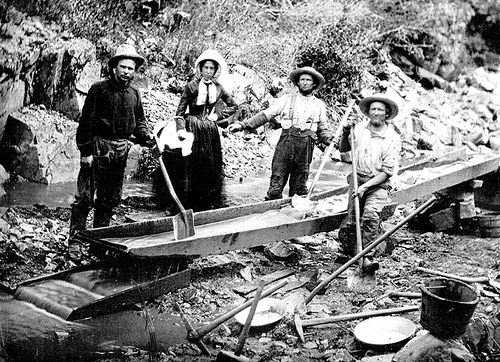
And right from the jump, the story had gaps. The gold rush was one of the first great American dramas to find the camera, Churchwell writes, ordinary men squinting into the lens, searching beyond it for gold. The myth wasn't that they all got rich. The myth was that the search itself made you American. A lottery everyone plays. Very few win. Still the operating system of the whole project, 250 years later.
Photography was the perfect art form for America specifically because, as Churchwell puts it, truth and myth could occupy the same frame. That's not a bug. That's the feature. The country has been running that exploit ever since.
The Famous Ones You Know Are More Complicated Than You Think
Take the 1869 photograph of the transcontinental railroad's completion, The Guardian essay notes, two locomotives meeting, bottles raised, the nation imagining itself joined coast to coast. Beautiful image. Stirring symbol of American ambition. Also: the Chinese workers who laid enormous stretches of that track are nowhere in the frame. Completely erased. Their absence isn't accidental; it's a choice baked right into the myth.
Or consider the photograph of two white men in suits posing on a mountain of bison skulls, bound for industrial processing. Churchwell is precise and devastating about what that image actually records: not just slaughter, and the elimination of the plains nations, but a whole worldview. Animals as raw material. Destruction as enterprise. The men, she writes, are mistaking extinction for triumph.
Dorothea Lange's Migrant Mother, probably the most reproduced image of the Great Depression, made Florence Owens Thompson the face of American poverty. Thompson spent the rest of her life resenting it. The image gave the nation an icon. It did not give its subject any control over what she had come to mean. That sentence should be tattooed somewhere prominent in every journalism school in the country.
The Images That Forced America to Look at Itself
Not every photograph in Churchwell's essay is a story of myth-making and erasure. Some of them are about the opposite: forcing a country to see what it was working very hard not to see.
When Emmett Till was murdered in 1955, his mother chose an open casket. She wanted white America to look directly at what had been done to her 14-year-old son. When the mainstream white press refused to run the photographs, The Guardian notes, she found a Black photographer and made the image testify. That is not myth-making. That is the opposite of myth-making. That is someone using the camera as a weapon against the comfortable story.
In 2020, photographer Julio Cortez captured a protester in Minneapolis carrying the American flag upside down following the murder of George Floyd. An upside-down flag is the universal distress signal. The image, Churchwell writes, asks a question the US is left to answer in its 250th year: is showing the nation its own violence a betrayal of its promise, or the only way to keep it? That's not a rhetorical question. That's the actual question.
Even the Classics Have an Asterisk Now
The Guardian essay also flags something that happened just last year, in 2025, that should have gotten more attention than it did. World Press Photo suspended the authorship attribution for Nick Ut's The Terror of War, the photograph known globally as Napalm Girl, after a rival claim emerged that the photo was actually taken by a Vietnamese stringer. The napalm, the essay reminds us, was dropped by a South Vietnamese plane. Her own side.
The only thing in that entire story that remains beyond dispute, Churchwell writes, is the devastated child in the frame, Phan Thi Kim Phuc. Everything around her, the authorship, the geopolitics, the narrative of American culpability that the image came to represent, has been contested, complicated, revised. The child's suffering was real. The story built around the suffering kept shifting.
This is the pattern. The cruelty is real. The narrative around the image is partly made up. That's been true since at least 1863, when magazine editors merged a whip-scarred man photographed as evidence of slavery's brutality with another escaped enslaved person to create a single cleaner abolitionist hero. The pain was genuine. The story around it was constructed for maximum effect.
What 250 Years of Curated Images Adds Up To
Here's what Churchwell's essay is really arguing, and it's worth sitting with: America didn't just use photographs to record its history. It used them to construct a version of history that was sellable, shareable, and emotionally coherent in ways the actual history wasn't.
The iconic images of Woodstock. The sailor kissing a woman in Times Square on V-J Day, an image now shadowed, as the essay notes, by her own words that it wasn't her choice. The construction workers eating lunch on a girder above New York in 1932, a photograph that was probably staged. These images do more than show what happened. They show a country inventing itself from, as Churchwell writes, evidence, denial, desire, grief.
As America marks 250 years of existence, the country is drowning in images at a velocity no previous generation has ever experienced. We no longer encounter events first and photographs second, The Guardian notes. For most people now, the image has become the event. Which means the gap between what happened and what we think happened has never been wider, and we've never been less equipped to notice.
The Dingo Take
There's something almost too on the nose about marking America's 250th birthday by publishing an essay about how the country built its entire self-image on photographs that ranged from carefully staged to outright dishonest. Almost. Because the alternative, pretending the myth and the reality are the same thing, is exactly the pathology Churchwell is diagnosing.
The right-wing version of American patriotism in 2026 runs entirely on image. The flag. The uniform. The muscle car. The image of strength and destiny and God-given exceptionalism. It cannot survive contact with the photographs Churchwell describes: the Chinese railroad workers cropped out of frame, the bison skull mountain, Emmett Till's open casket, Florence Owens Thompson resenting her own iconic face until she died. Those images are also America. They're actually more America, because they show the cost of the version we preferred to sell.
At 250, the country gets to choose which photographs it hangs on the wall. That choice, right now, in this specific political moment, is the whole ballgame. Churchwell's essay doesn't tell you what to choose. It just makes sure you understand that a choice is being made, and that someone always benefits from what gets left out of the frame.


Comments