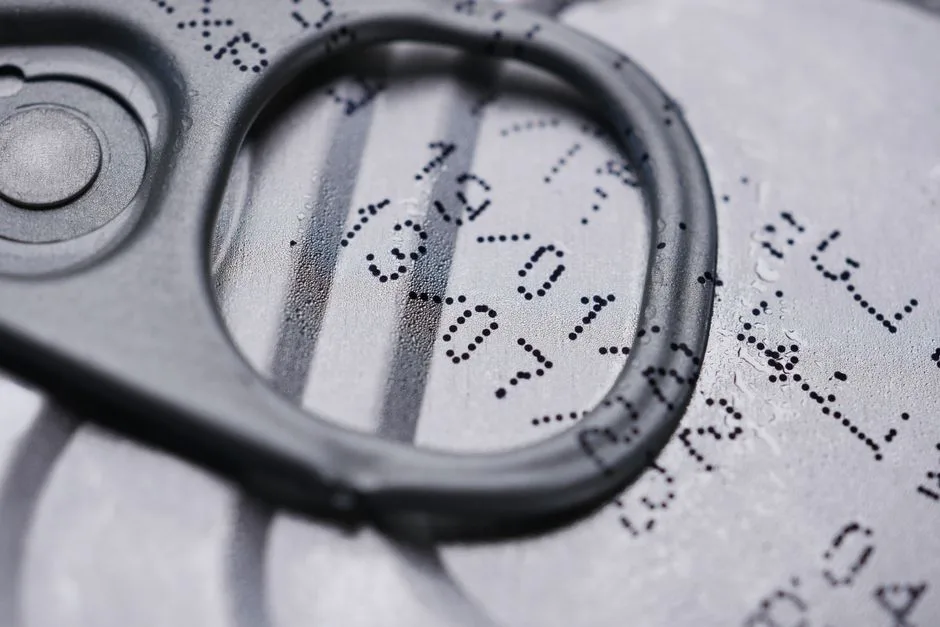
For decades, Americans have been hurling perfectly edible food into the trash because a little stamp on the package told them to. California just passed a law to fix that, and in doing so, has quietly confirmed what food policy nerds have been screaming about for years: those dates were never really about safety. They were about vibes.
The Law, In Plain English
California's new legislation standardizes the date labels printed on food packaging, drawing a clear line between 'use by' dates, which actually do indicate when a product may no longer be safe to eat, and 'sell by' or 'best by' dates, which are essentially the manufacturer's suggestion for peak quality. As NPR reports, the goal is to cut down on the staggering amount of food that gets thrown away simply because consumers don't understand what those labels mean.
Nick Lapis of Californians Against Waste told NPR that the confusion around these labels is a massive driver of food waste in the United States. People see a date, they assume it's a hard expiration, they toss the food. The yogurt goes in the bin. The bread goes in the bin. Millions of pounds of perfectly good food go in the bin. Every single day.
The new law requires clearer, standardized language so that shoppers can actually tell the difference between 'this cheese will kill you on Tuesday' and 'this cheese tastes marginally better before Tuesday.' That distinction, apparently, was too much to ask of the food industry on its own.
How Much Food Are We Actually Talking About
The scale of this problem is genuinely hard to wrap your head around. The United States wastes somewhere in the neighborhood of 30 to 40 percent of its entire food supply, according to the USDA. A significant chunk of that waste happens at the consumer level, in home kitchens and grocery stores, driven in large part by date label confusion.
California, as the most populous state in the country and the world's fifth largest economy, tends to set standards that ripple outward. When California changes its emissions rules, car companies eventually change their cars. When California changes its food labeling rules, food manufacturers who want access to 40 million consumers tend to update their packaging. This is how California policy works, for better or worse, and in this case it's pretty clearly for better.
The environmental math here is brutal. Food rotting in landfills produces methane. Methane is a greenhouse gas significantly more potent than carbon dioxide in the short term. So every loaf of bread someone throws away because the date on the bag made them nervous is, in a tiny but real way, cooking the planet faster. California apparently decided that was stupid enough to legislate against.
The Industry's Little Secret
Here's the part that should make you at least mildly furious. Date labels on food in the United States have historically been almost entirely unregulated at the federal level. Manufacturers could print basically whatever they wanted on the package. 'Best by,' 'sell by,' 'use by,' 'enjoy by,' 'freshest by,' 'peak flavor before,' whatever they felt like. There was no national standard, no required methodology, and no legal obligation for those dates to mean anything consistent.
The Food and Drug Administration regulates infant formula dates. That's it. That is the entire extent of federal date-labeling law for food safety. Everything else was voluntary, inconsistent, and largely driven by manufacturer preference and liability anxiety rather than any coherent science about when food actually becomes unsafe to eat.
So for generations, American consumers built deeply held habits around a system that was, to be blunt, made up. You threw out the milk two days before the date because you were being cautious. The date itself was a guess dressed up as a fact. Congratulations, you played yourself, and so did everyone else, and together we wasted an almost incomprehensible amount of food.
Will This Actually Change Anything
The honest answer is: maybe, and probably not as fast as anyone would like. Laws that change consumer behavior work slowly. People have spent their entire lives treating package dates as gospel, and a new California law is not going to instantly rewire those instincts. But standardized language is a real start.
As NPR spoke with Lapis about, the key is getting consumers to understand the distinction between quality and safety. 'Best by' dates are the manufacturer telling you when the product is at its tastiest. 'Use by' dates are the manufacturer telling you when the product may actually pose a health risk. These are very different pieces of information, and conflating them has cost us, in wasted food, wasted money, and real environmental damage, for decades.
California has passed the law. The harder work is the public education campaign that needs to follow it, the grocery store signage, the awareness push, the slow grinding effort to change what people actually do when they're standing in front of the fridge at 10pm trying to decide if that cottage cheese is still good. That part doesn't have a bill number yet.
The Dingo Take
Let's take a step back and appreciate the full absurdity of where we've been. The richest, most technologically advanced country in human history has spent decades throwing away roughly a third of its food supply partly because manufacturers were allowed to stamp arbitrary dates on packaging with zero federal standardization, and nobody in Washington thought this was worth fixing. California had to do it. A state law had to drag us toward basic clarity about what a date on a yogurt container actually means.
And look, this is not a partisan issue in any traditional sense. This is just a story about regulatory capture, industry inertia, and the federal government's historic unwillingness to do small, obvious things that would make life concretely better for ordinary people. The food industry liked the ambiguity. Ambiguity meant consumers threw things out sooner and bought more. The incentive structure was rotten, and it produced rotten outcomes, pun fully intended.
California deserves credit here. Californians Against Waste deserves credit. The people who have been pushing for federal date-label reform for years deserve credit. The rest of us probably owe an apology to every container of perfectly good leftovers we ever threw away in a panic because the package said 'best by yesterday.' We were played, and now, slowly, one state at a time, we are maybe getting played slightly less.





Comments