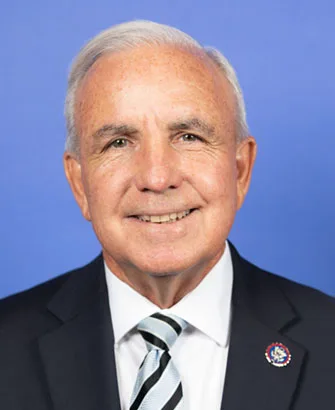
On the weekend America turned 250, two men who came to this country as children speaking no English sat down on national television and explained, with more grace than the moment deserved, why the United States is worth loving. One of them is a Republican whose party's White House deputy chief of staff just announced that citizenship "belongs only and solely to Americans." The other is a Democrat whose grandmother wept with pride the day she was sworn in. Neither of them needed a lecture from Stephen Miller about what it means to belong here.
What Stephen Miller Said Out Loud
Let's get the context down before we get to the heartwarming stuff, because the heartwarming stuff only makes sense against the backdrop of what's actually happening. The Supreme Court ruled last week that birthright citizenship is, in fact, guaranteed by the Constitution. This was not a surprise to anyone who has read the 14th Amendment, which has been settled law for roughly 130 years.
The White House's response was not to say "fair enough, the Court has spoken." Stephen Miller, Trump's deputy chief of staff and the architect of virtually every immigration restriction the administration has attempted, went on television to declare that "American citizenship isn't the birthright of the world, it belongs only and solely to Americans." Which is a sentence that, if you think about it for more than four seconds, answers nothing and raises an immediate follow-up question: who gets to decide who counts as American in the first place? Stephen Miller, presumably.
This is the political climate in which Face the Nation, moderated by Ed O'Keefe in the absence of Margaret Brennan, decided to mark America's 250th birthday by airing an interview with two immigrant members of Congress. It was either very good timing or very pointed programming. Possibly both.
Twenty-One People in One House
Republican Congressman Carlos Gimenez of Florida was not quite seven years old when his family fled Cuba at the start of the Castro regime. He remembers 21 people crowded into his uncle and aunt's house. He remembers a parochial school. He remembers a nun telling him, in a language he couldn't speak, that tomorrow was his first day of school. "That was my first word in English," he told CBS News.
His parents, he explained, came because they wanted freedom. Not as an abstraction, not as a bumper sticker, but because his father watched his young son come home one day asking questions that sounded like communist indoctrination, and decided that was enough. They left. They came to the United States. Gimenez grew up, thought in English, became a Miami mayor, became a congressman, and now sits on a committee that shapes immigration law.
That's the arc of it. That's the story. And Gimenez, to his credit, said clearly on CBS News that he agreed with the Supreme Court's ruling on birthright citizenship. "It's pretty well established in law for about 130 years," he said. He added that he always felt the administration's legal challenge on that front "really was going to fail" and that he was "proven right."
The Cold December in Washington Heights
Democratic Congressman Adriano Espaillat of New York was nine years old when he arrived from the Dominican Republic. He remembers the cold, which apparently hits differently when you've grown up in the Caribbean. He remembers his grandparents' four-and-a-half room apartment in Washington Heights. He remembers sitting in the back of a classroom for more than a year, not understanding a word anyone was saying around him.
"Surely and slowly we acclimated," he told CBS News, "and here we are." The understatement of the decade. "Here" is the United States Congress, where Espaillat now represents a district full of people whose stories rhyme closely with his own.
His grandmother was the first in the family to become a citizen. She was proud of it in a way that, as Espaillat described it, radiated outward through the whole family. She talked about what this country gave them. She translated her own pride into something her grandchildren could carry. Espaillat is still carrying it, which is why he was sitting in a television studio on July 4th weekend, being asked to explain America to an audience that includes a White House actively trying to narrow who gets to be part of it.
Where Gimenez Gets Complicated
Here is where the interview gets worth paying close attention to, because Gimenez is not a simple story and this piece isn't going to pretend he is. He agreed with the Court on birthright citizenship. Good. Full stop, right call, the law is the law.
But he also told CBS News that he thinks Congress needs to address what he called a "cottage industry" of "childbirth citizenship," referring to women who travel to the United States specifically to give birth so their child becomes a citizen. He said the writers of the 14th Amendment "never had that in mind" and called it "abusing the system."
This is the position a lot of Republican members stake out when they want to sound reasonable on birthright citizenship while still feeding the machine that produces Stephen Miller's press appearances. The legal framework Gimenez says he supports would still protect birthright citizenship broadly. But the framing, the idea that there's a wave of women gaming the Constitution's maternity ward, is one that conveniently points toward the same policy outcomes the administration wants, just with more procedural courtesy attached. It's worth watching how that legislative push actually develops.
On a separate but related front, CBS News reports that the Supreme Court also ruled recently that approximately 356,000 people from Haiti and Syria will lose their Temporary Protected Status, following the Trump administration's decision to cancel their legal protections. O'Keefe pressed Gimenez on this directly, given the significant Haitian community in South Florida. The transcript cuts off before Gimenez's full answer, which is unfortunate, because that's a harder question than the birthright one and his district makes it impossible to dodge entirely.
The 250th Birthday Party Nobody Planned
The backdrop for all of this, per CBS News's full broadcast summary, was America's 250th birthday. Trump gave a speech on the National Mall promising that "there is nothing that Americans cannot do." Record-breaking heat waves swept the country. Thousands were evacuated from the Mall when lightning and storms rolled through, then returned to watch what was billed as the largest fireworks display in world history, which apparently ran past midnight.
The whole production was very large and very loud and very American in exactly the way that makes other countries nervous. In the middle of it, two men who came to this country with nothing, who spent their first years here in silence in the back of classrooms, sat on television and talked about what the country actually means to people who had to choose it.
That contrast, between the pageantry of 250 years and the ongoing bureaucratic effort to make sure fewer people can access what those years supposedly represent, is the actual story of this particular Fourth of July. The fireworks were impressive. The policy is uglier.
The Dingo Take
Here is what Stephen Miller and the architects of this administration's immigration policy cannot afford to let people think about too carefully: Carlos Gimenez's father put 21 people in one house and crossed an ocean because he heard communism in his kid's questions. Adriano Espaillat's grandmother cried when she swore an oath because she understood, in her bones, what that oath cost and what it meant. These are not edge cases in American history. These are the central story. The 14th Amendment wasn't a loophole. It was the whole point.
Gimenez is a complicated figure here and it would be dishonest not to say so. He's a Republican member of Congress who voted with a party that spent years trying to strip the constitutional protection he just praised the Supreme Court for upholding. His concerns about "birth tourism" are real in the narrow sense that the practice exists, but they are also useful, in a very convenient way, to a movement that wants to redefine citizenship around bloodline rather than birth. You can agree with the Court and still quietly help build the legislative scaffolding for the next challenge. Watch his votes, not just his television appearances.
But take the two men together and you have something the White House's talking points genuinely cannot answer. They came here small and scared and unable to speak the language. They became the people who write the laws. That is the American citizenship Stephen Miller says belongs "only and solely to Americans," and the audacity of that framing, delivered by a man whose own grandparents fled pogroms, would be funny if the consequences for the people currently in TPS limbo weren't so catastrophic.





Comments