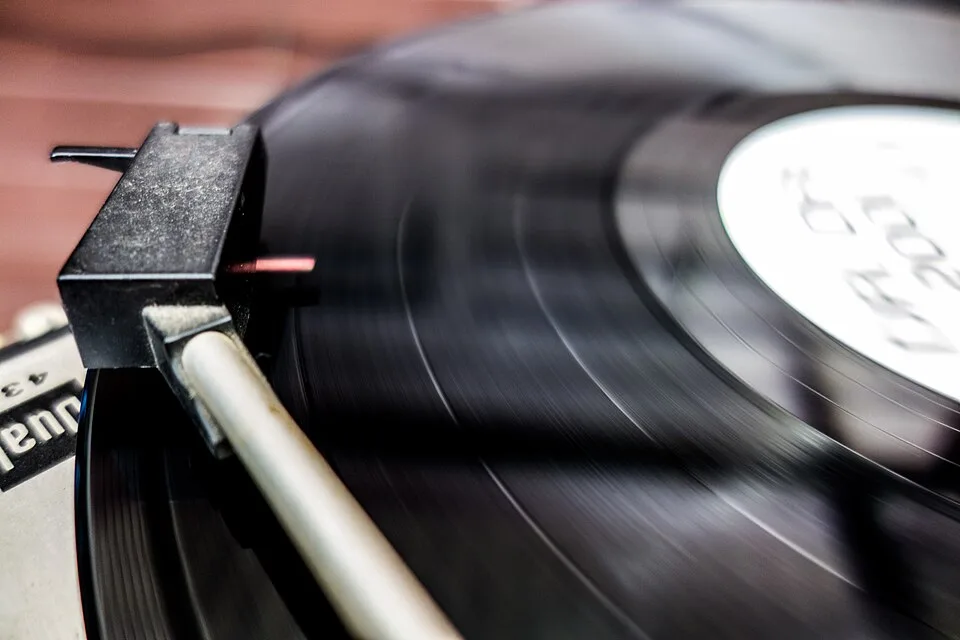
Somewhere in Seattle, a woman with a David Bowie tattoo took off her shoes, sat down in a back room, and paid twenty dollars to listen to an album she could have streamed for free at home. She was not alone. She was, in fact, part of a sellout crowd.
Yes, This Is a Real Thing and It's Spreading
CBS News reports that listening bars have exploded across the United States in recent years. These are venues where people pay to sit quietly and hear full-length albums played on audiophile-grade equipment, in a communal setting, with no distractions.
Seattle's Shibuya HiFi runs around 80 of these curated listening sessions every single month. They sell out. Guests leave their drinks and their shoes at the door, file into the back room, and just... listen. To Bjork. To Bowie. To whatever the night's program calls for.
This isn't just a Seattle thing. Similar venues have opened in Edina, Minnesota, in Kansas City, Missouri, and in Denver, Colorado. The concept takes its roots from the Japanese jazz kissas, listening bars that started drawing crowds in Japan back in the 1930s. What took the rest of us so long is a genuinely interesting question.
What Streaming Did to Your Brain (And Your Ears)
Here's the thing about having 100 million songs in your pocket: you stop actually listening to any of them. You have music on while you answer emails. You skip tracks before they finish. You treat entire albums like background noise for doing other things.
Devon Turnbull, an artist and audio equipment designer whose company Ojas builds handmade, high-end speakers, told CBS News he felt it happening to himself. "I realized I was really, like, losing touch with the way of listening to music that was moving emotionally for me," he said.
Turnbull describes the rise of these spaces as a "new wave" of listening bars. The shift from records to mp3s to streaming gave everyone access to more music than any human could hear in a lifetime, and somewhere in that abundance, the actual experience of listening got quietly swapped out for something cheaper and worse. People are now paying money to get the original thing back.
Andrew Carnegie's Library Is Now a Speaker Demo
Turnbull builds his custom audio equipment out of a warehouse in Brooklyn's Navy Yard. His speakers routinely end up in private living rooms belonging to people with very large budgets. But his current project is a bit more public-facing.
The Smithsonian's Cooper Hewitt Museum in New York City is currently showing his installation called "HiFi Pursuit Listening Room Dream No. 3," which CBS News reports is housed in what was once Andrew Carnegie's private library. That is a genuinely remarkable sentence to type. The steel baron's reading room is now a place where people sit and experience what serious, intentional listening actually feels like.
"Pursuit is a really important part of the title," Turnbull told CBS News. "I am not here to say that I have made the ultimate sound system. This is about my pursuit as a builder, as someone who's passionate about building audio equipment and listening to music through it." He's already thinking about what Dream No. 4 looks like.
The Sitting Quietly Problem
One attendee at Turnbull's Cooper Hewitt installation, a man named Brandon Stalling, put it plainly. "To sit and be quiet, it's a lost form, it's a lost art," he told CBS News. "To have a space to sit and just wonder and be in your own thoughts and be able to sit quietly and just let the music kind of take you on that ride, I think that's the type of journey that needs to happen a lot more."
That's not a man describing a leisure activity. That's a man describing something closer to a basic human need that got quietly removed from modern life and replaced with infinite scroll.
Turnbull runs workshops where he tries to get younger listeners thinking about sound from first principles. He told CBS News that when designing a listening room, the physical experience matters as much as the audio quality. "As much as the way it looks is important, just the smell and the light and everything, the comfort of the seat, that all contributes to the experience," he said. This is, it turns out, what going to a concert hall always was. We just forgot.
The Price of Paying Attention
There's something genuinely funny about the economics here. Spotify charges about $11 a month for access to essentially all recorded music in human history. Shibuya HiFi charges $20 a ticket to hear one album. And the $20 tickets sell out.
Part of this is the equipment, to be fair. A listening bar gives regular people access to speaker systems that might cost tens of thousands of dollars to own, as CBS News points out. Most people are not going to buy a pair of Ojas speakers for their apartment. But they might pay twenty bucks on a Friday night to hear what music actually sounds like when the hardware isn't an afterthought.
But the equipment is only part of it. The other part is the permission. Permission to sit down, put away your phone, take off your shoes, and do nothing except listen. That's what the twenty dollars is really buying. And the fact that people are lining up to purchase that permission says something uncomfortable about what we've done to our own attention spans.
The Dingo Take
Look, there's an obvious joke here about paying for something you already have for free, and yes, the listening bar boom has a certain Brooklyn-artisanal-sourdough energy to it. Noted. But step back for a second and think about what it actually means that enough Americans feel so incapable of sitting quietly with music in their own homes that a new industry has emerged to provide them a dedicated room in which to do it.
Streaming didn't just change how we access music. It changed our relationship to attention itself. Infinite choice turns out to be its own kind of poverty. When everything is available all the time, nothing demands to be heard. The listening bar is the corrective, and it exists because the thing it corrects for got so bad that people noticed the absence and started spending money to fill it.
Turnbull told CBS News he'll still be messing with circuits and speaker enclosures when his hearing is gone and his hands are shaking. That's either a beautiful commitment to craft or a very on-brand way to describe a future in which everyone is desperately trying to feel something through the noise. Probably both.




Comments