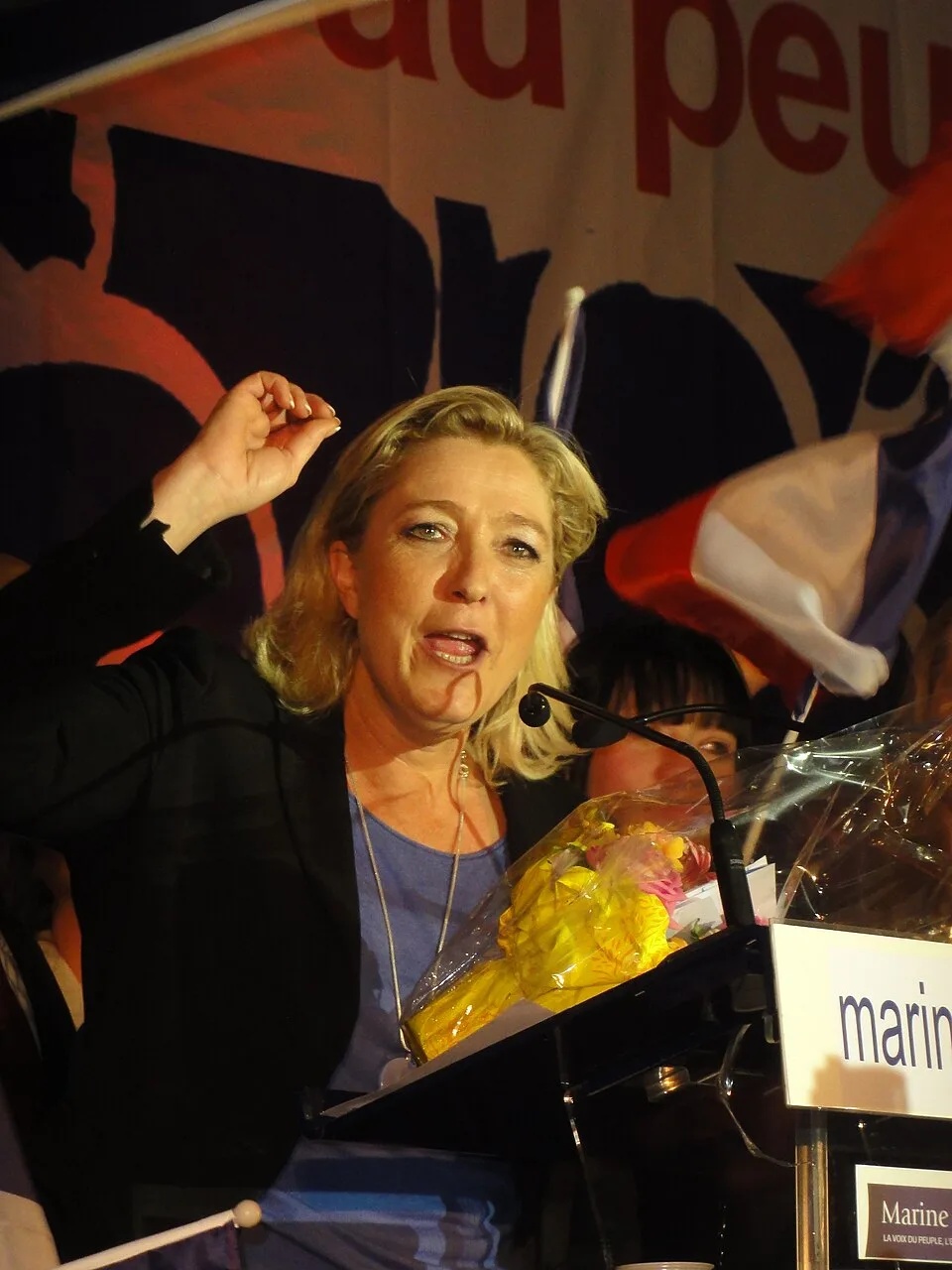
A French appeals court ruled Tuesday that Marine Le Pen, convicted embezzler and three-time presidential candidate, is technically eligible to run for president of France in 2027. The catch: she'd have to campaign while wearing an electronic ankle tag. Le Pen, for her part, has already said that's not going to work for her.
What the Court Actually Decided
Here's the situation. Le Pen was convicted in March 2025 of embezzling 1.4 million euros, roughly $1.6 million, in European Parliament funds to pay two senior members of her then-party, the National Front, as parliamentary assistants when they were actually doing party work. The original sentence handed down by the trial court was five years of ineligibility to hold public office, plus four years in prison and a 100,000 euro fine.
The Paris appeals court upheld the conviction on Tuesday but tinkered with the numbers. According to CBS News, the court reduced her ineligibility from five years to 45 months, with 30 months suspended and 15 already served. That math, conveniently, puts her just past the threshold in time for the April 2027 first-round vote. The prison sentence was also trimmed from four years to three, with two suspended and one to be served under house arrest with an ankle bracelet.
So yes, she is legally cleared to run. And yes, she has to wear an ankle tag while doing it. The house arrest conditions that were suspended during the appeals process were reinstated by Tuesday's ruling, NBC News reports, meaning the clock on the bracelet starts now.
The Ankle Tag Problem Is Not Small
Le Pen has been pretty explicit about what she thinks of campaigning under electronic monitoring. Last week, before the ruling came down, she told interviewers: "If it is a matter of allowing me to run as a candidate while effectively preventing me from campaigning with complete freedom, you will surely understand that that is not possible." She added, per CBS News, that a presidential candidate "must be completely free to move about" and said she cannot "depend on a magistrate to authorize me to hold a rally in Romorantin or visit a market in Hénin-Beaumont."
That is a remarkably specific grievance about rally locations, but the underlying point stands. Running for president of a country while legally tethered to your house is not exactly a logistical slam dunk. She was set to give a prime-time interview on TF1 Tuesday evening, at which point she may announce whether she intends to run, step aside, or appeal further.
There is one potential lifeline. CBS News reports that Le Pen may request the electronic bracelet sentence be reduced to six months, which would free her up to campaign without restriction by early 2027. Her lawyer, Rodolphe Bosselut, called Tuesday's verdict a "good start" and said he was "partially" happy with the outcome. Good start. Sure.
What She Was Actually Convicted Of
Let's not lose the thread here. This is not a technicality. This is not a procedural dispute. Le Pen and eight current or former members of her party were found guilty of a scheme, running from 2004 to 2016, in which EU parliamentary funds meant to pay legislative assistants were instead used to pay National Rally party staff doing party work. Investigators concluded the hires were not isolated cases but part of what they described as a wider system of "fake jobs," according to NBC News.
A dozen others who served as parliamentary aides for National Rally also received guilty verdicts, per CBS News. The party itself was fined 2 million euros, half suspended. Le Pen's defense at appeal was that the party had "absolutely no sense of doing anything wrong whatsoever." That argument did not persuade the court. The conviction stands.
Bardella Is Waiting in the Wings, Sort Of
If Le Pen decides the ankle bracelet situation is disqualifying, the obvious replacement is Jordan Bardella, 30 years old, current president of the National Rally, and a man who joined the party at 16 because of Le Pen. He posted a lengthy tribute to Le Pen on X Monday, declaring his support "total" and insisting that "nothing can justify Marine Le Pen being excluded from the choice of the French people."
He may end up being that choice anyway. According to pollster Adelaide Zulfikarpasic of Ipsos BVA, speaking to RTL radio Tuesday, Le Pen and Bardella have "more or less the same score in the polls." Both are pulling between 31 and 36 percent support, which puts them far ahead of any rival party heading into the first round of voting.
Why This Actually Matters Beyond France
The 2027 French presidential election is not a sideshow. France is a founding EU member, a nuclear power, and one of the few remaining Western democracies where the far right hasn't actually seized the top office. That margin has been shrinking. In 2017, Macron beat Le Pen by a significant margin. In 2022, that margin closed to 18 points. Macron is constitutionally barred from running again, per CBS News, meaning the Republican Front, the informal cross-party coalition that has historically united to block far-right candidates in second-round runoffs, will have to do its job without its most successful recent standard-bearer.
CBS News notes that pollster Zulfikarpasic said she has "never, in my memory as a pollster" seen the National Rally measured at such levels at this stage of an election. Le Pen's father, Jean-Marie Le Pen, the convicted antisemite who founded the party in 1972, got 0.74 percent of the vote in his first presidential run. His daughter made the second round twice. His granddaughter's generation of the party may actually win the whole thing.
Some of Le Pen's supporters, for what it's worth, responded to last year's initial conviction by sending death threats to the judge who handed it down, according to Agence France-Presse. This information is offered without additional comment.
The Dingo Take
Let's take stock of what just happened. A woman who was convicted of running a multi-year fake jobs scheme to steal EU funds is now cleared to run for president of France, contingent on whether she can get her ankle bracelet sentence reduced enough to attend her own campaign rallies. Her lawyer called it a "good start." Her party leader called her exclusion unjustifiable. The polls have her party at 36 percent. This is where we are.
The right has perfected the art of framing criminal accountability as political persecution. Le Pen called her original conviction a "witch hunt" and a "democratic scandal." Sound familiar? The script is exactly the same one deployed everywhere from Mar-a-Lago to Budapest to Rome. Get convicted, claim martyrdom, watch the poll numbers hold or climb. The conviction is the brand now.
The French election is still nine months away and a lot can change. But right now, the most likely outcome of the 2027 French presidential race is a National Rally candidate in the Elysee Palace, ankle tag or not. The Republican Front coalition has stopped the far right twice in second-round runoffs. Whether it can do it a third time, without Macron, against a party polling in the mid-thirties, is a genuinely open question. Europe should probably be paying attention.



Comments