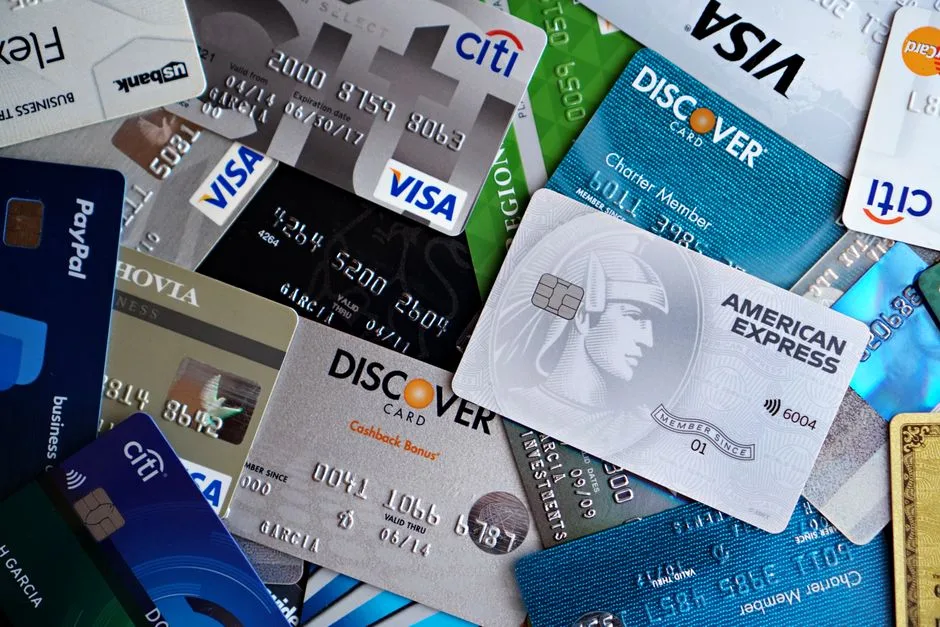
American companies are collectively stealing $165 billion a year from you, and the weapon of choice is not a heist or a scam — it's the hold music, the hidden fee, the cancellation process designed by someone who genuinely hates you. A group of Democratic policy veterans has decided to do something about it, and they're calling their plan Project 2029.
Yes, They Named It After the Thing That Haunted Them
Look, the name is not subtle. Project 2029 is a direct, unambiguous response to Project 2025, the Heritage Foundation blueprint that the Trump administration essentially used as a governing instruction manual. Democrats spent all of 2024 warning voters about Project 2025, then watched helplessly as the incoming administration cracked it open like an IKEA guide on day one.
According to NPR's Planet Money, that experience apparently stung enough that some Democratic policy veterans decided to build their own version. The result is Project 2029, an effort to hand a future Democratic president a ready-to-go governing agenda before they ever set foot in the Oval Office. Chad Maisel, former special assistant to President Biden on the White House Domestic Policy Council, is running the operation as executive director.
"I think the lesson from Project 2025," Maisel told NPR, "is just the importance of preparation." He wants a future Democratic president to have, in his words, "a bookshelf full of really bold, transformational ideas" that can be deployed on day one. The shelf, for now, includes one proposal that should resonate with basically every human being alive: killing the annoyance economy.
What Is the Annoyance Economy and Why Does It Cost $165 Billion
The annoyance economy is a term Maisel developed with Neale Mahoney, a Stanford economist who directs the Stanford Institute for Economic Policy Research. Together, they describe it as the sprawling ecosystem of business practices specifically engineered to waste your time and squeeze your money. NPR reports their joint estimate puts the cost to American families at "at least $165 billion" every year.
Think about what that actually covers. Hidden fees that materialize at checkout like bad news. Subscription services that make canceling feel like filing a federal tax appeal. Health insurance paperwork designed to exhaust you into giving up. Robocalls. Spam texts. AI phone agents that make you nostalgic for the rudest human customer service rep you ever dealt with. Waiting on hold for an hour to fix a billing error that was the company's fault in the first place.
This is not a minor irritation. This is a coordinated economic extraction system, and corporations profit enormously from every minute you spend trapped in it. The friction is not a bug. It is the product.
They Tried This Before — Here's What Happened
Project 2029 did not invent this fight. Maisel and Mahoney worked together in the Biden White House, where they helped craft a federal rule targeting junk fees — those mandatory charges companies quietly tack on after advertising a lower price. That work contributed to the FTC implementing a rule in 2024 that banned junk fees for hotels, vacation rentals, and live events. Biden devoted a notable chunk of his 2024 State of the Union address to it.
That success led to the "Time is Money" initiative, a broader set of proposed federal rules unveiled in the summer of 2024. It was ambitious. It was popular. And then Biden left office before most of it could take effect. Most of those proposals never happened.
NPR reports that the airline industry spent millions opposing a rule that would have required cash refunds for significant flight delays. The Trump administration scrapped that rule in November 2025. Telecom industry groups sued to block the FTC's proposed "click-to-cancel" rule, which would have required companies to make canceling a subscription as easy as signing up for one. The industries that profit most from making your life miserable are very, very motivated to keep things exactly as they are.
What Project 2029 Actually Wants to Do
Project 2029 is still in early stages, with proposals rolling out over the next year or so, according to NPR. The broader agenda includes what you'd expect from Democrats right now: lowering child care costs, making housing and health care more affordable, reducing energy bills, protecting kids online.
But the annoyance economy plank is the one with the most immediate, visceral appeal. Maisel and Mahoney have published a policy brief calling for a new series of rules and regulations to end these practices at the federal level. The argument is that these daily frustrations are not just annoying in a personal sense — they represent a genuine, large-scale economic problem that affects working families disproportionately and that policymakers have largely ignored because it does not have the drama of a market crash or a factory closure.
"American companies derive big profits from these painful interactions — and fight to protect them," Maisel and Mahoney write in their brief. That is not a conspiracy theory. That is a corporate earnings call.
Can This Actually Win Elections
The political calculation here is interesting. The junk fees campaign under Biden was genuinely popular across party lines. People do not enjoy being deceived at checkout. Republicans hate spam texts too. Nobody has warm feelings about the insurance prior authorization process. The annoyance economy is one of the few places in American political life where the populist anger of a MAGA voter and a progressive activist might actually land on the same target.
The risk is that Democrats have a habit of winning the policy argument and losing the communications fight. They passed the Inflation Reduction Act, which contained prescription drug price negotiation that polling showed was wildly popular, and then managed to get almost no political credit for it. Maisel's explicit goal with Project 2029 is to not repeat that pattern — to have the policies ready, the messaging sharp, and the implementation plan built before a Democrat ever wins back the White House.
Whether any of this matters depends, obviously, on whether Democrats win in 2028. But as political strategies go, "spend the next two years preparing to actually govern" beats the alternative, which is apparently what happened last time.
The Dingo Take
Here is a thing worth sitting with: the same administration that scrapped the cash refund rule for flight delays and let telecom companies sue click-to-cancel into oblivion is the one that swept into power with a detailed governing document written by think tanks and was ready to go on day one. Democrats, meanwhile, showed up to that election having spent four years governing and roughly fifteen minutes preparing for what came next. Preparation is not glamorous. It does not go viral. But it turns out it matters.
The annoyance economy framing is smart because it is honest. Maisel and Mahoney are not telling voters about abstract macroeconomic forces or supply chain inefficiencies. They are saying: the reason it takes forty-five minutes to cancel your gym membership is because that gym is making money off those forty-five minutes, and someone in power should make that illegal. That is a message that translates. It does not require a graduate degree. It requires a pulse and a phone plan.
The real test is whether any of this survives contact with the industries that profit from the status quo. The airline industry spent millions to kill a refund rule. Telecoms lawyered up against click-to-cancel. These companies are not going to hand over $165 billion in annual extraction revenue because a policy brief made a compelling argument. Whatever comes after Project 2029 needs to be built for a fight, not a seminar. The blueprints are only useful if somebody actually builds something.



Comments