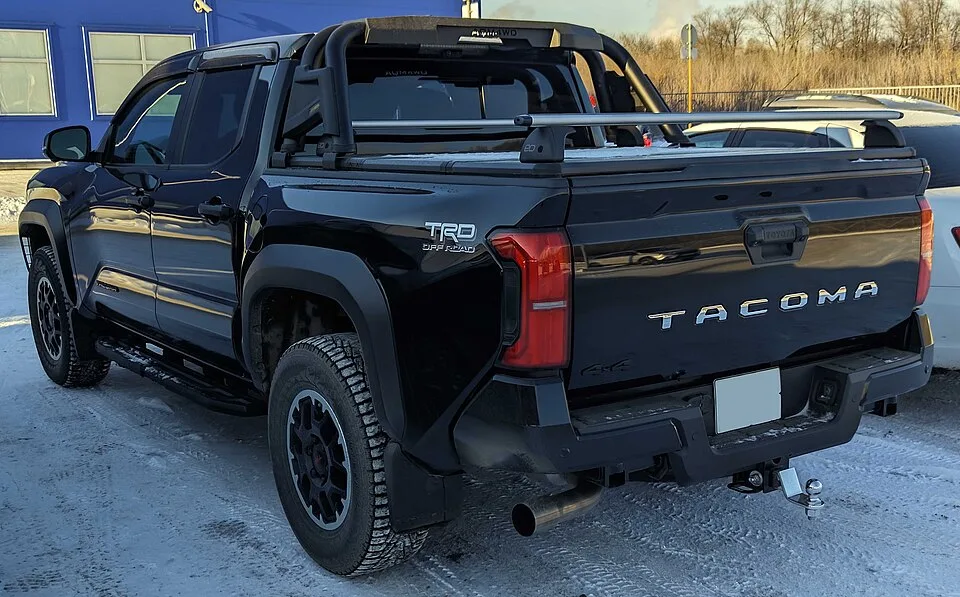
Toyota just announced a $3.6 billion investment to move most of its Tacoma pickup truck production from Mexico to San Antonio, Texas — and the reason why tells you everything about what Trump's trade war is actually doing to the North American economy. The world's largest automaker by vehicle sales is not doing this because Texas has great weather. It's doing this because the rules of the road just got shredded, and when a company that sells millions of cars a year sees which way the wind is blowing, it moves.
What Toyota Actually Announced
According to CBS News, Toyota will build a second assembly line at its existing San Antonio plant, creating more than 2,000 jobs and bumping annual production capacity by 150,000 units. The transition will take roughly four years, pulling the bulk of Tacoma manufacturing out of Toyota's Tijuana, Mexico facility.
Toyota will still build some Tacomas at its Guanajuato, Mexico plant, so this isn't a complete pullout from Mexico. But the direction of travel is unmistakable. The San Antonio plant already produces Tundra pickups and Sequoia SUVs, and a new rear axle assembly facility on the same Texas campus is set to open this fall. The company is building a serious American manufacturing hub, and it's doing it fast.
This is also part of a larger commitment Toyota made back in November to invest as much as $10 billion in the United States over the next five years. Monday's $3.6 billion San Antonio announcement is a significant chunk of that pledge, and it's clearly being accelerated by the current political environment.
The Trade Deal Grenade That Started This
Here's the context you need. Just days before Toyota's announcement, Washington declined to renew the US-Mexico-Canada Agreement, the North American trade pact that has governed cross-border manufacturing for years. CBS News reports that although the USMCA technically remains in force for another decade, the Trump administration announced it will now be reviewed annually. That single change, a pact that was supposed to provide long-term certainty now living year-to-year on Washington's whims, is the kind of thing that makes corporate planning departments have collective panic attacks.
For automakers, the USMCA was the backbone of the whole North American production model. GM, Ford, Stellantis, Toyota, Honda — they all built supply chains that crossed the US-Mexico border dozens of times before a finished vehicle rolled off the line. That model was built on the assumption that the trade rules would stay stable. Trump just told everyone that assumption is dead.
Toyota's own statement made the stakes clear. CBS News quotes the company saying it "encourages a quick resolution to USMCA to make the North American region globally competitive." That's corporate-speak for: please stop breaking things, we are trying to run a business here.
Tariffs Are Doing the Work Trump Said They Would
To be fair to the administration, this is exactly what Trump said tariffs were supposed to accomplish. He said slap enough taxes on imported vehicles and auto parts, and companies would move production to the United States. Toyota moving Tacoma production to Texas is, on its face, that theory in action. Two thousand jobs in San Antonio is real.
But the mechanism here is closer to coercion than persuasion. Toyota isn't coming to Texas because America suddenly became the optimal place to build trucks. It's coming because Trump has made the alternative, keeping production in Mexico under a stable trade framework, too risky to count on. CBS News notes that Toyota and other major automakers are shifting production as Trump raises tariffs on automobiles, steel, and aluminum, among other goods. This is companies responding to threats, not to opportunity.
The difference matters, because coerced investment comes with a hidden cost. Prices on vehicles built under tariff-pressured supply chains tend to go up. The consumer who buys a Tacoma in 2028 will likely pay more for it than they would have under the old model, even if that truck was assembled in Texas.
What This Means for the Workers in Tijuana
Lost in the American jobs story is what happens to the Mexican workers building Tacomas right now in Tijuana. Toyota shifting most of that production out does not mean those workers find equivalent jobs next week. It means a facility that employed a significant workforce starts winding down a major product line over four years, with the company's own statement offering nothing more than vague assurances about continued commitment to Mexico.
This is the part of the tariff war story that rarely makes it into American political speeches. The disruption is real and it falls on workers who had nothing to do with US trade policy and no vote in any American election. The "America wins" framing papers over the fact that North American economic integration was, for all its flaws, keeping a lot of people employed on both sides of the border.
Toyota keeping some Tacoma production in Guanajuato is a small buffer, but it's not a plan. It's a hedge.
The Bigger Picture Nobody Wants to Say Out Loud
Toyota is the world's largest automaker by vehicle sales. When a company that size moves $3.6 billion in capital and restructures a major product's entire supply chain in direct response to US trade policy, that is not a routine business decision. That is a signal. Other automakers are watching. Every company with production in Mexico is running the same math right now.
The annual USMCA review mechanism is the thing that should worry everyone in the long run. A trade agreement that could be renegotiated or effectively gutted every twelve months is not a trade agreement — it's a recurring hostage situation. Companies don't build factories and supply chains on a one-year horizon. They build them on twenty-year horizons. Making the rules of trade contingent on Washington's annual mood is a way of ensuring that North American manufacturing integration never fully recovers, even if a future administration tries to put it back together.
The Dingo Take
Give Trump credit where it's due: he said he'd bring auto manufacturing jobs back to the United States, and Toyota is bringing auto manufacturing jobs back to the United States. That's a real thing that happened. Two thousand jobs in San Antonio is not nothing. If your entire evaluation of policy begins and ends with "did the number go up," you can stop reading here and go post something triumphant.
But if you care about how the sausage gets made — the trade framework that just got destabilized, the Mexican workers watching their jobs migrate north, the American consumers who are going to pay more for trucks because the supply chain got scrambled, the corporate planners who are now structuring decade-long investment decisions around a trade deal that might get reviewed out of existence in any given January — then this story is considerably more complicated than a ribbon-cutting ceremony in Texas.
Toyota's statement calling for "a quick resolution to USMCA" is a company in polite corporate language telling Washington to get its act together. They're investing in America because they have to, not because the policy environment is stable or sensible. There is a version of this story where American manufacturing wins. There is also a version where we blew up a functional trading relationship and replaced it with uncertainty, higher prices, and a geopolitical mess with Canada and Mexico that will outlast this administration by a decade. Right now we're living in both versions simultaneously, which is about as comfortable as it sounds.


Comments