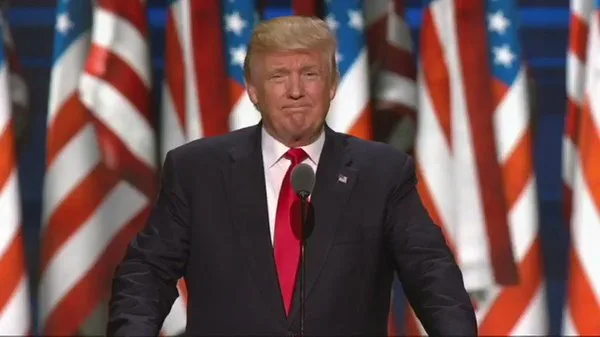
Donald Trump stood in front of Mount Rushmore on America's 250th birthday and warned the nation about a resurgence of the "communist menace." The economy is cratering, his Iran war is a disaster, and his immigration raids have become deeply unpopular, so naturally the man pivoted to a scare tactic that last had real traction in 1954. Robert Reich, writing in The Guardian, has the full autopsy.
When You've Got No Cards, Play the Scary Old One
Here's the thing about political desperation: it has a smell. And right now, according to Reich writing in The Guardian, Trump reeks of it.
The argument is bracingly simple. Trump cannot run on the economy because prices are still rising faster than wages, which means most Americans are objectively getting poorer. He cannot run on foreign policy because, per The Guardian's summary, his war in Iran has been a debacle, his tariffs have failed, and Ukraine is still very much at war despite his famous Day One promise. He cannot run on immigration because the raids and mass deportations have curdled into something so broadly unpopular that even his own base has grown queasy.
So what do you do when the cupboard is bare and the midterms are coming? You dig all the way to the back of the pantry and pull out the moldy, decades-expired can of red-baiting. Trump's exact words at Mount Rushmore: "There is now a resurgence of the communist menace in our land, including from newcomers to our country who embrace ideas totally opposed to our way of life and our great success. You can be a communist, or you can be a patriot. You cannot be both."
Wow. Stirring stuff. Very original. Very 1950.
A Brief History of This Exact Same Trick
Reich is careful to point out that this is not a new move. It is not even a creative remix of a new move. It is the move, the one Republicans have reached for every time they wanted to kneecap the left and had no substantive argument to make.
After both World Wars, as The Guardian piece details, "communist" became the word you attached to anyone whose politics you wanted to destroy. The Republican National Committee ran the 1946 midterms as a "battle between Republicanism and communism." The RNC chair claimed the federal bureaucracy was stuffed with "pink puppets." Southern segregationist Democrats piled on too, with Mississippi Senator Theodore Bilbo, a literal Klansman, calling multiracial labor unions a plot by "northern communists." The tactic worked brilliantly. Democrats lost both chambers of Congress in 1946, and Wisconsin sent Joe McCarthy to the Senate to really get the party started.
Then McCarthy overplayed his hand, a young army lawyer's reputation got dragged through the mud, and attorney Joseph Welch delivered the line that every civics teacher has quoted ever since: "Have you no sense of decency?" McCarthy imploded almost overnight. Censured, ostracized, ignored, he drank himself to death at 48. The scare had a shelf life, and the American public eventually smelled the rot.
Roy Cohn, the Connective Tissue Nobody Wants to Think About
Here is where Reich's piece gets genuinely interesting rather than just historically instructive. McCarthy's chief counsel during the Army hearings was a young lawyer named Roy Cohn, who had made his bones prosecuting Julius and Ethel Rosenberg and sending them to the electric chair. After McCarthy collapsed, Cohn reinvented himself as a New York power broker, surviving, according to The Guardian, "scandals, indictments, and accusations of tax evasion, bribery and theft."
Cohn then became Donald Trump's mentor.
So when you wonder why Trump's brain reaches instinctively for McCarthyite tactics the moment things go sideways, the answer is not complicated. He learned from the guy who literally learned at McCarthy's knee. The red-baiting playbook was not handed down through abstract cultural osmosis. It was handed down personally, man to man, from one of McCarthy's own lieutenants to the current president of the United States. That is not a metaphor. That is a direct line.
The Targets This Time Are Genuinely Not Communists
The specific politicians Trump is trying to tar with this brush are Zohran Mamdani, Alexandria Ocasio-Cortez, Seattle's Katie Wilson, Colorado's Melat Kiros, and a rising class of young Democratic politicians who are popular, per The Guardian, because they are taking on corporate America and advocating for things like Medicare for All, universal childcare, free public higher education, and higher taxes on the ultra-wealthy.
Policies, Reich points out, that most Americans actually support in polling.
This is the central absurdity of the play. McCarthy at least had the Soviet Union actively trying to recruit American spies, which gave his hysteria some real-world texture to latch onto, however dishonestly he used it. Trump is pointing at politicians whose main beef is that insulin costs too much and college debt is crushing an entire generation, and calling that communism. The charge does not fit. It fits the way a Halloween mask fits: you can tell what it's supposed to be, but nobody is actually scared.
Why It Probably Won't Work This Time
Reich's core argument is that Trump is throwing scary labels at the wall to see what sticks because he has nothing else. That is probably right. But it is also worth examining why the tactic may land differently in 2026 than it did in 1946.
In 1946, the Soviet Union was a real and genuinely threatening geopolitical force that had just finished being America's awkward ally in a world war. The anxieties McCarthy exploited were not invented from thin air; he was lighting an existing fire with a blowtorch. Today, the "communist menace" Trump is describing is a group of young American politicians who want universal healthcare. The villain does not scan.
McCarthyism also had television as a weapon and a largely compliant mainstream press that amplified the charges before they were scrutinized. Today's media environment, for all its catastrophic flaws, also includes an immediate debunking infrastructure and a generation of voters who grew up with free public WiFi at the library and still cannot afford rent. Telling them that Medicare for All is Stalinist may not land the way Trump's team is hoping.
The Dingo Take
Let's be direct about what is happening here. A president whose economy is failing, whose war is failing, whose signature domestic policy has become a political liability, stood in front of four stone presidents and invoked a red scare that was already discredited seventy years ago. This is not a sign of strength. This is a tell. Poker players have a word for the face a person makes when they are holding nothing and they know you know it.
The Roy Cohn connection is the part that should stick in your memory. Trump did not arrive at McCarthyism by accident or cultural inheritance alone. He was tutored in it by a man who watched McCarthy do it live, from the front row. The playbook was passed down like a family heirloom, except the family is a loose association of powerful men who have spent the better part of a century trying to discredit any political movement that might inconvenience them. Medicare for All is not communism. It is what every other wealthy country on earth has already figured out. Calling it a menace does not make it one.
The question for the midterms is whether "have you no sense of decency" still lands. Welch asked it in 1954 and McCarthy was finished within months. The American public, when it finally focused, recognized the performance for what it was. Whether that same instinct still functions in 2026 is the only question that matters, and nobody, including the man standing at Mount Rushmore waving a ghost around, knows the answer.



Comments