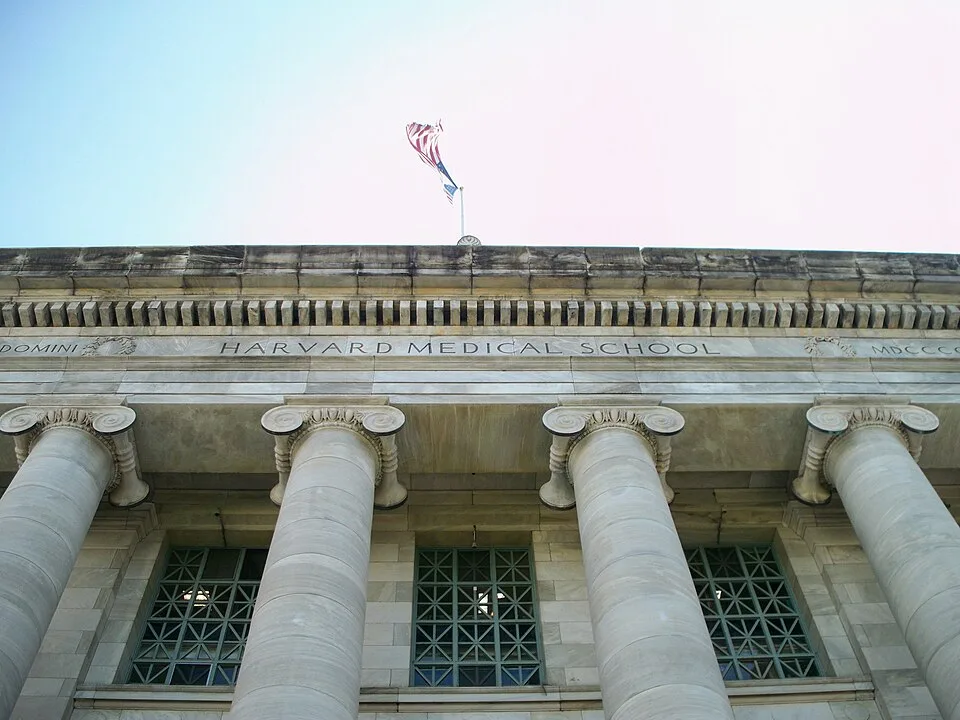
A Harvard Medical School physician and bioethicist has published a formal proposal in the New England Journal of Medicine arguing that surgeons should be allowed to kill euthanasia patients by removing their hearts and organs while they are still alive. The procedure has an actual name: "Death by Organ Donation." And yes, the debate about it is exactly as unhinged and philosophically serious as you'd expect.
What They're Actually Proposing Here
Here's the setup, as NPR reports. Countries like Canada, the Netherlands, and Spain have legalized euthanasia, which means doctors can administer lethal drugs to patients who choose to die. Some of those patients also want to donate their organs. The problem is that once you administer the lethal drugs, the organs, especially the heart, degrade rapidly and become much less useful for transplant.
So Dr. Robert Truog, a physician and bioethicist at Harvard Medical School, co-authored a paper with Canadian critical care physician Dr. Carter Winberg arguing for a different approach. Instead of giving patients a lethal injection first and then harvesting whatever's left, surgeons would anesthetize the patient, remove their organs while those organs are still fully functioning, and the patient would die as a result of having their organs removed. "So the organs would still be in ideal condition," Truog told NPR.
That's the pitch. The patient consents to euthanasia, consents to organ donation, and the two things happen simultaneously. The organ removal is the cause of death. A living person goes into the OR. A dead person comes out. The kidneys, however, are great.
The Argument For It (Yes, There Is One)
Look, before you throw your phone across the room, the case for this isn't nothing. Truog frames it as a question of autonomy. If someone has already decided to die, and they want their death to help other people, why are we stopping them from doing it in the most medically effective way possible? "Why would it not be OK for patients to say, 'I've chosen to die by a lethal injection. Isn't there some way I can help others?'" he told NPR.
Ruth Faden, a bioethicist at Johns Hopkins University, told NPR she finds the concept "extremely troubling at first glance" and "a creepy idea," which, fair. But she argues that once you've accepted euthanasia as ethically permissible, the logic of Death by Organ Donation follows from the same commitment to individual autonomy at the end of life. The question becomes: if we respect a dying person's right to choose how they die, why do we get to override their additional wish to maximize the good their death does?
There is also the transplant shortage to consider. Tens of thousands of people in the U.S. alone are waiting for organs. If some subset of euthanasia patients in countries where the practice is legal want to donate in a way that makes their organs more viable, the utilitarian math is not obviously wrong.
The Argument Against It (Also Not Nothing)
The Dead Donor Rule has governed organ transplantation for decades. It's exactly what it sounds like: patients must already be dead before you remove their organs. Doctors cannot kill a patient in the process of taking their organs. This rule exists not just as a legal formality but as the load-bearing ethical beam that keeps public trust in the entire organ donation system from collapsing.
Lainie Friedman Ross, a bioethicist at the University of Rochester, did not mince words with NPR. "This is asking surgeons to take a living person into the operating room and to come out with a dead person, which I think is murder," she said. She added that there are limits to consent, and that agreeing to let someone kill you in an operating theater may fall outside those limits, regardless of your intentions.
Lori Andrews, a bioethicist and professor emerita at Chicago-Kent College of Law, raised a different but equally important concern: what this does to public trust. She told NPR it could "give people the image that these are vultures that no longer wait until you die to attack" and invoke "visions of body snatchers from prior centuries." That's not a trivial worry. Organ donation rates are already sensitive to public perception, and the idea that doctors might have some incentive to hurry your death along has haunted the system for years.
The Slippery Slope Nobody Wants to Talk About
Critics of the proposal aren't just worried about euthanasia patients. NPR reports that several bioethicists fear that allowing Death by Donation for euthanasia cases could eventually be used to justify the same approach for patients in physician-assisted suicide programs, and potentially even hospice patients. That's a much larger population with far less uniform medical and legal consensus around their end-of-life decisions.
The slope from "euthanasia patients who explicitly request this" to "anyone who is dying and has signed a vague consent form" is not a hypothetical invented by alarmists. Medical ethics is full of procedures and policies that began as narrow exceptions and expanded over time. The Dead Donor Rule exists precisely because someone decided that some lines, once crossed, have a tendency to keep moving.
Where This Actually Stands
This is a proposal in a medical journal, not a law or a policy. Euthanasia is still illegal in the United States. Assisted suicide is legal in a growing number of states, but that's a different thing, and neither version currently allows anything like Death by Organ Donation under American law.
The paper Truog and Winberg co-authored was published in the New England Journal of Medicine, which is about as serious and prestigious as medical publishing gets. This is not a fringe idea being floated on a bioethics blog. These are credentialed people at major institutions making a formal argument that the medical community is now obligated to take seriously and debate. Whether that debate ends with "interesting thought, never doing it" or something more consequential depends on how willing the field is to keep pulling at the thread.
The Dingo Take
Here's what makes this story genuinely hard to dismiss with a single reaction. The people proposing Death by Organ Donation aren't ghouls. They're Harvard and Hopkins bioethicists making a carefully reasoned argument rooted in patient autonomy and the very real suffering of people waiting for organs that never come. The internal logic, if you accept euthanasia's premises, is not incoherent. That's what makes it unsettling in a way that goes beyond the obvious shock value.
But the critics are right about something the autonomy argument tends to glide past: institutions require trust to function, and trust is not an abstract resource that refills itself automatically. The organ donation system works because people believe, on some fundamental level, that doctors are not going to be in any hurry to see them dead. The moment that belief starts to erode, the whole thing gets shaky. And a proposal where the cause of death is literally the organ procurement does not obviously help with that perception problem.
The real answer here is probably that this debate needed to happen, it will be ugly, and we are not remotely prepared for it. Most of the ethical frameworks governing organ donation were built in an era when euthanasia was illegal everywhere and assisted dying was a distant hypothetical. That era is over. The rules haven't caught up. Someone was eventually going to write this paper, and now they have, and now the rest of medicine gets to spend the next decade arguing about it at conferences while the transplant waitlist keeps growing. Great system.


Comments