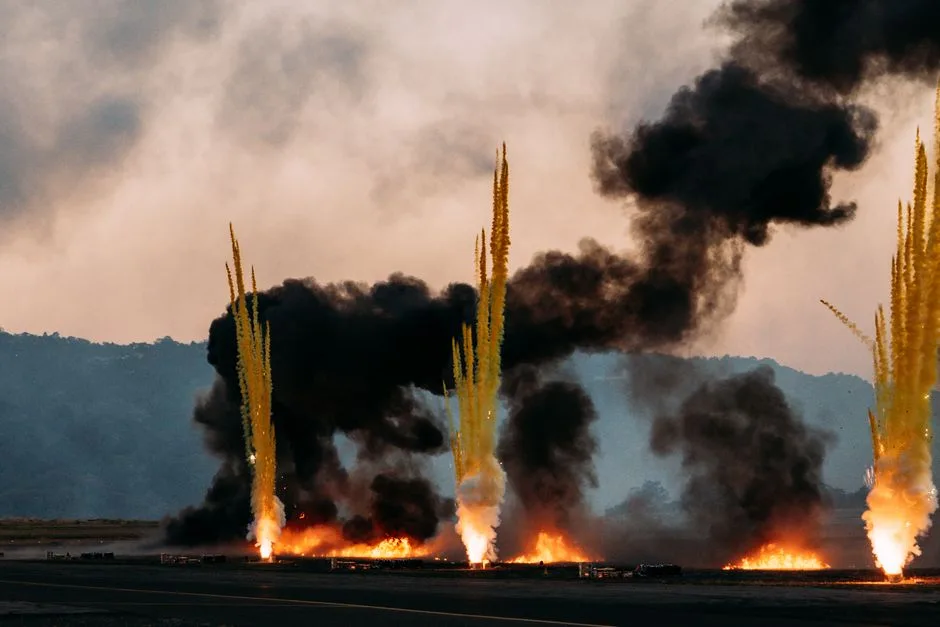
The ceasefire between the United States and Iran is disintegrating at speed, and both sides are now taking turns blowing things up while insisting the other side started it. On Wednesday, Iran fired missiles and drones at US military installations in Bahrain and Kuwait, hours after American forces hit over 60 Iranian Revolutionary Guard boats and a string of coastal defense sites. We are, in every meaningful sense, back to the war.
How We Got Here in 24 Hours
According to the New York Post, the immediate trigger was Iran striking three commercial ships in the Strait of Hormuz on Tuesday, including the Qatari LNG supertanker Al Rekayyat, which took a drone hit to its engine room and caught fire. Qatar's foreign ministry spokesperson Majed al-Ansari held Iran fully legally responsible. A Saudi-flagged crude oil tanker believed to be the Wedyan was also damaged off the coast of Oman.
Iran, per its foreign ministry, denied responsibility and called Qatar's accusations perplexing. In the same breath, Iranian state media warned that commercial vessels faced risks for using routes not coordinated with Tehran. So: we didn't do it, but also, you shouldn't have been there. Classic.
US Central Command responded by launching strikes on Iranian air defense systems, coastal surveillance systems, surface-to-air missiles, anti-ship cruise missiles, drone launch sites, and more than 60 small IRGC patrol boats. A US official told Reuters the goal was to impose a heavy cost. CENTCOM called Iran's ship attacks a clear and dangerous violation of the ceasefire and a threat to freedom of navigation.
Sirens Over Bahrain and Kuwait
Iran did not sit on its hands. The Islamic Revolutionary Guard Corps announced it carried out a joint missile and drone operation against US military installations at Bandar Salman, Bahrain's Fifth Naval District, and Ali Al Salem Air Base in Kuwait. The IRGC also claimed to have shot down a US MQ-9 drone during the operation.
As NPR reports, air raid sirens sounded in both countries. Bahrain, home to the US Navy's 5th Fleet, actually had to sound its alert a second time later in the morning. The Kuwaiti army confirmed its air defenses were actively engaging hostile missiles and drones.
This is not a one-off escalation. NPR notes that a nearly identical sequence, Iranian attacks on shipping followed by US strikes followed by Iranian retaliation against Bahrain and Kuwait, happened just last month. We are watching a pattern play out on loop, except each iteration frays the ceasefire a little more.
The Oil License Gets Yanked
Alongside the military strikes, Washington pulled off what may be the economically sharpest move in this exchange. The US Treasury revoked the general license it issued on June 22 that had allowed Iran to openly sell crude oil and petroleum products on international markets through August 21. Iran got a wind-down window until July 17. Then the sanctions snap back.
For Iran, this was a genuinely significant concession in the interim ceasefire deal. For years Iran had been selling sanctioned crude at below-market rates, largely to China. The license briefly allowed Tehran to operate in the open, for real dollars. Killing it is a serious economic blow dressed up as a routine policy move.
Oil markets noticed immediately. Prices rose more than 3% after the announcement, according to the New York Post. Iran's foreign ministry condemned the revocation as a breach of the framework agreement and said Washington would bear full responsibility for the consequences.
Khamenei's Funeral and the Worst Timing Imaginable
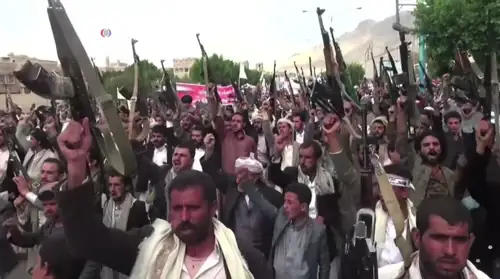
All of this is happening during the funeral of Iranian Supreme Leader Ayatollah Ali Khamenei, who was killed on February 28 at age 86 on the very first day of the war, along with his daughter, granddaughter, son-in-law, and daughter-in-law. NPR reports that enormous crowds of mourners have gathered, with funeral ceremonies running through Thursday.
The thinking before this week was that the funeral period might represent a moment of lower tensions, a kind of informal pause within the pause. That thinking has been thoroughly and violently refuted. NPR notes that mourners at the funeral have repeatedly called for the deaths of Donald Trump and Benjamin Netanyahu. Meanwhile, Trump himself was in Turkey for a NATO summit when Wednesday's strikes went down.
Negotiations toward a final deal were supposed to begin after Khamenei's burial, tackling the genuinely hard stuff: fully reopening the Strait of Hormuz and rolling back Iran's nuclear program. Those talks are now very much in question.
What Iran Actually Wants Here
Here is the part that gets buried under the explosion updates. According to the New York Post, Iran's clerical leadership is pushing for a permanent system to collect fees from commercial ships passing through the Strait of Hormuz. This would represent a seismic shift in how the region's most critical waterway operates. The US and most Gulf Arab states have flatly refused to agree to it.
Analysts told the Post that Tehran uses the tanker attacks tactically, not randomly. Each strike on a commercial ship is a reminder that Iran holds real leverage over a chokepoint through which roughly one-fifth of all globally traded oil and natural gas passed in peacetime. Every attack is Iran saying: settle on our terms, or this keeps happening.
Iran's parliament speaker Mohammad Baqer Qalibaf was blunt about it on X. Citing the US strikes, the oil sanctions, alleged violations of Iranian-approved shipping routes, and Israeli attacks on Lebanon, he wrote: the era of bullying and extortion is over. We don't fold. Iran's Foreign Minister Abbas Araqchi had already warned that final deal negotiations would not begin as long as threats continued.
A Ceasefire in Name Only
The interim US-Iran ceasefire was sold as a 60-day window for serious diplomacy. Indirect talks in Qatar ended last week with no meaningful progress, per the New York Post. Now both sides are launching strikes and revoking agreements and firing missiles at each other's military bases, while US officials keep saying that negotiators are working in good faith toward a final deal.
Trump has repeatedly threatened to resume full-scale bombing unless Iran agrees to make a deal. Iran's foreign minister says negotiations can't start under threat. The IRGC says the US violated the ceasefire. CENTCOM says Iran violated the ceasefire. Everyone agrees there is a ceasefire. Nobody is honoring it.
No civilian deaths were reported in Iran from the US strikes, though NPR confirms explosions were heard in Bandar Abbas, Qeshm, and Sirik. The New York Post reports that several people were injured by shrapnel from a projectile that struck a commercial pier in Sirik, and that fishing piers in Sirik and Bandar Abbas were also hit. CENTCOM made no mention of Kharg Island, from which Iran exports 90% of its crude oil, despite Iranian media reporting explosions there.
The Dingo Take
Let's be honest about what the scoreboard looks like right now. Iran attacked three tankers including a Qatari LNG supertanker. The US hit over 60 Iranian boats and a suite of coastal defense systems. Iran then fired missiles at US military bases in two US-allied countries. Oil prices jumped 3%. The ceasefire agreement has the structural integrity of wet tissue paper. And the peace talks that were supposed to start after the funeral? Good luck with those.
The administration will frame this as strength, as accountability, as imposing costs. Maybe some of that is true. But there is a serious question hiding inside all the CENTCOM press releases: what exactly is the endgame here? Iran has genuine leverage over the strait and it knows it. It is using tanker attacks as a bargaining chip while mourning its supreme leader and watching its oil revenue get cut off. That combination does not produce a country ready to fold. It produces a country with nothing left to lose by escalating.
Trump promised he could make deals that no one else could make. He helped start this war, killed Khamenei on day one, and now finds himself watching a ceasefire fall apart in real time while he sits at a NATO summit in Turkey. The negotiations were supposed to start this week. Instead we got missile alerts in Bahrain. History is not going to be kind to the word fragile being used to describe something nobody apparently intended to hold together.


Comments