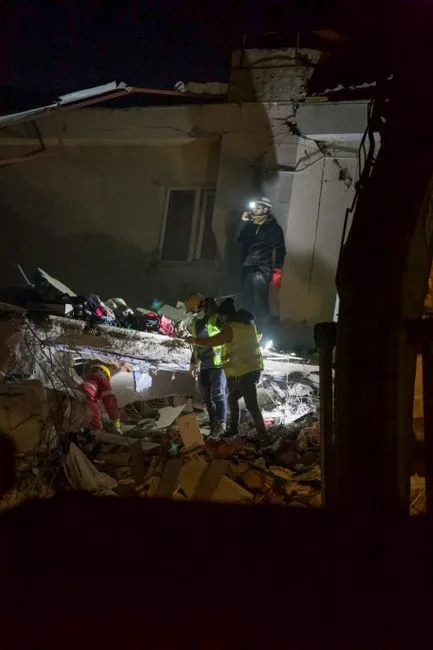
Venezuela's June 24 earthquakes killed at least 3,535 people, left 18,000 homeless, and injured more than 16,700. Now, the survivors are fighting a second disaster inside the wreckage of the first: a public health system so hollowed out by years of political collapse that it was already missing up to 37% of essential medicines before a single aftershock hit.
The Night in the Street
Luz Noguera was in the shower when the first earthquake hit. The 36-year-old grabbed her keys, forced her door open, and ran. Her asthma medication sat on her nightstand. She didn't go back for it.
As NPR reports, Noguera spent that whole first night on the main road with her neighbors, standing in the rain, with no electricity and no cell service. "We gathered on the main road and stayed there," she told NPR. "We spent the whole night in the street."
Multiply that story by 18,000 people, scattered across a state with three hospitals knocked completely out of service, several others only partially functional, and a pre-existing shortage of basically everything medicine requires. That's La Guaira right now.
When the Rubble Is the Good News
Here's the grim arithmetic of disaster medicine. In the first days after the quakes, doctors were performing amputations and treating crush injuries and cuts from broken glass. That was the acute horror. Now they've moved to what comes after: a massive displaced population in the heat, the rain, and the dust, without reliable access to food, clean water, or the medications they were already managing.
NPR reports that Dr. Eduardo Celades, a senior health adviser for UNICEF, is watching waves of diarrhea, respiratory infections, and skin diseases roll through the shelters. Dehydration. Asthma attacks. Sunburn. Conditions that are completely preventable for people with functioning lives, and suddenly lethal for people who have neither roofs nor running water.
"As well, there will be risks of outbreaks, like for example measles, respiratory infections. This is going to be our priority," Celades told NPR. Measles. In 2026. Because that's where Venezuela is.
The Healthcare System Was Already a Ruin
This is the part that separates Venezuela's earthquake from, say, a natural disaster hitting a country with functional institutions. According to NPR, even before June 24, Venezuelan hospitals were missing up to 37% of essential medicines. About a third of the country's doctors had already emigrated, according to the Venezuelan Medical Federation. Vaccination rates had collapsed. Cases of measles, diphtheria, and malaria had surged under Nicolas Maduro's government, which ran the country's economy into the ground through hyperinflation and attracted international oil sanctions.
Health economist Alejandro Arrieta at Florida International University put it plainly to NPR: "That's the normal situation. But in a crisis, that spike in demand, it's exacerbated by the history."
The WHO's Ian Clarke told NPR that the woman running the entire maternity program for the region is missing and presumed dead. The institution she ran is now offline. In its place: a 56-bed field hospital from the nonprofit Samaritan's Purse, a mobile clinic from Project Hope, and international medical teams doing telehealth calls from other parts of Venezuela and abroad. That's not a healthcare system. That's a very brave patch job on a wound that needed surgery years ago.
Aid Is Arriving, But the Math Is Brutal
The World Health Organization has delivered six metric tons of medical supplies, with another 28 tons on the way from its logistics hub in Dubai, according to NPR. Trauma kits, personal protective equipment, supplies to prevent communicable disease outbreaks. Chile and Brazil are donating vaccines for tetanus, diphtheria, and yellow fever. The Red Cross and Red Crescent have dispatched 36 tons of aid including water filters and hygiene kits.
Dr. Lydia Gordon, an OB-GYN with Project Hope working in La Guaira, described what she sees on the street to NPR: "Thousands of people walking in the street, disoriented, who need help." Her team offers ultrasounds to pregnant women at a shelter in one of the hardest-hit neighborhoods. In a functioning country, that would be a prenatal appointment. Here, it's emergency humanitarian intervention.
For routine care, NPR notes that Venezuelan patients are typically expected to purchase their own medical supplies at pharmacies near hospitals. That's not unusual in Latin America, but the scale of the expectation in Venezuela is extreme even by regional standards. For people who lost everything they own in a single morning, that system is not a system at all.
Rescue Became Recovery. Recovery Became Something Harder.
The shift from rescue to recovery happened fast. As hopes for live rescues faded, health workers turned their attention to the 18,000 people now living in shelters, on roads, and in the ruins of neighborhoods. The challenge is no longer pulling people out of rubble. It's keeping them alive for the weeks and months ahead, in conditions designed to make disease spread and in a country that started this disaster already on its knees.
Noguera, the woman who left her asthma medication behind, told NPR she is simply grateful to be alive. She took a photo the day after the catastrophe, she said, and she was smiling. That kind of resilience is real, and it matters. It is also not a substitute for a functioning government, a stocked pharmacy, or a hospital with all its walls still standing.
The Dingo Take
Let's be clear about what happened here. The earthquake killed thousands of people in a single day. The decades of misrule that preceded it created the conditions where thousands more are now at risk of dying from diarrhea, measles, and untreated asthma in the weeks that follow. Nicolas Maduro is no longer president, but his government's wreckage is the infrastructure the survivors are living inside. You can't separate the body count from the political history. Anyone who tries is lying to you.
The international response, to its credit, is moving. The WHO, UNICEF, Samaritan's Purse, Project Hope, the Red Cross, Chile, Brazil: real organizations sending real aid and real doctors to a real catastrophe. That matters enormously. But 34 tons of incoming medical supplies and a 56-bed field hospital are a bandage on a collapsed system, not a rebuilt one. The people of La Guaira are not going to be okay because the world shipped them trauma kits. They are going to need years of sustained investment in health infrastructure that their own government spent a generation dismantling.
And yet here is Luz Noguera, standing in the rain, no medication, no cell service, her whole world shaken loose, taking a smiling photo the next morning because she is alive. If she can find something to hold onto in that, the least the rest of the world can do is not look away.



Comments