The Supreme Court spent its spring session systematically dismantling the Voting Rights Act of 1965, and Donald Trump watched that happen and thought: great start, but what if we also made people dig through their filing cabinets to find their birth certificate before they could vote? With midterms four months out, the walls around American democracy are closing in from multiple directions at once.
The Death of the Voting Rights Act, Explained Plainly
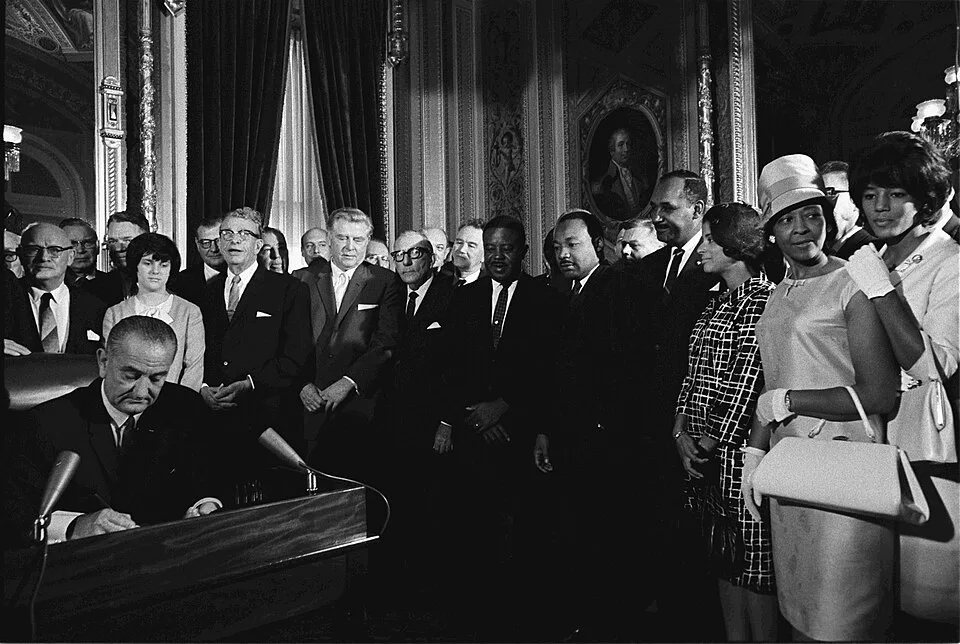
The Voting Rights Act of 1965 was reauthorized four times by Congress. Each time, it passed with overwhelming bipartisan support. Each time, a Republican president signed it into law. It was the crown jewel of the civil rights movement, the legislation LBJ went to the mat for, the law that finally put teeth into the promise that Black Americans could actually vote without someone beating them on a bridge for trying.
The Roberts Court just finished killing it. Quietly. Over several years. With the methodical patience of someone who planned this a long time ago.
The final blow came in April with the Louisiana v. Calais decision, which Mother Jones voting rights reporter Ari Berman describes as a "death blow." According to NPR, the ruling essentially struck down the creation of majority-minority districts, the mechanism that allowed Black voters and voters of color to actually elect candidates who represented them. Within weeks of that ruling, Tennessee, Louisiana, and Alabama were already scrambling to redraw their maps, racing to reduce Black representation before November. "My fear is that we are returning to a politics of Jim Crow in the South," Berman told NPR's Fresh Air.
Half of America Doesn't Own a Passport. Trump Wants One to Vote.
While the Supreme Court was busy on one end, the Trump administration has been working the other. The SAVE America Act, which Trump is pushing Congress to pass, would require voters to show a passport or birth certificate to register to vote, plus strict ID requirements at the ballot box itself. As Berman told NPR, "Half of all Americans don't have passports. So already there, you're talking about half the country can't comply."
Think about that for a second. Not a third. Not a fringe minority. Half the country. And that's before we even get to the birth certificate requirement, which Berman frames with a question so simple it hurts: "Ask the average person, 'Do you know where your birth certificate is?' And a lot of people are gonna struggle to find it."
This isn't a voter integrity measure. Voter fraud at the registration level is vanishingly rare, documented repeatedly, and has never come close to affecting an election outcome. This is a paperwork obstacle course designed to look like a security measure while functioning as a filter. The people most likely to lack a passport or struggle to locate a birth certificate are not, by pure statistical coincidence, the people most likely to vote Republican.
The Pre-Rigged Complaint Strategy
Here's where it gets genuinely chilling, because there's a logic to all of this that goes beyond just suppressing votes before November. Berman, speaking to NPR, lays it out clearly: if Republicans lose the midterms, Trump already has his explanation ready. "If Republicans lose, he's going to say, 'Well, we didn't have the SAVE Act, therefore the election was rigged.'" The law doesn't need to pass. The demand for the law is the point.
Berman calls it "creating the predicate" for challenging the results. Which is exactly what happened in 2020, except this time the predicate is being constructed in advance, in public, with a cooperative Supreme Court and a Congress that hasn't shown much appetite for stopping any of it. The question Berman says keeps voting rights experts awake at night: "What steps could this administration take to try to interfere in the voting process that we've never seen another administration in history take before?"
That question doesn't have a reassuring answer. We're watching the infrastructure for a challenge get built in real time.
Mail Voting Survived. Barely.
The one piece of genuinely good news from the Supreme Court's spring session is that mail-in voting survived. According to NPR, the court preserved it by a single vote. One vote. In a 6-3 court.
Mail voting is safe. The evidence for this is overwhelming and has been for years. States like Oregon and Washington have run all-mail elections for a long time without the sky falling. But the fact that its survival came down to a single justice in a court that has already shown it will overturn decades of settled law when the politics align is not exactly a comfort.
And Rich People Can Now Spend Unlimited Money on Campaigns. Sure.
Almost as a bonus, the Supreme Court also struck down the longstanding limits on how much political parties can spend on behalf of their candidates. Before, there were caps. Now there aren't. As Berman explained to NPR, this means wealthy individuals can funnel unlimited money through party structures directly to candidates, bypassing the contribution limits that apply to direct donations.
This is the Roberts Court continuing a project it's been running for over a decade, the systematic deregulation of campaign finance in a direction that consistently, predictably benefits wealthy donors and the politicians who serve them. Citizens United was not a one-off. It was a roadmap.
The Dingo Take
Let's be honest about what's happening here, because the pieces are all in plain sight and it's worth assembling them. The Supreme Court killed the mechanism that protected minority voting districts. It let political parties spend unlimited cash on elections. It kept mail voting alive by one vote. And now the White House is pushing a law that would require documents half the country doesn't have just to register. None of this is random. None of this is a coincidence. This is a coordinated, multi-front effort to reshape who participates in American democracy, and it is working.
Ari Berman has been covering this for years, and he's not a fringe figure crying wolf. He's a reporter who has documented every step of the Roberts Court's long march through voting rights law. When he uses the words "death blow" and invokes Jim Crow, he's not being dramatic. He's being historically precise. The mechanisms that allowed the South to disenfranchise Black voters for nearly a century were not burning crosses and literacy tests exclusively. They were paperwork requirements. They were redrawn maps. They were rules that looked race-neutral on paper and were anything but in practice.
Four months before the midterms, with voting districts being redrawn, with new documentary requirements potentially on the way, with the legal infrastructure that protected voting rights in tatters: this is the moment that requires the most attention and is getting the least of it. The 2026 midterms may be the most consequential elections in a generation, and the conditions under which they're being held are already compromised. Don't say nobody warned you.




Comments