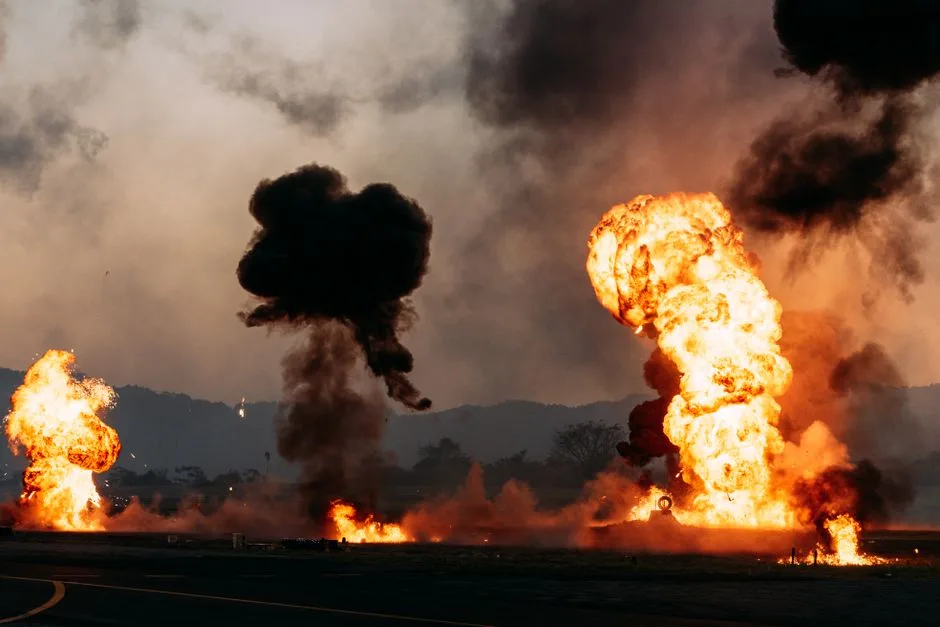
The United States bombed Iranian military targets for the second consecutive day on Wednesday, and this time the strikes were bigger. Bandar Abbas. Sirik. Chabahar. The Island of Lavan. Multiple sites along Iran's southern coast got hit in what U.S. officials are calling an effort to stop Tehran from attacking commercial shipping through one of the most critical waterways on the planet.
What Actually Happened on Day Two
According to Axios, a U.S. official confirmed Wednesday's strikes on Iranian military targets in and around the Strait of Hormuz, and stated plainly that the scope of the attacks was wider than Tuesday's. That is not a small thing to say. That means the United States is not signaling restraint here. It is escalating.
Iranian state media reported strikes across Bandar Abbas, Sirik, Chabahar, Lavan Island, and other positions along Iran's southern coastline. These are not remote desert outposts. Bandar Abbas is Iran's largest port city and home to a major naval base. The Islamic Republic of Iran Navy runs significant operations out of that city. Hitting it two days in a row, and hitting more of it the second time, is a statement.
What the specific targets were on Wednesday has not been fully disclosed. The U.S. official described them but the reporting available cuts off before that detail becomes clear. The fog of war is doing its thing.
Why the Strait of Hormuz Is the Whole Ball Game
If you want to understand why the United States is now in a shooting war with Iran over a stretch of water, start with the numbers. Roughly 20 percent of the world's oil supply passes through the Strait of Hormuz. It is one of the narrowest and most consequential chokepoints in global shipping. At its tightest point, the shipping lane is only about two miles wide in each direction.
Iran has been striking commercial ships there. That is the U.S. justification for military action. Tehran disrupting commercial traffic at that scale is not just a regional problem. It hits oil prices, global supply chains, and every country whose economy depends on fuel moving freely through international waters. Which is most of them.
The U.S. has long maintained that keeping the Strait of Hormuz open is a core national security interest. That commitment is now being tested in real time, with bombs.
This Is Day Two of Something, But Day Two of What Exactly?
Here is the thing about military escalations. They rarely announce themselves as escalations. They start as measured responses, targeted operations, proportional actions. And then, quietly, you are on day two of a bombing campaign against a country of 90 million people that has nuclear ambitions, regional proxy forces spread across Lebanon, Syria, Iraq, and Yemen, and decades of stored-up rage toward the United States.
Axios reports that Tuesday's strikes came first, and Wednesday's were described by officials as broader. That trajectory matters enormously. Wider scope on day two is not de-escalation. It is the opposite. The question nobody seems to be answering in public is where day three goes.
Iran has not responded militarily to the United States directly yet, at least not in ways that have been publicly confirmed as of this reporting. What happens when they do is the whole story. That is the story we are all about to be living inside.
Iran's Side of This
Iranian state media confirmed the strikes, reporting hits across multiple locations along the southern coast. Tehran has been attacking commercial vessels in the Strait of Hormuz, a campaign that U.S. officials say is the direct trigger for the American military response.
Iran's position, consistently, is that its actions in the Strait are leverage. Leverage for sanctions relief, for nuclear negotiations, for regional influence. The Islamic Republic has used the threat of closing or disrupting the strait as a pressure tool for decades without actually pulling the trigger on full closure. The question is whether American bombs change Tehran's calculus or harden it.
History suggests the latter is at least as likely as the former. Iran does not typically respond to military pressure by immediately capitulating. The country has endured crippling sanctions, an eight-year war with Iraq, assassinations of top military figures including Qasem Soleimani in 2020, and repeated covert attacks on its nuclear program. Its government is still standing.
Where Congress Is on All of This
That is a great question and one worth sitting with for a moment. The United States appears to have entered a second consecutive day of offensive military strikes against a sovereign nation. Has Congress authorized this? Has anyone asked?
The War Powers Resolution requires the president to notify Congress within 48 hours of committing U.S. forces to hostilities and limits unauthorized military engagement to 60 days. That law has been functionally ignored by presidents of both parties for decades, treated as a speed bump rather than a constitutional guardrail. The pattern is not new. The stakes are.
As of this writing, there is no public indication of a congressional authorization for military force against Iran. There is no public debate. There is, apparently, just the bombs.
The Dingo Take
Let's be honest about what is happening here. The United States is now two days into bombing a country that has ballistic missiles, regional proxies with significant military capability, and a government that has built its entire identity around resisting American pressure. The stated goal is to get Iran to stop attacking ships in the Strait of Hormuz. That is a legitimate goal. The method chosen involves blowing up Iranian military infrastructure and apparently expanding those strikes on day two. Whether this works or catastrophically backfires is not a question anyone in power seems to be answering out loud.
The thing about the Strait of Hormuz is that closing it would hurt Iran too. They export oil through it. So Tehran is playing a dangerous game of chicken with global shipping, and Washington has decided to play back with airstrikes. What neither side seems eager to discuss publicly is the off-ramp. What does Iran have to do, specifically, to make the bombs stop? What does the United States have to offer, if anything, to give Tehran a reason to stand down that doesn't involve pure humiliation? These are the negotiations that prevent wars from becoming something worse.
Right now we are watching a live military escalation with no publicly stated endgame, no congressional debate, and no clear diplomatic track running alongside the bombs. That might work out fine. History has a lot of examples of military pressure producing results. History also has a lot of examples of day two becoming day two hundred. Pay attention to which example this turns into.


Comments