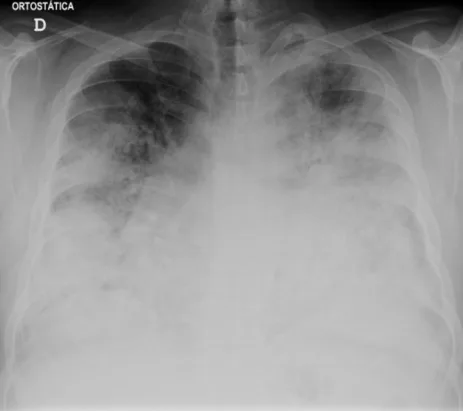
New York City's own health commissioner just stood up and said, out loud, that New York is now a subtropical climate, and the proof is 28 people on the Upper East Side currently fighting off a potentially fatal lung disease they caught from the air. At least 19 buildings have been ordered to drain, clean, and disinfect their cooling towers. The source of the outbreak has not been identified, and may never be.
What Is Happening and Why It Should Scare You a Little
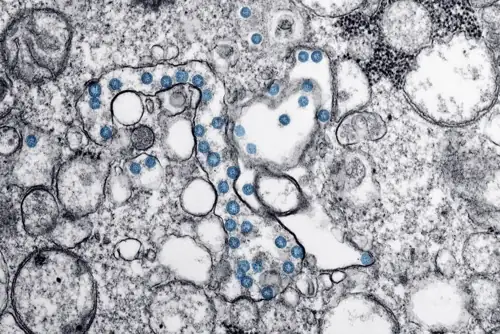
Legionnaires' disease is a severe form of pneumonia caused by the bacterium Legionella pneumophila, which thrives in warm, stagnant water. It doesn't spread person to person. You get it by breathing in contaminated mist or vapor, often from a cooling tower on a building you're just walking past. You have no idea it's happening.
As The Guardian reports, the current outbreak is centered across three zip codes on Manhattan's Upper East Side, a neighborhood that sits between Central Park and the East River. Health officials have already sampled water from nearly 160 building cooling towers trying to find the source. They may not find it. The CDC has noted that in many smaller outbreaks, the source is never identified at all.
The disease kills up to 10% of people it infects. It affects fewer than 3 people per 100,000 in any given year, so the odds of getting it remain low. But "low odds" and "consequence-free" are very different things, and a disease with a 10% fatality rate does not get to just slide by without scrutiny.
The Commissioner Said the Quiet Part Out Loud
Dr. Alister Martin, the New York City health commissioner, told The Guardian something that most politicians spend considerable energy avoiding saying directly. "This is now a subtropical climate," Martin said. "It is absolutely true that climate change is worsening our exposure and increasing the propensity for Legionnaires' disease clusters like we're seeing today."
That is a sitting city health official, in July 2026, telling you that the climate has already shifted enough to change which diseases you are realistically at risk of contracting while walking down the street in New York. Not in a future projection. Right now.
Martin signed orders for at least 19 buildings to clean their cooling towers, which he described as "buildings of interest." He also said New Yorkers would soon learn the names of those buildings, though the list won't actually identify which building is at the center of the outbreak, because that requires a much longer chain of lab work involving PCR tests, bacterial cultures, genome sequencing, and matching those sequences against patient sputum samples. And since doctors typically test for Legionnaires' with a urine test, some patients may not have even had sputum samples collected. The investigation could take another month.
This Disease Has a History of Hitting the Poorest Hardest
Here is the part that should make you genuinely angry. The current outbreak is concentrated in one of Manhattan's wealthiest neighborhoods. But multiple studies and New York's own outbreak history show that Legionnaires' disease disproportionately hits people living in poverty and Black Americans.
"I started to believe that Legionella only knew Black and brown neighborhoods," Marquis Harrison, chair of a Manhattan community board in Harlem, said at a public meeting in March, according to The Guardian. "We only saw it in the South Bronx and in Harlem, and only communities of color."
Ageing infrastructure, deferred maintenance, and residents with higher rates of chronic illness that make them more vulnerable to severe outcomes all concentrate in the same places. Jory Lange, a food safety attorney based in Houston who represented 50 people sickened in a 2025 Harlem outbreak, told The Guardian that every summer his firm gets calls from New Yorkers who have contracted the disease. This is not a freak event. It is a recurring one.
The Bacteria Are Everywhere and Getting More Comfortable
Legionella got its name from a 1976 outbreak at a Philadelphia convention of American Legion veterans, which is one of those historical facts that sounds made up but is completely true. Since then, the bacterium has been linked to outbreaks across New York, Melbourne, Italy's Lombardy region, Lincoln, New Hampshire, and plenty of other places.
The list of reservoirs where Legionella has been found reads like a fever dream of modern infrastructure: hot tubs, floor scrubbers, water jet cutters, decorative fountains. One study found that truck drivers were particularly vulnerable because of their use of non-genuine windshield washer fluid. George Yates, a Harlem resident who contracted Legionnaires' in a 2018 Washington Heights outbreak, told The Guardian he was just driving for a ride-share company at the time. He passed through the neighborhood, breathed the air, ended up hospitalized for five days.
"The bacteria don't care," Dr. Rene Najera, director of public health at the College of Physicians of Philadelphia, told The Guardian. "If they see a warm spot with water they're going to thrive and multiply." The conditions a warming climate creates, warm and wet and increasingly year-round in cities like New York, are exactly what Legionella needs to expand its footprint.
What Should You Actually Do
The official advice from Dr. Benjamin Wyler, an emergency medicine physician at Mount Sinai Health System who has studied the disease, is don't panic, but don't ignore symptoms either. "If you're developing symptoms like a febrile illness and cough, or malaise, gastrointestinal issues, you should maybe have a lower threshold to seek care," he told The Guardian.
For the Upper East Side specifically: if you have a fever, a bad cough, headache, muscle aches, or shortness of breath, go get checked out. The disease is treatable with antibiotics when caught early. The 10% fatality rate is not a guarantee of death; it is a reminder that this is not something to walk off.
For the rest of New York and, frankly, for most urban Americans: the infrastructure that runs through your city is aging, the climate is warming, and the conditions that let bacteria like Legionella flourish are getting better every year. That is not alarmism. That is what the health commissioner of the largest city in the United States just said in plain English.
The Dingo Take
Let's be precise about what has happened here. The climate has warmed enough that the commissioner of New York City's health department felt compelled to announce, in the middle of an active outbreak, that his city has functionally become subtropical. He is not a climate activist. He is a public health official responding to a disease cluster. When the guy whose job is to reassure the public starts leading with climate change as a direct cause of a current health emergency, something has shifted.
The part that doesn't get enough attention is the equity dimension. This outbreak hit a wealthy neighborhood, so it will get extensive coverage, aggressive government response, and a thorough investigation. The 2025 Harlem outbreak that sickened 50 people was represented by an attorney based in Houston, Texas, which tells you something about how much institutional muscle Harlem residents could call on locally. Legionnaires' doesn't discriminate, but the response absolutely does.
The bacteria, as Dr. Najera said, do not care. They are not ideological. They do not have a political agenda. They just need warm water and a way to become airborne, and a warming planet full of aging pipes and undertreated cooling systems is giving them more of that every year. We built the conditions that are coming back to make us sick, and then we cut the agencies that might have caught it earlier, and then we act surprised when 28 people on the Upper East Side can't breathe. The math here is not complicated.


Comments