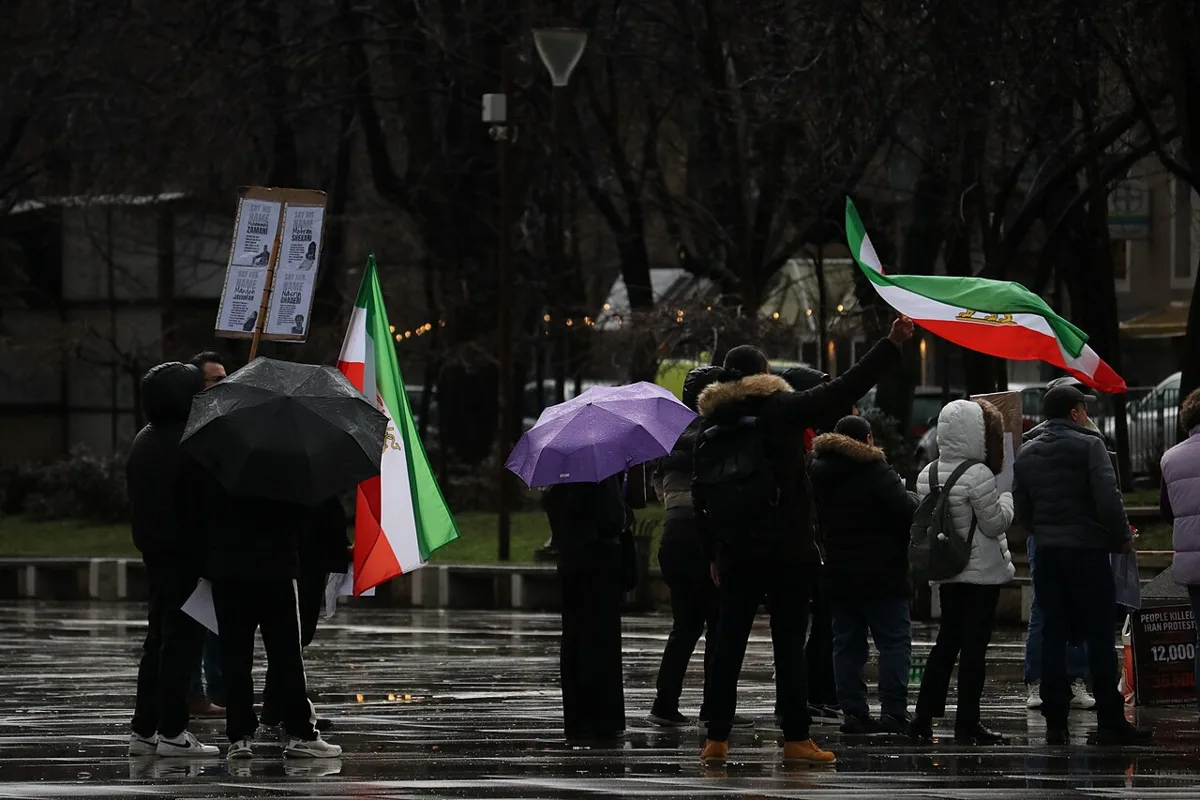
Donald Trump declared the U.S.-Iran memorandum of understanding dead, ordered two rounds of airstrikes, and announced the ceasefire was 'over.' Now, according to Axios, Qatar and Pakistan are quietly running around trying to convince everyone to please, please stop before this gets any worse. This is diplomacy in the Trump era: break the thing, then outsource the cleanup.
What Trump Blew Up and What He Still Wants
Here's the situation as Axios reported it on Wednesday. Trump declared the U.S.-Iran memorandum of understanding finished, called the ceasefire off, and launched two separate rounds of airstrikes. In terms of diplomatic messaging, that's roughly the equivalent of flipping a table and walking out of a restaurant.
But here's the thing he apparently forgot to factor in: the Strait of Hormuz. Trump, according to Axios's sources, is still laser-focused on getting that waterway reopened, which is where roughly 20 percent of the world's oil supply flows through. You can blow up the diplomatic framework, it turns out, but the geography doesn't care about your press releases.
So now the United States is in the position of having torched the negotiating structure it helped build, while still very much needing Iran to do something specific. That's a fun place to be.
Enter Qatar and Pakistan, Carrying the Broom
Qatar and Pakistan, along with other regional mediators, are now actively working to de-escalate and get nuclear talks back on track, Axios reports, citing two sources from the mediating countries and a U.S. official. These are countries that have spent years cultivating relationships on both sides of this divide, and they are apparently spending that political capital right now.
The mediators believe, per Axios, that regardless of the recent escalation, both parties made meaningful progress before everything went sideways. The thinking seems to be that you don't throw out the whole negotiation just because one side ordered airstrikes and dramatically announced the ceasefire was over. Which is a genuinely impressive amount of optimism about the current moment.
Qatar has played this role before. Doha has a long history of hosting back-channel conversations that formal diplomacy can't touch, and Pakistan has maintained lines of communication with Tehran that Washington often can't. These aren't random bystanders. They are doing a specific, difficult job that the Trump administration has apparently decided it cannot do for itself right now.
The Hornets' Nest That Is the Strait of Hormuz
Let's be very clear about why the Strait of Hormuz keeps coming up. It's a narrow channel between Iran and Oman, roughly 21 miles wide at its tightest point, and it is one of the most consequential chokepoints in the global economy. If Iran closes it or even meaningfully disrupts traffic through it, oil prices spike globally, immediately, and everyone from European consumers to American drivers feels it at the pump.
That's Trump's actual problem here. He can strike Iranian targets. He can tear up diplomatic agreements. What he cannot do is make Iran irrelevant to the global energy supply by sheer force of political will. The leverage cuts both ways, and Iran knows it. The mediators know it. Everybody except, apparently, whoever was in the room when the airstrikes got ordered, knows it.
So Is There Actually a Path Back?
Axios's sources from the mediating countries seem to think so, which is either genuinely encouraging or a sign that professional diplomats are constitutionally incapable of giving up. Probably both.
The argument the mediators are making is that substantive progress happened before the breakdown. That means there's a foundation somewhere underneath the rubble of the last few days. Whether you can build back on that foundation when one party just ordered two rounds of airstrikes is a genuinely open question. Diplomatic goodwill has a half-life, and the clock is running.
What's clear is that the U.S. does not appear to be leading this recovery effort. America is not the one reaching across the table right now. Qatar and Pakistan are. The world's self-described greatest dealmaker is apparently waiting for smaller countries to fix the deal he just dismantled.
The Dingo Take
There is a particular kind of chaos that the Trump administration specializes in, and it goes like this: announce that everything is ruined, make it more ruined, then quietly rely on other countries to un-ruin it while claiming credit if it works and assigning blame if it doesn't. The Iran situation is a masterclass in this approach. Trump killed the MOU. Trump called the ceasefire over. Trump ordered the strikes. And now Qatar and Pakistan are the ones trying to prevent a regional war while the White House presumably watches the oil futures markets and hopes somebody else solves it by morning.
The Strait of Hormuz is the tell here. If Trump actually wanted full-on conflict with Iran, the Strait wouldn't be his priority. The fact that reopening it is still the goal suggests that someone, somewhere in the administration, understands that a closed Strait of Hormuz is an economic catastrophe that lands on American consumers faster than any Iranian nuclear program ever would. That's not strategy. That's damage control dressed up as foreign policy.
So yes, Qatar and Pakistan are out there trying to save a deal that the United States both negotiated and blew up within the same news cycle. If they pull it off, it will be one of the more remarkable diplomatic feats in recent memory. If they don't, we're back to watching crude prices and hoping nobody does something genuinely irreversible in a very narrow stretch of water. Normal times.




Comments