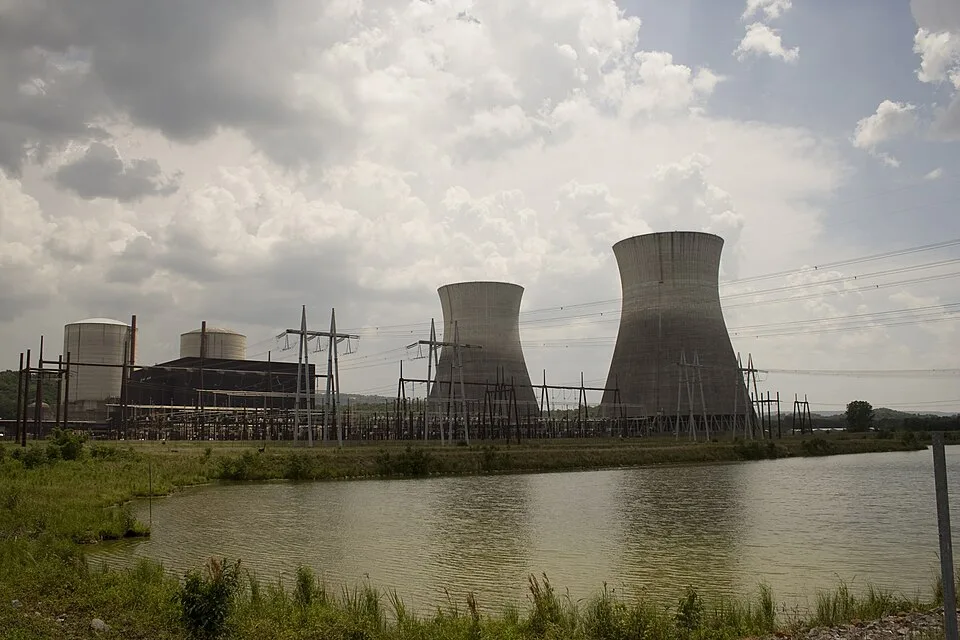
The United States hit the area surrounding Iran's Bushehr Nuclear Power Plant on Thursday, Iranian state media reported, while President Trump told the American public that Iran "wants to make a deal so badly." Meanwhile, Jordan was intercepting Iranian missiles over Amman, 600 sailors were trapped in the Persian Gulf, and the Strait of Hormuz had been effectively reduced to three tankers and a prayer. Totally normal stuff.
So We Hit a Nuclear Plant. Sort Of.
Let's be precise here, because precision matters a great deal when the words "nuclear" and "strike" appear in the same sentence. According to Iran's IRNA state news agency, citing a deputy governor of Bushehr Province, a U.S. projectile hit the perimeter area of the Bushehr Nuclear Power Plant on Thursday. Not the reactor. The perimeter.
Ehsan Jahangirian told IRNA that U.S. attacks also hit the Choghaddak military base and a fishing pier in the south of the coastal province, where fishing boats belonging to local residents caught fire. He said no casualties had been reported from the Bushehr strikes specifically, though Iran's health ministry put the overall death toll from two days of U.S. airstrikes at 14 people.
The U.S. military's Central Command said Wednesday evening that its strikes had hit roughly 90 Iranian targets total, including air defenses, drone and missile storage, naval infrastructure, and logistics sites along Iran's coast. The stated goal, per President Trump, is to destroy the small boats Iranian forces are using to lay sea mines in the Strait of Hormuz. The actual result, as of Thursday morning, is that we are shooting things near an active nuclear facility.
Jordan Intercepted Eight Iranian Missiles This Morning
Jordan, a country that is not a party to this conflict, woke up Thursday to air raid sirens and incoming Iranian missiles. Jordan's Armed Forces confirmed that eight missiles launched from Iran toward Jordanian territory were intercepted, with debris falling to the ground but no casualties or material damage reported.
The U.S. Embassy in Amman had warned people in the capital to "shelter in place immediately" about 40 minutes before Jordan's military confirmed the intercepts. Jordanian government spokesman Dr. Mohammad al-Momeni posted on X that security forces had "activated air raid sirens moments ago after the Kingdom's airspace was breached by missiles launched from Iran."
This came after Iran said Wednesday that it had targeted U.S. bases in Bahrain, Kuwait, and Qatar. So to recap the geography of Thursday's chaos: strikes in southern Iran, missiles over Jordan, U.S. bases under fire in three Gulf states, and a former supreme leader's funeral procession underway in Mashhad. The region is not having a great week.
Khamenei's Funeral, While His Successors Fire Missiles
The funeral procession for Ayatollah Ali Khamenei began Thursday on Imam Reza Street in the northeastern city of Mashhad, with Iranian state media airing footage of enormous crowds lining the street as his coffin was carried toward the Holy Shrine of Imam Reza. The shrine reached capacity, meaning worshippers followed the funeral prayer from adjoining streets outside.
Khamenei's body, along with those of family members killed in the same strike on the first day of the war, will be buried in the inner area of the shrine. CBS News reports that Khamenei was killed on the opening day of the U.S.-Israeli military campaign against Iran.
So Iran is burying its supreme leader while simultaneously firing ballistic missiles at a neighboring country. The government that replaced him is not, by any observable measure, in a mood to de-escalate. Whatever Trump thinks he's reading in Tehran's signals, the Iranians firing eight missiles at Jordan seems like a pretty clear counter-argument.
The Strait of Hormuz Is Down to Three Tankers
Here is the number that should scare every economist and energy analyst on the planet: three. As of Thursday, only three fuel tankers appeared to be transiting the Strait of Hormuz, according to public data from MarineTraffic.com cited by CBS News. Two of them, the Solix and the Berg 1, are already under U.S. sanctions for ties to Iran's illicit fuel shipments. The third has exhibited behavior consistent with ship-to-ship fuel transfers since the conflict began.
Iran has attacked three vessels this week that tried to use the southern route through the strait, close to Oman's coast. Tehran has demanded all commercial shipping use a northern route it controls. Ships are responding to this situation the way any rational actor would: by not being there. It is possible other vessels are attempting the southern route with their location transponders switched off, which is the maritime equivalent of sneaking past a guard with your eyes closed.
The United Nations' International Maritime Organization said Monday that approximately 600 seafarers remain trapped in the Persian Gulf and surrounding waters. Six hundred people, stuck. Iran has threatened to close the strait entirely. About 20 percent of the world's oil supply moves through that waterway on a normal day. This is not a normal day.
Trump Says Iran Wants a Deal. Iran Says Otherwise.
President Trump said Wednesday that Iran "wants to make a deal so badly," while also threatening "much worse" strikes if Iran attacks ships again. CBS News reports there is no sign of any ongoing diplomacy taking place. These two things are both true simultaneously.
What we have right now is a president publicly telegraphing that he reads the other side as desperate for an exit, while the other side is launching missiles at Jordan, threatening to shut down one of the world's most critical shipping lanes, and burying its supreme leader in a nationally televised funeral. If Iran is desperate for a deal, they have a very unusual way of showing it.
Trump has done this before, the performance of knowing the other guy's hand while the table is still on fire. Sometimes it works. Sometimes the Strait of Hormuz closes and oil hits $200 a barrel and everyone pretends they didn't see it coming.
The Dingo Take
Let's just say it plainly: the United States is in a shooting war with Iran. We are striking targets inside their country, including the area surrounding a nuclear power plant. They are firing missiles at our allies and our bases across the Gulf. Fourteen Iranians are confirmed dead from U.S. strikes. The Strait of Hormuz, through which a fifth of the world's oil supply flows, is functionally closed. This is a war. Call it what it is.
The thing that should make your hair stand up is not the conflict itself, ugly and dangerous as it is. It's the gap between the gravity of what is happening and the casualness of how it's being communicated. Trump is out here saying Iran "wants a deal so badly" like he's closing on a condo in Fort Lauderdale, while the U.S. military is firing projectiles at the perimeter of a nuclear facility and Jordan is intercepting ballistic missiles before breakfast. The cheerful deal-maker framing and the actual events on the ground are not living in the same reality.
And 600 sailors are trapped in the Persian Gulf. Six hundred human beings stuck in the middle of a shooting war between the world's most powerful military and a regime that has nothing left to lose after we killed its supreme leader on day one. Nobody is talking about them. Someone should.





Comments