Iran's government privately walked up to Trump's team, hat in hand, and said the quiet part out loud: "We screwed up. We made a mistake. Let's keep talking." That's not a paraphrase. According to CBS News, that is almost verbatim what Iranian officials told senior U.S. advisers after their forces opened fire on commercial ships in the Strait of Hormuz. So here we are: one of the most geopolitically sensitive waterways on the planet just had a military incident, and the explanation is basically "some rogue guys in our government did it, our bad."
What Actually Happened in the Strait
Let's back up. The Strait of Hormuz is where roughly 20 percent of the world's oil supply flows through a channel barely 21 miles wide at its narrowest point. It is, in the bluntest possible terms, a choke point that entire economies depend on. So when Iranian forces started shooting at commercial ships passing through it, the world noticed.
CBS News reports that the Trump administration had believed a southern lane of the strait, running along the Omani coast, would remain open under a memorandum reached during nuclear negotiations. Iran, apparently, did not fully anticipate how much traffic would immediately flood that lane once it was officially designated as clear. The speed and volume of oil and gas tankers caught them off guard, and that, according to U.S. officials, is why Iran started targeting ships.
That's the American interpretation. Iran's version, as relayed privately to Trump's team, is that the attacks came from an "errant entity" inside their system, a sect of hardliners who are actively trying to blow up the negotiations. The Trump administration is not buying that story wholesale, but they're not shutting the door either.
The 'Errant Hardliners' Defense Is Doing a Lot of Work Here
Here is the thing about the "rogue faction" explanation: it is extremely convenient, and also not entirely implausible. Iran's government is not a monolith. It is a fractured collection of competing power centers, and there are absolutely hardliners within the Revolutionary Guard and elsewhere who view any deal with the United States as an existential betrayal. The idea that some of them might take unilateral action to torpedo a negotiation they hate is not science fiction.
But it is also the kind of explanation that is impossible to verify and very easy to deploy whenever something goes wrong. "Sorry, that was our bad element" is a diplomatic get-out-of-jail-free card that governments have been playing for decades. The Trump administration appears to be holding it at arm's length, noting they believe the real trigger was Iran getting spooked by how fast commerce was moving through that southern lane.
Either way, the ships got shot at. That happened. And under the ceasefire framework the two sides had been operating under, CBS News reports the Trump administration views this as a clear violation.
JD Vance, Jared Kushner, and the World's Most Unusual Diplomatic Team
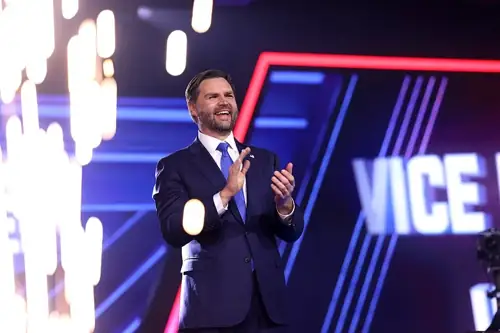
President Trump has directed his negotiating crew to keep talking anyway. CBS News identifies the team as Vice President JD Vance, Jared Kushner, special envoy Steve Witkoff, and Secretary of State Marco Rubio. Talks are scheduled to continue in Oman on Saturday.
Let that roster sink in for a moment. The man who wrote a book about leaving Appalachian poverty, the president's son-in-law who made his bones in New York real estate, a Miami-area businessman turned diplomat, and a former senator from Florida are the people currently holding the line between an open global shipping lane and a potential military escalation with Iran. No commentary necessary. The facts speak clearly enough.
That said, the administration's posture, as described to CBS News by senior officials, is not soft. The U.S. will respond with military and economic leverage if Iran keeps up the hostile acts. One official put the stakes for Saturday's Oman meeting plainly: if Iran's position is not that the strait is open and operating normally, "it's not going to be a great day for them."
The Nuclear Question Underneath Everything
The ships are the crisis of the moment, but the real reason everyone is in Oman having tense conversations is Iran's nuclear program. CBS News reports that U.S. officials used the phrase "nuclear dust" to describe the remnants of Iran's nuclear infrastructure. The preference is to excavate it. But if Iran refuses to act like what officials called a "normal country," there are other options, including leaving it buried.
That is a striking thing to say out loud. Keeping the evidence of a nuclear program buried rather than dismantled is not exactly a triumphant arms control outcome. It sounds less like a deal and more like a temporary arrangement between two parties who don't fully trust each other, which is, of course, exactly what it is.
One official framed the logic this way to CBS News: if Iran cannot honor the easiest part of the deal, keeping a shipping lane open, then nobody is ever going to get to the hard part, which is figuring out what to do with their nuclear program. The strait is, in other words, a test. And Iran just failed it, then called to ask for a retake.
Trump Is Giving It Time, But Not Much
CBS News reports that Trump is giving his negotiators room to work, but not infinite patience. "We're definitely in a wait-and-see moment," one senior official said, which is a remarkably calm way to describe a situation where commercial ships just got shot at in one of the world's most critical waterways.
The administration also declined to comment on separate reports that Israeli intelligence uncovered Iranian plots targeting Trump himself. Officials told CBS News only that the president doesn't make decisions based on fear or threats. Whether that's bravado or genuine indifference is anyone's guess, but it is consistent with how this White House presents itself publicly regardless of what's happening privately.
The Dingo Take
Let's be honest about what we're watching here. Iran shot at ships, violated a ceasefire, and then called up the Trump team to say it was a mistake and they'd like to continue the meeting. And the Trump administration said, essentially, okay, see you Saturday. That's not weakness, necessarily. Keeping a negotiation alive after a provocation, if the alternative is military escalation in the Persian Gulf, can be the right call. The problem is that Iran now knows the floor: they can fire on commercial vessels, blame internal hardliners, and the talks continue. That is a data point they will remember.
The nuclear dimension of this is what should be keeping people up at night. The U.S. and Iran are trying to hash out the fate of a nuclear program while simultaneously arguing about whether a shipping lane is open. These are not small problems being handled in a controlled environment. These are enormous, interlocking crises being managed by a team that includes the president's son-in-law, on a timeline Trump has described as limited, with military threats sitting on the table as a fallback. The margin for a catastrophic miscalculation is not comfortable.
Saturday's meeting in Oman will tell us something real. If Iran shows up and commits to keeping the strait open, the deal survives for now and everyone exhales. If they don't, the official's warning that "it's not going to be a great day for them" will have to be cashed in somehow. And whatever that means, it will not stay contained to a conference room in Muscat.


Comments